

On This Day in Business: January 30, 2007
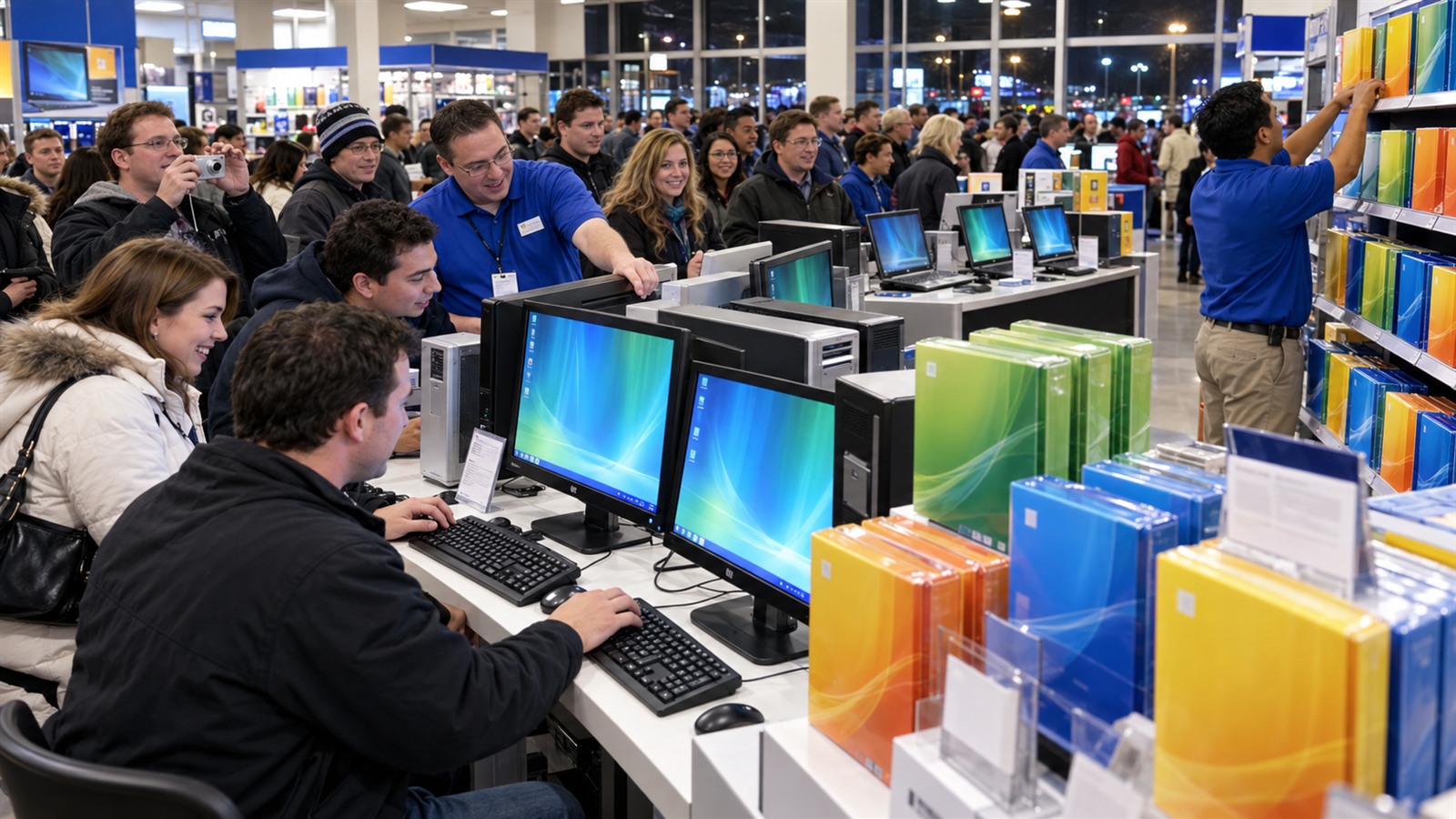
On January 30, 2007, Microsoft made Windows Vista and the 2007 Microsoft Office system broadly available to consumers. The company organized launch events in New York and other cities, while retailers in more than 70 countries offered new PCs and boxed upgrades. Vista followed Windows XP, whose long and successful run had given Microsoft a vast installed base but also raised expectations for compatibility. The new operating system introduced a translucent visual interface, desktop search, redesigned networking, stronger account controls and improved security architecture. Office 2007 arrived beside it with the Ribbon interface, replacing many familiar menus with a prominent strip of task-based commands.
The launch depended on a large ecosystem. Microsoft said more than 1.5 million devices and components worked with Vista and that thousands of products carried compatibility certification. PC manufacturers prepared machines across wide price ranges, retailers trained staff and software companies updated applications. This network gave Windows enormous reach, but it also made change difficult. A new platform had to support countless printers, graphics cards, corporate programs and user habits. Several Vista editions further complicated purchasing, and its visual effects and security features demanded more from hardware than many existing computers could comfortably provide.
Early reception mixed admiration with frustration. Reviewers recognized improvements in search, parental controls and protection, yet users encountered driver gaps, repeated permission prompts and performance problems on marginal systems. Businesses adopted cautiously because testing applications and retraining workers imposed costs beyond the software license. Microsoft's 'Vista Capable' marketing also generated complaints and litigation when some labeled PCs could run only a limited edition without the signature Aero interface. Those difficulties did not stop millions of sales, but they weakened confidence and allowed the older Windows XP to remain popular far longer than a normal product transition would suggest.
Microsoft responded through updates and then incorporated lessons into Windows 7, released in 2009. Vista's security model and driver changes helped establish foundations that continued in later versions, even as the product's name became shorthand for a troubled launch. January 30 matters because it exposes the unusual economics of platform renewal. Microsoft was not selling an isolated application; it was asking an enormous network of customers, manufacturers and developers to move together. The release shows that installed-base power can guarantee attention and distribution without guaranteeing enthusiasm. Compatibility, clear hardware requirements and restrained disruption to familiar workflows can be as important as new features when a company updates infrastructure used by hundreds of millions of people.
Windows XP's long success created a huge installed base, making the next operating-system transition commercially important and technically difficult.
Vista introduced a translucent interface, desktop search, stronger security controls and redesigned networking, while Office 2007 debuted the Ribbon.
On January 30, 2007, both products reached consumers through retailers in more than 70 countries and a broad new-PC campaign.
Microsoft promoted compatibility with more than 1.5 million devices and components, but older drivers and marginal hardware still caused real problems.
Performance complaints, frequent prompts and confusing editions slowed enthusiasm, while businesses faced significant testing, support and retraining costs.
Later updates and Windows 7 preserved parts of Vista's technical foundation, making the launch a lasting lesson in managing large platform transitions.
Explore more of "On This Day ..."
Discover more events from the same date across news, politics, technology, sports, and other fields. Each link highlights significant moments that shaped history on different fronts.