

On This Day in Business: February 10, 1996
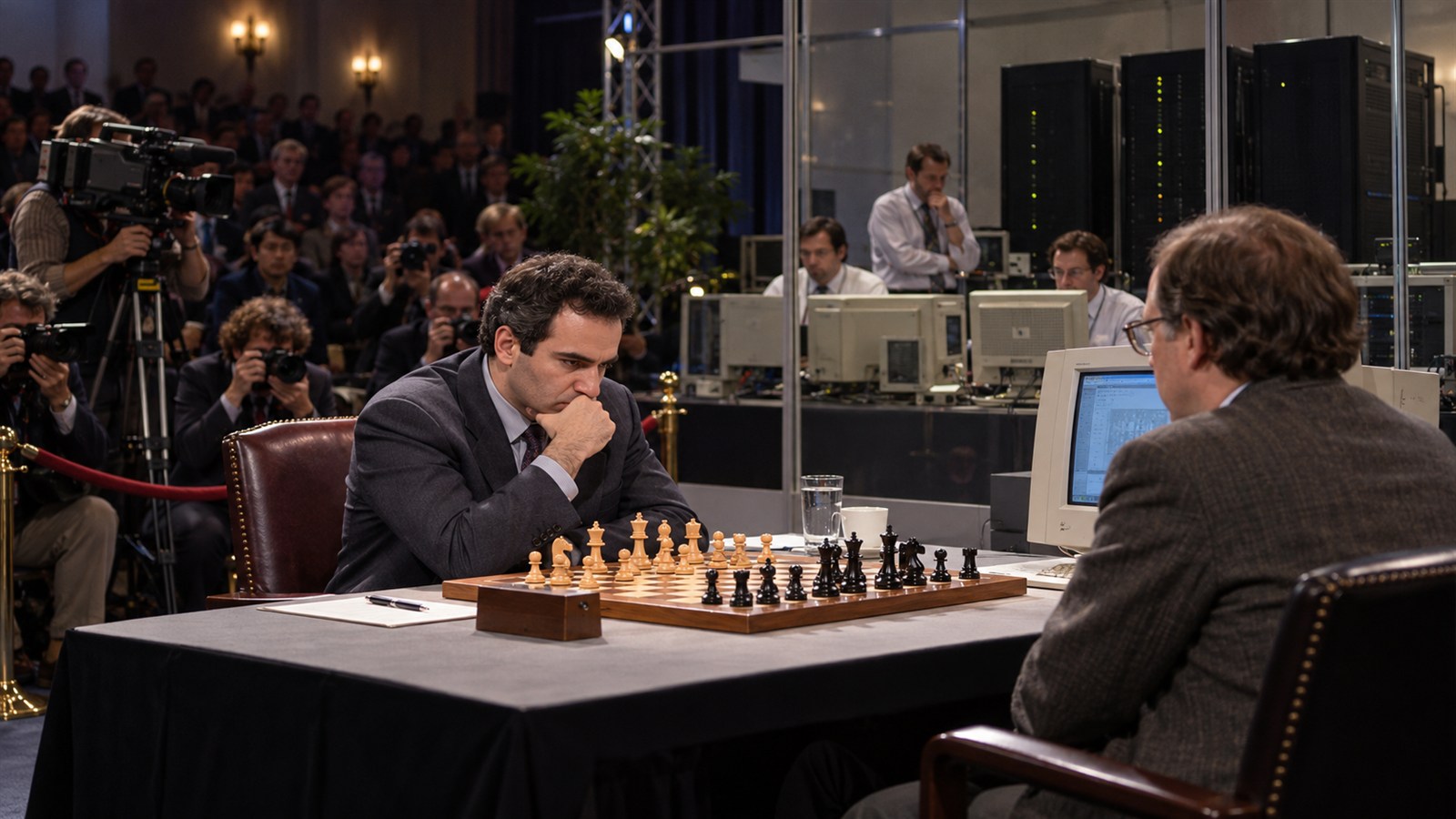
On February 10, 1996, IBM's Deep Blue chess computer defeated world champion Garry Kasparov in the opening game of a six-game match in Philadelphia. It was the first time a reigning world champion had lost a game to a computer under standard tournament conditions. Kasparov recovered and won the match four games to two, but the first result supplied a powerful public demonstration of machine calculation. Deep Blue combined specialized chess hardware, parallel IBM processors, a large opening database and evaluation software refined with expert knowledge.
The match was both research and corporate theater. Chess offered clear rules, measurable outcomes and a famous human opponent, making progress in high-performance computing understandable to people who would never inspect a processor architecture. IBM could associate its engineering with an event carried by newspapers and television around the world. The company did not claim that the system thought like a person. Deep Blue searched enormous numbers of positions, evaluated them with designed criteria and used computational scale to challenge human intuition within a bounded domain.
After upgrading the system, IBM arranged a rematch in New York in May 1997. Deep Blue won the deciding sixth game and the match, generating even more attention and controversy. Kasparov questioned particular moves and requested information about the machine's operation, while IBM retired the system after the victory. The episode intensified debate about transparency, human-machine competition and whether a spectacular benchmark represented broad intelligence. It also anticipated a recurring technology-marketing pattern: select a symbolic task, create a public contest and let a visible achievement stand for capabilities that are harder to explain directly.
The February 10 game remains significant because it turned computing performance into a mass-audience business story. IBM used an elite competition to showcase parallel processing, software and research talent, while the limitations of the system reminded observers that dominance in one task did not equal general reasoning. Later artificial-intelligence companies repeated the strategy with quiz shows, complex games and generative demonstrations. Deep Blue's first win therefore offers two lessons. Benchmarks can focus investment and give technical progress a memorable narrative, but customers and the public must still distinguish the staged achievement from the full range of real-world problems. The board made the computer legible; the surrounding debate revealed how quickly a product demonstration can influence expectations about an entire industry. For IBM, the match converted a complex research program into a story with a scoreboard. That clarity attracted attention that ordinary technical claims rarely receive, even though it also encouraged audiences to infer more general capability than the machine actually possessed.
IBM built Deep Blue from parallel processors, specialized chess hardware, expert evaluation rules and databases of openings and previous games.
A match against the reigning world champion turned abstract computing performance into a contest that global audiences could immediately understand.
On February 10, 1996, Deep Blue defeated Garry Kasparov in game one under standard tournament conditions, an unprecedented result for a computer.
Kasparov adjusted and won the six-game Philadelphia match, showing that the system's dramatic success did not yet guarantee sustained superiority.
IBM upgraded the machine and won a 1997 rematch, receiving enormous publicity while prompting disputes about transparency and the meaning of the benchmark.
The contests established a model for public AI demonstrations: use a symbolic challenge to communicate capability, then confront expectations that extend beyond it.
Explore more of "On This Day ..."
Discover more events from the same date across news, politics, technology, sports, and other fields. Each link highlights significant moments that shaped history on different fronts.