

On This Day in Health: August 25, 1841
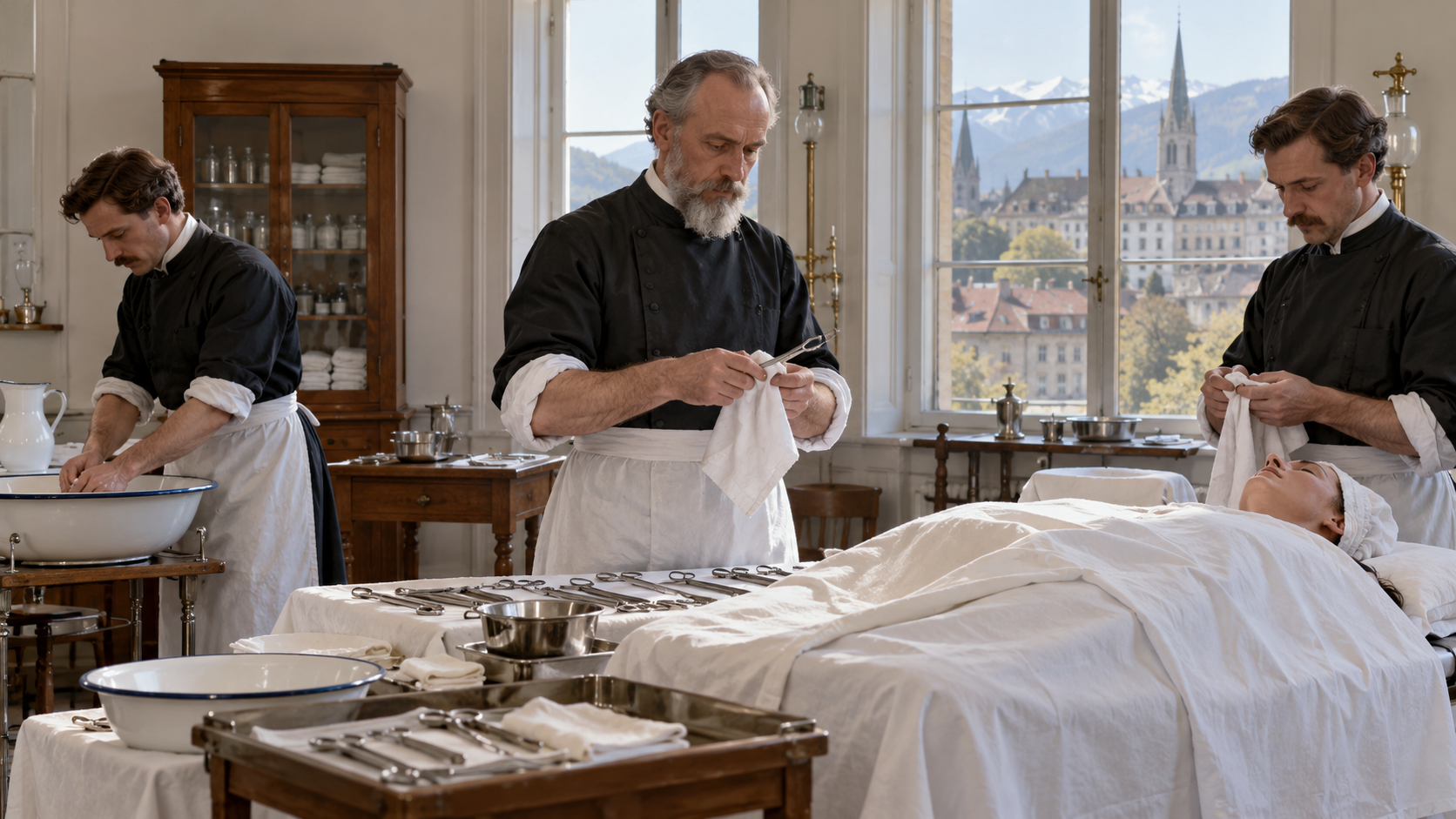
Theodor Kocher was born in Bern, Switzerland, on August 25, 1841. He trained in medicine and surgery in Bern and across leading European centers before becoming professor of surgery at the University of Bern. Thyroid enlargement, or goiter, was common in parts of Switzerland, but operations on the gland were extremely dangerous. Bleeding, infection, airway injury, and damage to nearby nerves made early thyroidectomy a last resort. Kocher brought precise anatomy, careful hemostasis, antiseptic technique, and disciplined follow-up to the problem.
His operative mortality fell dramatically as he standardized exposure of the gland, controlled blood vessels, and protected surrounding structures. Success created an unexpected complication. Patients who had undergone complete thyroid removal sometimes developed profound physical and mental slowing, swelling, and poor growth in children. Kocher documented this postoperative syndrome, helping show that the thyroid was physiologically essential rather than a dispensable mass. He changed practice toward preserving functioning tissue when possible and supported replacement with thyroid material as the biological consequences became clearer.
Kocher’s research connected surgical technique with long-term outcomes. He studied goiter, thyroid physiology, infection, trauma, abdominal surgery, and pressure inside the skull, while designing instruments and maneuvers used by other surgeons. In 1909, he received the Nobel Prize in Physiology or Medicine for work on the physiology, pathology, and surgery of the thyroid gland. He was the first surgeon to receive the medicine prize. The honor recognized not simply technical dexterity but the feedback loop between observing patients, revising operations, and investigating organ function.
The August 25 anniversary captures a central lesson of modern surgery: an operation can be immediately successful yet still cause delayed harm. Outcomes must include survival, function, development, quality of life, and the need for lifelong treatment. Thyroid surgery today benefits from anesthesia, antibiotics, imaging, pathology, hormone testing, nerve monitoring, and replacement therapy, and it is performed for carefully defined indications. Risks remain, including bleeding, voice changes, and low calcium when nearby parathyroid glands are affected. Kocher’s legacy lies in making surgery methodical and self-correcting. He treated complications as evidence to learn from, not as inconveniences to overlook. Kocher’s experience also helped establish endocrine replacement as a companion to surgery. Once the consequences of thyroid loss were recognized, extracts and later purified hormone could restore missing function. The sequence linked anatomy, physiology, pharmacology, and lifelong follow-up, illustrating how a complication can reveal what an organ normally does and suggest a remedy today.
Kocher was born in Bern on August 25, 1841, trained across Europe, and returned to lead surgery at the University of Bern.
Goiter operations once carried severe risks from hemorrhage, infection, airway compromise, and injury to nerves controlling the voice.
Careful anatomy, antisepsis, hemostasis, and standardized technique helped Kocher reduce operative mortality and make thyroid surgery more reliable.
Follow-up revealed that total removal could cause profound illness, demonstrating the thyroid’s essential role and changing how much tissue surgeons preserved.
The 1909 Nobel Prize recognized his integrated work on thyroid physiology, disease, and surgery, making him the first surgeon to receive the medicine award.
Modern outcome assessment continues his broader lesson: technical success must be judged together with long-term function, complications, and quality of life.
Explore more of "On This Day ..."
Discover more events from the same date across news, politics, technology, sports, and other fields. Each link highlights significant moments that shaped history on different fronts.