

On This Day in Lifestyles: February 6, 1971
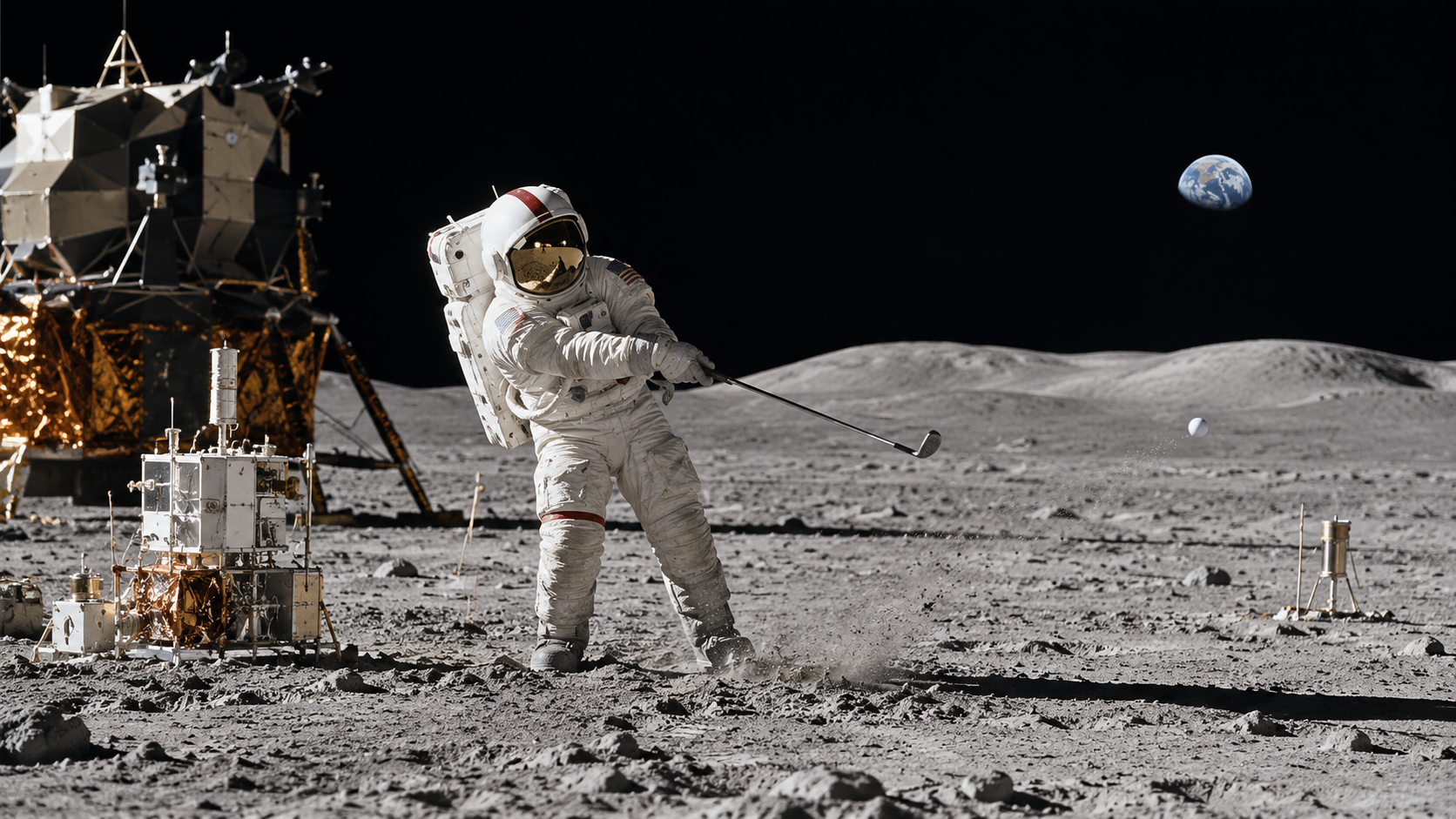
On February 6, 1971, Apollo 14 commander Alan Shepard turned the Moon into the most improbable golf course in history. Near the end of the mission’s second moonwalk, he attached a six-iron head to a sample-collection handle, produced two golf balls, and swung one-handed in his pressure suit. The gesture lasted moments but instantly humanized an intensely technical expedition. The occasion became memorable because a large historical shift took a form people could see and feel. It joined public significance with an ordinary action, turning an abstract change into a shared experience that could be described at dinner tables and remembered later.
Shepard had returned to space after an inner-ear condition grounded him for years. Apollo 14 carried him, Edgar Mitchell, and Stuart Roosa on the program’s third successful lunar landing. The surface crew spent more than nine hours outside the lunar module, deployed experiments, gathered rocks, and hauled equipment across the Fra Mauro terrain. The golf shot came only after demanding scientific work. Seen against its background, the moment was the product of sustained work rather than sudden inspiration. Earlier advocates, craftspeople, researchers, performers, organizers, or users supplied the knowledge and pressure that allowed the event to happen when it did.
Bulky gloves and limited movement made a conventional swing impossible. Shepard’s first attempt barely moved the ball, while another traveled farther in the Moon’s low gravity. His playful claim that it went “miles and miles” was comic exaggeration, but later image analysis showed a modest distance. The stunt worked because viewers understood golf’s familiar motions and could compare them with an alien environment. Its first effects unfolded through details: schedules, rooms, tools, printed pages, broadcasts, conversation, and the movement of bodies through new routines. Those details show how history enters life—not as a slogan, but as hundreds of small adjustments made by real people.
The shot became a lasting image of exploration as a human activity rather than a purely mechanical achievement. Astronauts carried humor, hobbies, and cultural references with them, even while working under strict constraints. The moment also invites questions about what people bring into new environments and how recreation helps make distant places imaginable. A backyard gesture briefly connected Earthly life with the lunar surface. Later generations inherited both the achievement and its unresolved tensions. The event helped establish a durable practice or institution, yet its meaning continues to evolve as society asks harder questions about inclusion, power, environmental cost, memory, and cultural ownership. The anniversary also reminds us that everyday life is where large historical forces become personal, repeated, debated, and ultimately durable.
He attached a six-iron head to a lunar sample handle and swung one-handed while wearing his pressure suit.
This detail helps place the anniversary in its original setting.
No. Apollo 14 focused on scientific experiments, rock collection, and exploration; the shots came near the end of the second moonwalk.
The wider context explains why the moment drew public attention.
A familiar recreational gesture made the distant lunar landscape feel unexpectedly personal and human.
Its legacy remains visible in contemporary culture and everyday life.
Explore more of “This Day in Lifestyles”
Discover more moments in everyday life, design, education, travel, food, fashion, and culture. Each story connects a calendar date with an event that changed how people lived.