

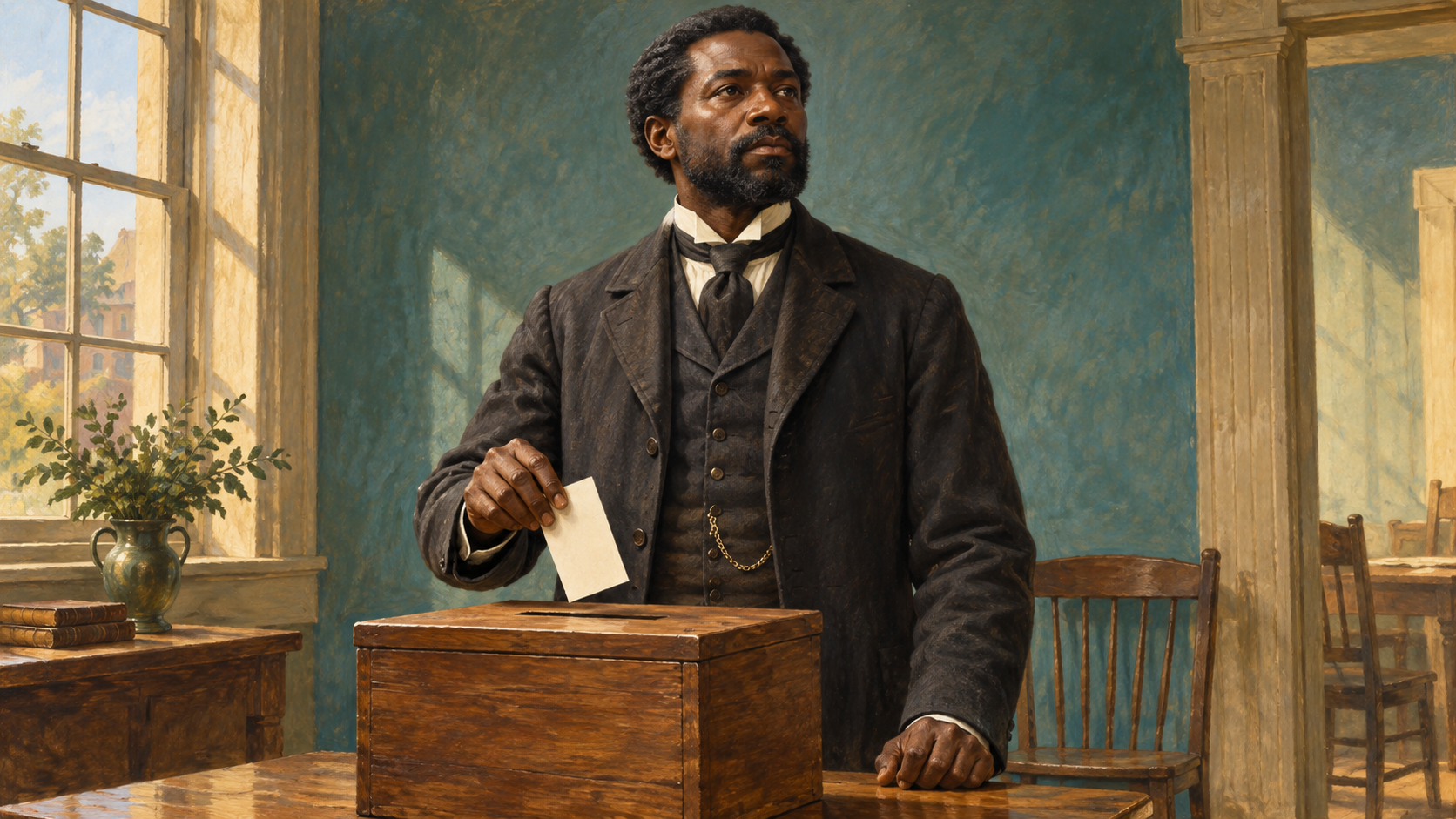
On This Day in Politics: February 3, 1870
On February 3, 1870, the Fifteenth Amendment to the United States Constitution reached ratification, establishing a national prohibition against denying citizens the vote because of race, color, or previous enslavement. The achievement followed congressional action in Washington and a campaign for approval in state legislatures. Senator William Stewart of Nevada had helped guide the proposal through the Senate. For Black Americans and their allies, the amendment represented a major constitutional advance after the Civil War. It restricted the grounds on which governments could exclude voters and gave Congress authority to enforce that restriction. Yet the amendment’s adoption did not immediately make elections equally accessible throughout the country.
The measure was the third of the Reconstruction amendments. The Thirteenth abolished slavery, while the Fourteenth established national citizenship and equal protection. Voting required a further safeguard because freedom and citizenship did not automatically settle who could cast a ballot. Congress approved the Fifteenth Amendment in February 1869, and the states then considered whether to ratify it. Its language targeted racial discrimination rather than establishing universal adult suffrage. States retained considerable control over voter qualifications, leaving openings that opponents of Black political participation would exploit. Women did not gain a nationwide constitutional protection against sex discrimination in voting from this amendment.
Black political participation was already changing public life during Reconstruction, and the amendment supplied an additional constitutional foundation for it. Later in February 1870, Hiram Revels of Mississippi became the first African American to serve in the United States Senate. His arrival followed election by Mississippi’s legislature and a separate debate over his eligibility, rather than an election triggered by the amendment on February 3. Such distinctions matter: ratification strengthened a broader transformation involving organizing, state politics, and federal policy. Black officeholders and voters nevertheless faced determined resistance. In subsequent decades, Southern states used literacy tests, grandfather clauses, and other devices to remove Black citizens from the electorate while avoiding an explicit racial prohibition in the wording of their voting rules.
The resulting gap between constitutional protection and political reality endured for generations. Civil rights organizations and individual reformers continued the struggle to make voting rights effective. In 1965, Congress enacted the Voting Rights Act, creating stronger federal tools against discriminatory practices and authorizing federal supervision of registration where necessary. That later legislation demonstrated the importance of the amendment’s enforcement provision: a constitutional rule required institutions willing and able to apply it. February 3 therefore marks both an enduring achievement and an unfinished task at the moment of ratification. The amendment changed the Constitution, but equal access to the ballot depended on sustained action against the barriers erected around it.
The Reconstruction amendments addressed different problems. Ending slavery, defining citizenship, and protecting voting against racial exclusion were related but distinct constitutional changes.
Congressional approval sent the proposed voting amendment to state legislatures. Ratification depended on the states, rather than on a presidential signature.
The amendment bound both federal and state governments. Its second section assigned Congress an explicit role in enforcing the new protection through legislation.
The text did not erase every voting qualification. That limited wording left room for restrictions that were presented as neutral while operating to exclude Black citizens.
Revels's Senate service illustrated the political possibilities of Reconstruction. His admission on February 25 was a separate event, following Mississippi's readmission to congressional representation.
The Voting Rights Act of 1965 pursued enforcement nearly a century later. The interval shows why adopting a right and making it usable must be understood as different stages.
Explore more of "On This Day ..."
Discover more events from the same date across news, politics, technology, sports, and other fields. Each link highlights significant moments that shaped history on different fronts.