

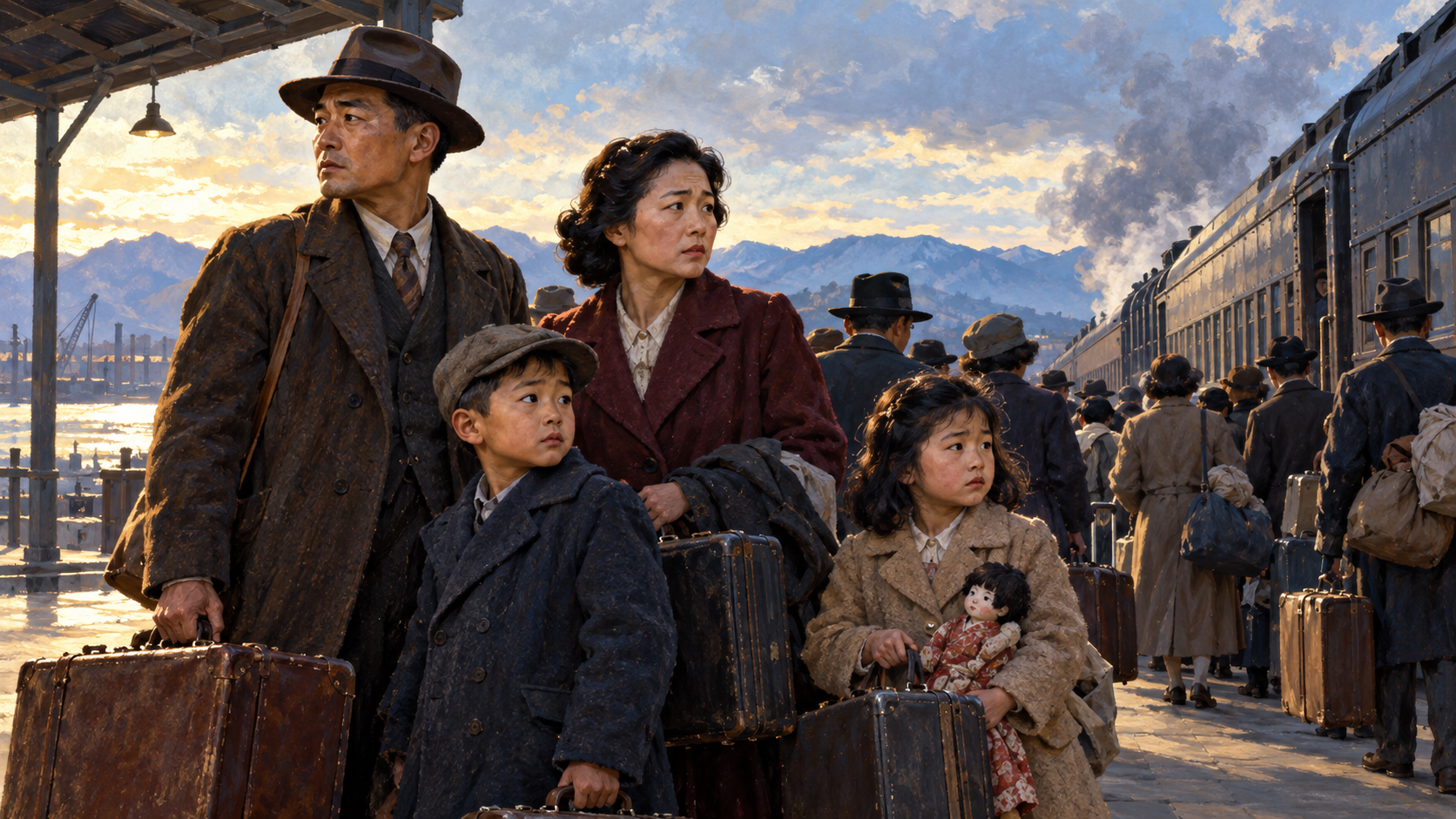
On This Day in Politics: February 19, 1942
On February 19, 1942, President Franklin D. Roosevelt signed Executive Order 9066, authorizing the military to designate areas from which people could be excluded. The order became the foundation for the forced removal and incarceration of Japanese Americans during the Second World War. Its language did not name a particular ethnic group, but its implementation on the West Coast targeted people of Japanese ancestry, including American citizens. The signing therefore stands as a major example of how broad emergency authority can be used to strip a population of liberty without individual evidence that its members have committed a crime.
The decision came after Japan’s attack on Pearl Harbor, amid fear of further attacks and longstanding anti-Asian prejudice. Japanese immigrant communities had already faced restrictions on citizenship, land ownership, and equal treatment. Wartime anxiety intensified those pressures rather than creating them from nothing. Political demands for exclusion treated ancestry as a measure of danger and made collective suspicion a substitute for individual assessment. The order empowered the secretary of war and designated military commanders to control entry, residence, and departure within military areas. It also directed federal agencies to assist, turning a presidential decision into an administrative system with sweeping practical consequences.
The mass removal did not occur everywhere on the day the order was signed. Subsequent military proclamations, legislation, and administrative decisions carried it into effect. More than 120,000 people of Japanese ancestry were uprooted and confined, many of them citizens by birth. Families lost freedom, interrupted schooling and work, and often suffered severe property losses. People were moved through temporary assembly facilities and into guarded camps far from their homes. The bureaucratic language of relocation obscured the coercion involved. The distinction between the order and its implementation matters, but it does not diminish the order’s role in enabling a policy that imposed punishment-like conditions on an entire community.
The federal government eventually acknowledged the injustice. The Civil Liberties Act of 1988 provided an official apology and compensation for eligible survivors, following years of activism and a congressional commission’s investigation. Redress could not restore the years lost or fully repair the damage to families and communities. It did establish that the wartime policy should be remembered as a failure of government rather than accepted as an unavoidable security measure. February 19 remains a warning about the gap between constitutional promises and their protection in practice. Rights require particular vigilance when officials invoke urgency, public fear is intense, and a minority is asked to bear the costs of collective suspicion.
Wartime fear operated alongside earlier discrimination against Japanese immigrants and their American-born children. The policy drew on an existing pattern of exclusion.
The order authorized military areas and restrictions without naming an ethnic group. Its implementation nonetheless targeted Japanese ancestry on the West Coast.
Military orders and administrative action followed the presidential signature. The mass incarceration was a developing system rather than a single-day removal.
Citizenship did not protect tens of thousands of those affected. Families experienced confinement, disrupted education, and major economic losses.
The 1988 redress law acknowledged injustice after sustained organizing by survivors and supporters.
The anniversary asks how institutions can protect individual rights when fear encourages government to treat identity itself as evidence of danger.
Explore more of "On This Day ..."
Discover more events from the same date across news, politics, technology, sports, and other fields. Each link highlights significant moments that shaped history on different fronts.