

On This Day in Politics: February 21, 1972
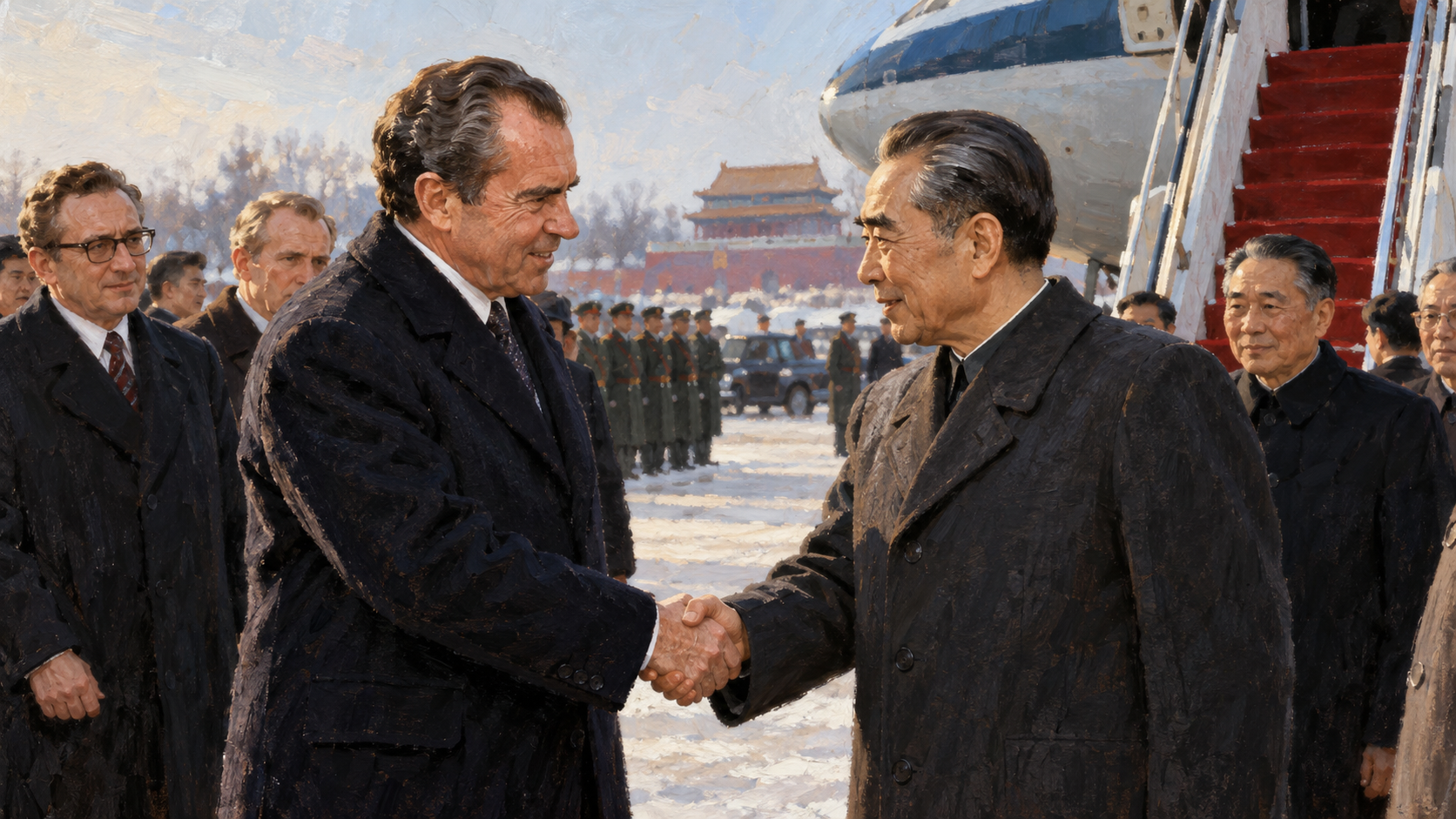
On February 21, 1972, President Richard Nixon arrived in Beijing, beginning a visit that changed the direction of relations between the United States and the People’s Republic of China. Premier Zhou Enlai greeted him at the airport, and Nixon met Mao Zedong later that day. The encounter was striking because the two governments had spent decades in hostility and lacked formal diplomatic relations. Nixon became the first sitting American president to visit mainland China. The arrival was both a public diplomatic gesture and the opening of substantive discussions about how two adversaries might manage their differences without pretending those differences had disappeared.
The division dated to the Chinese civil war and the establishment of the People’s Republic in 1949. The United States continued to recognize the Republic of China government on Taiwan, while Beijing regarded Taiwan as part of China. These competing positions made a simple diplomatic reconciliation impossible. The Cold War also shaped the opening, as both governments reassessed their strategic interests. Preparatory contacts and Henry Kissinger’s earlier diplomacy helped make the presidential trip possible. The visit therefore represented the visible result of groundwork carried out before the television cameras recorded the airport greeting, rather than a sudden change produced by a handshake alone.
Talks during the week addressed the difficult relationship between strategic cooperation and unresolved disputes. The Shanghai Communiqué, issued near the end of the visit, recorded positions rather than eliminating every disagreement. Taiwan remained a central obstacle, and the language chosen by the two sides allowed movement toward better relations without immediate agreement on all underlying claims. The February 21 meetings began that public phase of engagement. They also gave leaders a chance to assess one another directly, an important political function when official contact had been limited and assumptions about the other side had hardened over many years.
The visit did not establish full diplomatic relations on the spot; that step came in 1979. Nor did it end the broader conflicts and rivalries of the Cold War. Its significance was to make sustained engagement possible and to alter the diplomatic choices available to both governments. The distinction between opening a relationship and resolving it is central to the event’s legacy. February 21 recalls a moment when leaders chose conversation with a major adversary while continuing to disagree on fundamental issues. It remains an example of diplomacy as a process of creating room for future decisions, with symbolic gestures gaining importance because they were connected to negotiation and subsequent institutional change.
The United States and the People’s Republic had lacked formal diplomatic relations. Taiwan and the legacy of the Chinese civil war remained central disputes.
Preparatory diplomacy made the visit possible before Nixon landed. The public ceremony was the visible part of a longer process.
Zhou Enlai greeted Nixon on February 21, and Nixon met Mao that day. The visit continued through the following week.
The Shanghai Communiqué recorded areas of agreement and disagreement. It created a basis for further relations without resolving every issue.
Formal diplomatic normalization followed in 1979, so the 1972 visit should be understood as an opening rather than the completion of that process.
The event illustrates how direct engagement can change strategic possibilities even when governments retain sharply different political systems and interests.
Explore more of "On This Day ..."
Discover more events from the same date across news, politics, technology, sports, and other fields. Each link highlights significant moments that shaped history on different fronts.