

On This Day in Business: March 27, 1999
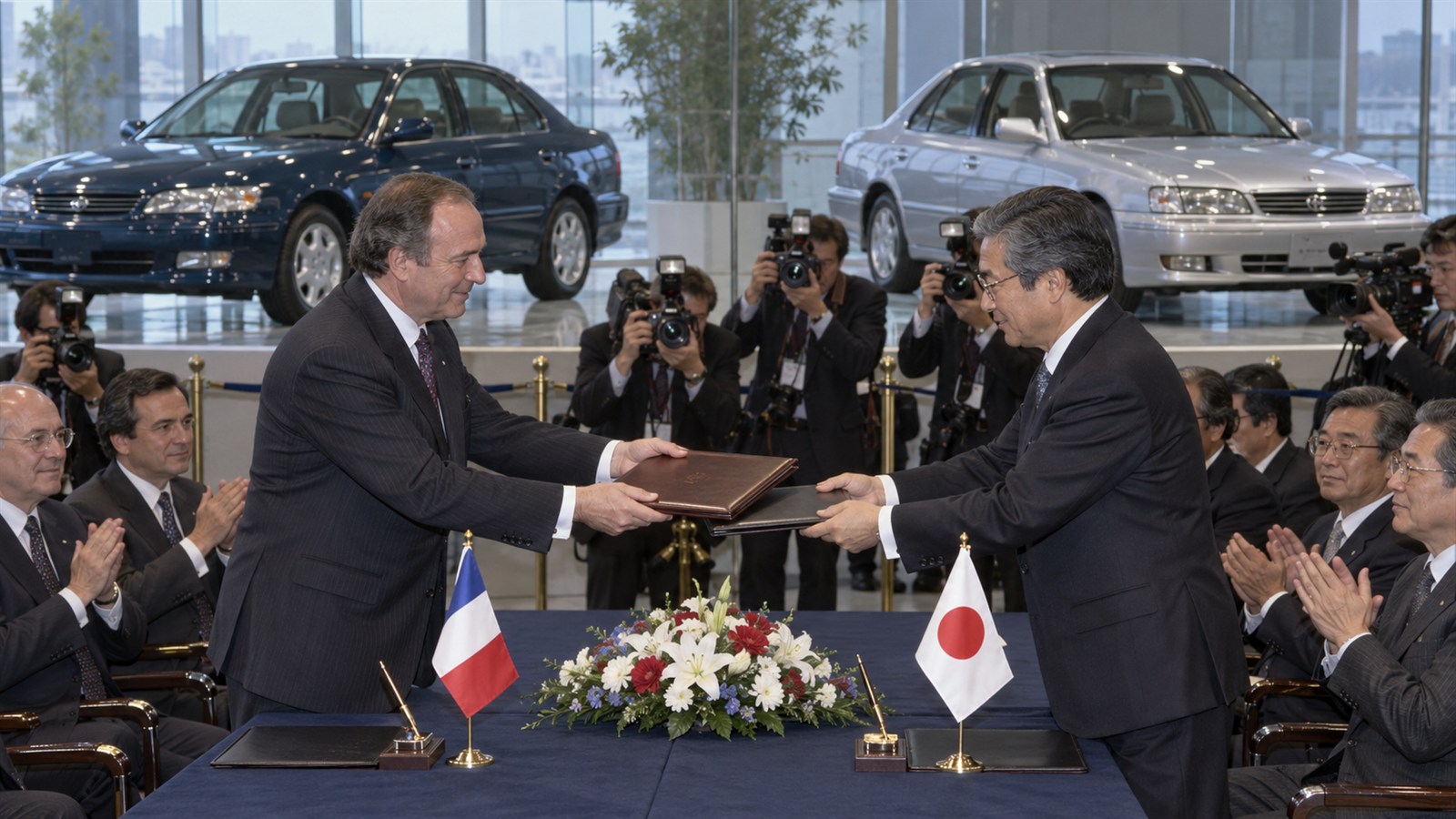
On March 27, 1999, Renault and Nissan signed the agreement that created their automotive alliance. Nissan possessed valuable engineering, factories, and global brands but carried heavy debt and struggled with weak profitability. Renault sought greater international reach and scale beyond Europe. Under the deal, Renault invested in Nissan and later held a substantial ownership stake, while Nissan eventually acquired a smaller position in Renault. The companies remained legally distinct rather than completing a conventional merger, an unusual structure intended to combine resources while preserving identities.
The alliance promised savings through shared purchasing, platforms, powertrains, logistics, and development. Those benefits could not be achieved by contract language alone. Cross-company teams had to compare processes, challenge internal loyalties, and choose common components without erasing customer-facing differences. Carlos Ghosn was sent to lead Nissan and introduced a revival plan with plant closures, supplier changes, debt reduction, and performance targets. The turnaround strengthened belief that a cross-border partnership could create value without full integration.
The structure also contained enduring tensions. Ownership was unequal, voting rights differed, and the French government's stake in Renault added a political dimension. As leadership and markets changed, questions about control, governance, culture, and the distribution of benefits became harder to manage. Ghosn's 2018 arrest and removal intensified the crisis. Renault, Nissan, and Mitsubishi later revised their arrangements, reducing some imbalances while maintaining areas of cooperation. The history shows that alliances require repeated negotiation after the original economics have changed.
The March 1999 agreement is a major case in cooperative competition. Automakers face huge development costs and can benefit from common engineering, yet their brands and national roots make outright merger difficult. An alliance can preserve flexibility and identity, but ambiguity over authority may become expensive when trust weakens. Renault and Nissan demonstrated real operating gains and global reach, while also revealing the fragility of governance built around key individuals and asymmetrical stakes. The lasting lesson is that shared assets need equally durable rules for decision-making, accountability, and renewal. The arrangement also made cultural translation an operating capability. Practices that seemed efficient in one company could appear threatening or disrespectful in the other, especially when restructuring decisions affected long-standing relationships. Cross-functional teams helped expose assumptions, but genuine cooperation depended on leaders who could explain shared goals and distribute credit. International alliances save money only when people exchange information honestly; formal ownership links cannot manufacture that trust, and concentrated personal authority can conceal how fragile it is.
Nissan faced heavy debt and weak returns, while Renault wanted global reach and scale that its primarily European position could not provide.
A cross-shareholding alliance offered capital and cooperation without the political and cultural disruption of a full legal merger.
The companies signed their agreement on March 27, 1999, and created teams to pursue purchasing, platform, logistics, and development savings.
Nissan's restructuring produced a rapid turnaround, but closures and supplier changes imposed significant costs on workers and business partners.
Later leadership crises exposed tensions over voting power, government influence, national identity, and unequal ownership arrangements.
The alliance shows that operational synergy can be real while governance must continually adapt as power, strategy, and trust change.
Explore more of "On This Day ..."
Discover more events from the same date across news, politics, technology, sports, and other fields. Each link highlights significant moments that shaped history on different fronts.