

On This Day in Business: March 30, 1987
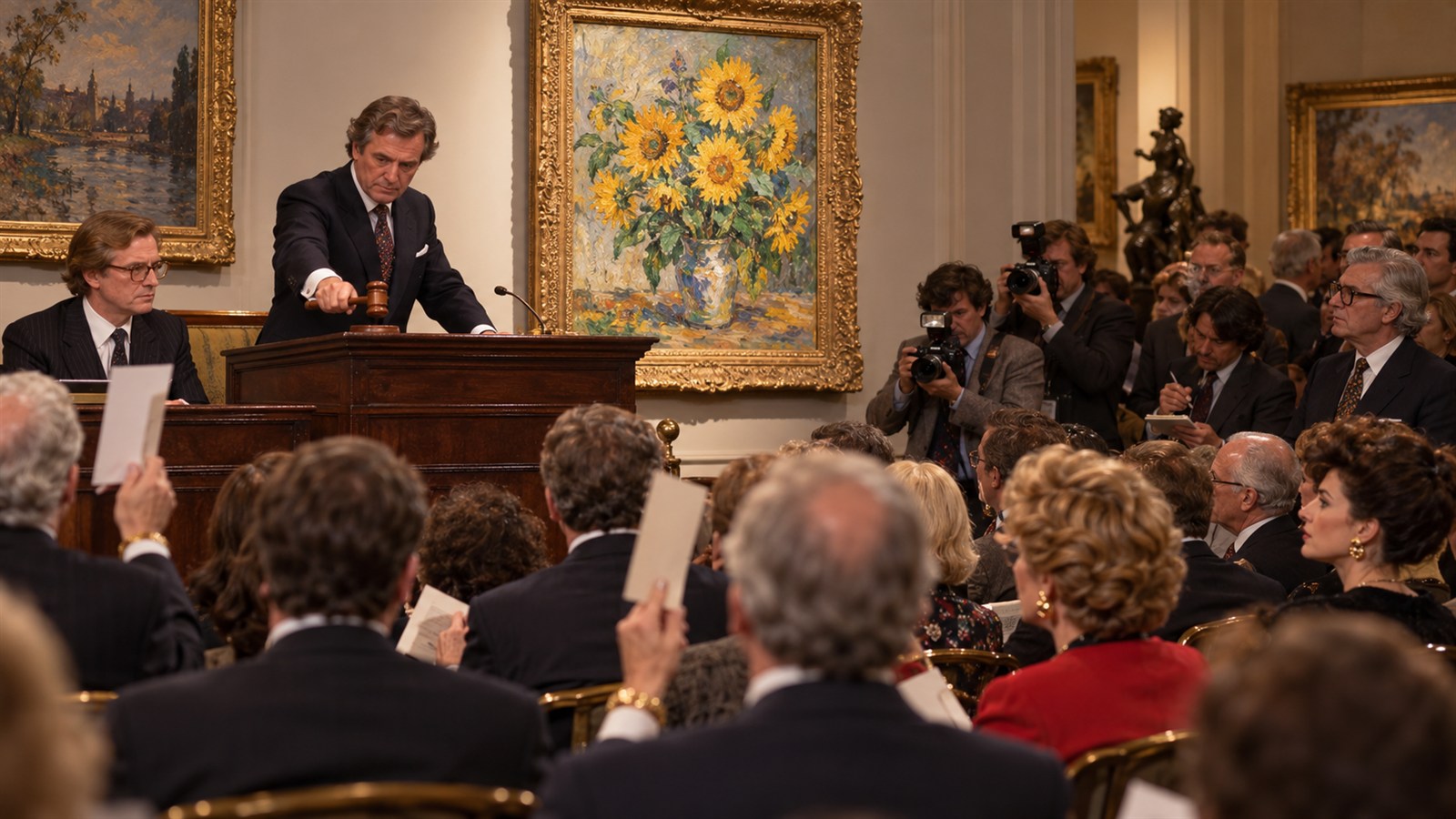
On March 30, 1987, Vincent van Gogh's Still Life: Vase with Fifteen Sunflowers sold at Christie's in London for £24.75 million, including the buyer's premium. Purchased by the Japanese insurer Yasuda Fire and Marine, the painting set an auction record for any work of art at the time. The price shocked observers because it greatly exceeded earlier public benchmarks. A canvas created by an artist who struggled financially during his life had become a scarce global asset pursued by institutions and wealthy buyers.
The sale occurred as Japanese companies and collectors were expanding their presence in international art markets. Strong asset prices, currency conditions, and corporate ambition supported headline purchases that could confer prestige as well as investment exposure. Auction houses intensified global marketing, estimates, catalog scholarship, and media coverage, turning the sale room into a public stage. Competitive bidding revealed a price, but that price also advertised the work, the buyer, the artist, and the intermediary arranging the transaction.
Art does not generate cash flow in the same way as a factory or bond, so valuation rests on rarity, condition, provenance, scholarship, taste, and expectations about future demand. A record can attract new consignments and buyers, yet it can also encourage extrapolation from one exceptional object. The late-1980s art boom later cooled as economic conditions changed. The Sunflowers purchase nevertheless remained culturally significant, and the painting became a prominent work in the collection now associated with the SOMPO Museum of Art in Tokyo.
The auction demonstrates how markets create value through trust and contest. Christie's authenticated, documented, exhibited, and marketed the work, bringing credible bidders into a transparent competition. The record did not measure artistic quality alone; it reflected scarcity, buyer capacity, timing, and the symbolic power attached to Van Gogh. March 30, 1987, changed price expectations across the art world and made auction results a form of global financial news. It also cautions that a dramatic public sale is a data point, not a complete valuation model for every related object. Corporate ownership added another dimension to the purchase. A museum-quality artwork could support public reputation, employee pride, hospitality, and cultural philanthropy while remaining an asset on a balance sheet. Those benefits are difficult to quantify and may encourage prices that a purely financial buyer would reject. Yasuda's acquisition showed how strategic and symbolic motives can enter an auction together, making the winning bid a statement about institutional identity as well as expectations of monetary value.
Van Gogh's Sunflowers paintings combined extraordinary art-historical recognition with the scarcity and provenance valued by top collectors.
International wealth, Japanese corporate buying, currency conditions, and auction-house marketing strengthened demand for trophy works in the 1980s.
At Christie's on March 30, 1987, Vase with Fifteen Sunflowers sold for £24.75 million including premium, then an art-auction record.
A single exceptional sale could reset expectations, but fine-art prices still depended on attribution, condition, provenance, fashion, and buyer competition.
The acquisition became a prominent Japanese museum holding while the record helped globalize attention around high-value art auctions.
The sale shows how trusted intermediaries, credible documentation, scarcity, and public competition combine to establish prices for unique assets.
Explore more of "On This Day ..."
Discover more events from the same date across news, politics, technology, sports, and other fields. Each link highlights significant moments that shaped history on different fronts.