

On This Day in Lifestyles: March 7, 1876
On March 7, 1876, The U.S. Patent Office granted Alexander Graham Bell Patent No. 174,465 for improvements in telegraphy. The document described transmitting vocal or other sounds electrically, placing a legal marker beside experiments that Bell, Thomas Watson, and rival inventors were rapidly pursuing. The date matters in lifestyle history because the human voice could become an electrical service rather than something limited by physical presence. Rather than remaining an isolated announcement or demonstration, the moment gave people a new way to think about calling family, conducting business, seeking help, and coordinating everyday plans. Its importance became visible through familiar places, objects, and routines, where a broad historical change could be felt at human scale.
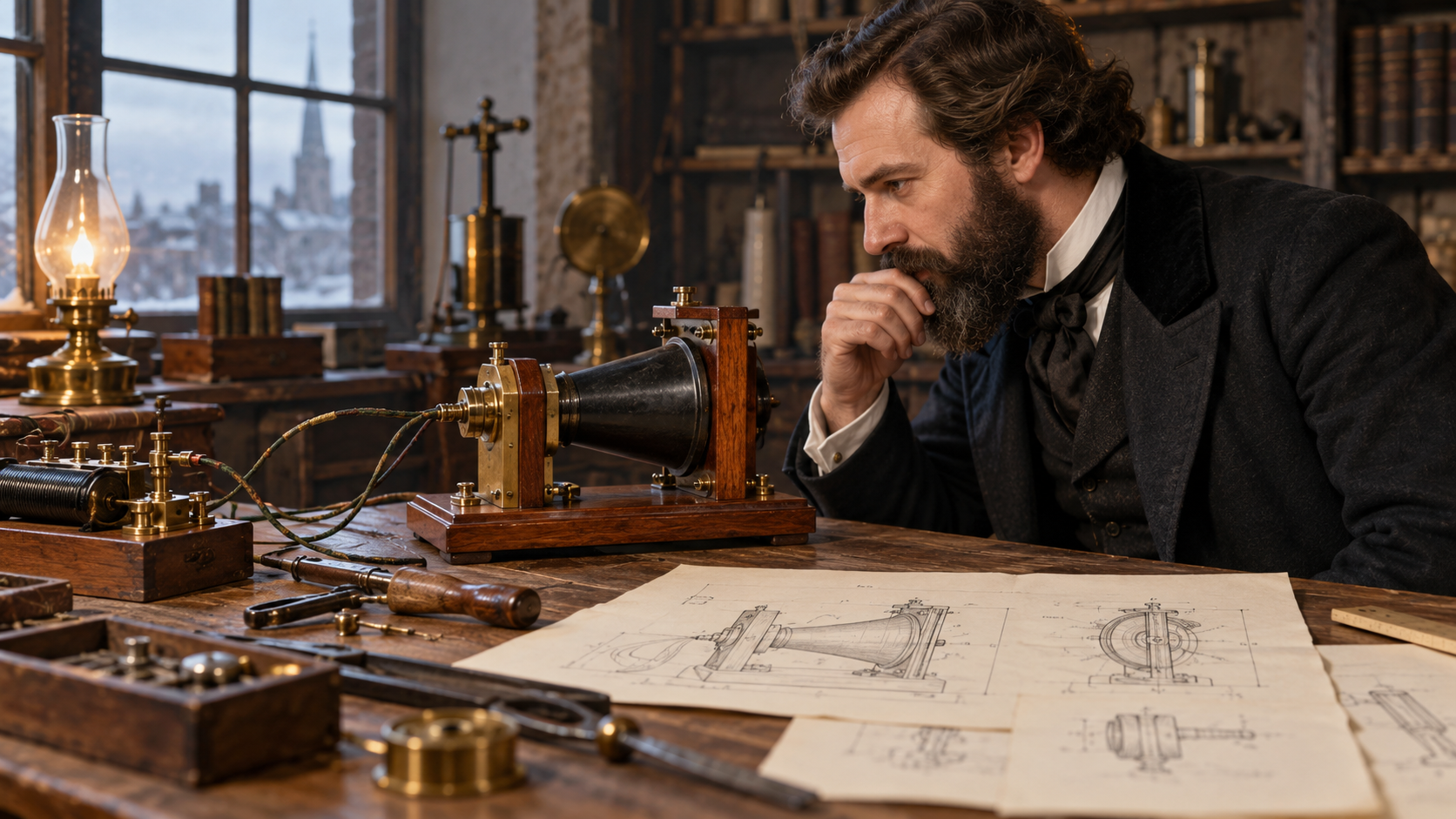
Nineteenth-century telegraph networks could send coded signals, but transmitting the complexity of speech required new thinking about electricity, vibration, and sound. Bell’s drawings and claims were part of a crowded field in which timing, documentation, capital, and courtroom arguments mattered greatly. The setting shaped how contemporaries understood the event. inventors, patent examiners, investors, operators, subscribers, workers, and distant relatives encountered it through patent documents, demonstrations, telephone exchanges, wires, directories, switchboards, and later mobile networks. Those details show that social change usually travels through ordinary systems such as workplaces, schools, shops, homes, streets, or public institutions. What seems inevitable in hindsight depended on people testing, organizing, purchasing, teaching, maintaining, or protecting the idea in real time.
The patent did not instantly produce a national phone system, yet it helped Bell’s organization attract investment and defend a technology that soon entered businesses and homes. Talking across distance gradually altered appointments, family news, emergency response, customer service, and the pace of work. In daily life, people learned new greetings, shorter forms of conversation, appointment habits, and expectations of immediate reachability. The episode also exposed questions about competing invention claims, corporate control, privacy, unequal service, and the social pressure to remain available. Access and influence were never perfectly even, and later generations adapted the original development to different communities, values, and technologies. Still, the event changed expectations by making real-time conversation across distance easier to imagine, recognize, or demand.
Telephony expanded from operators and shared party lines to direct dialing, mobile networks, and internet calling. Questions about monopoly power, privacy, access, etiquette, and who receives credit have followed the technology throughout that history. Today, echoes remain in mobile phones, voice calls, video meetings, emergency lines, and debates about constant connection. Looking back helps separate the documented milestone from the myths that often accumulate around famous anniversaries. It also reminds us that lifestyle history is built from choices about design, health, work, leisure, communication, memory, and public space. On this day, the 1876 patent was a legal step toward making spoken distance part of ordinary life.
The U.S. Patent Office granted Alexander Graham Bell Patent No. 174,465 for improvements in telegraphy. The document described transmitting vocal or other sounds electrically, placing a legal marker beside experiments that Bell, Thomas Watson, and rival inventors were rapidly pursuing.
Nineteenth-century telegraph networks could send coded signals, but transmitting the complexity of speech required new thinking about electricity, vibration, and sound. Bell’s drawings and claims were part of a crowded field in which timing, documentation, capital, and courtroom arguments mattered greatly.
The patent did not instantly produce a national phone system, yet it helped Bell’s organization attract investment and defend a technology that soon entered businesses and homes. Talking across distance gradually altered appointments, family news, emergency response, customer service, and the pace of work.
The larger theme was that the human voice could become an electrical service rather than something limited by physical presence.
Telephony expanded from operators and shared party lines to direct dialing, mobile networks, and internet calling. Questions about monopoly power, privacy, access, etiquette, and who receives credit have followed the technology throughout that history.
Today the story remains visible in mobile phones, voice calls, video meetings, emergency lines, and debates about constant connection.
Explore more of “This Day in Lifestyles”
Discover more moments in everyday life, design, education, travel, food, fashion, and culture. Each story connects a calendar date with an event that changed how people lived.