

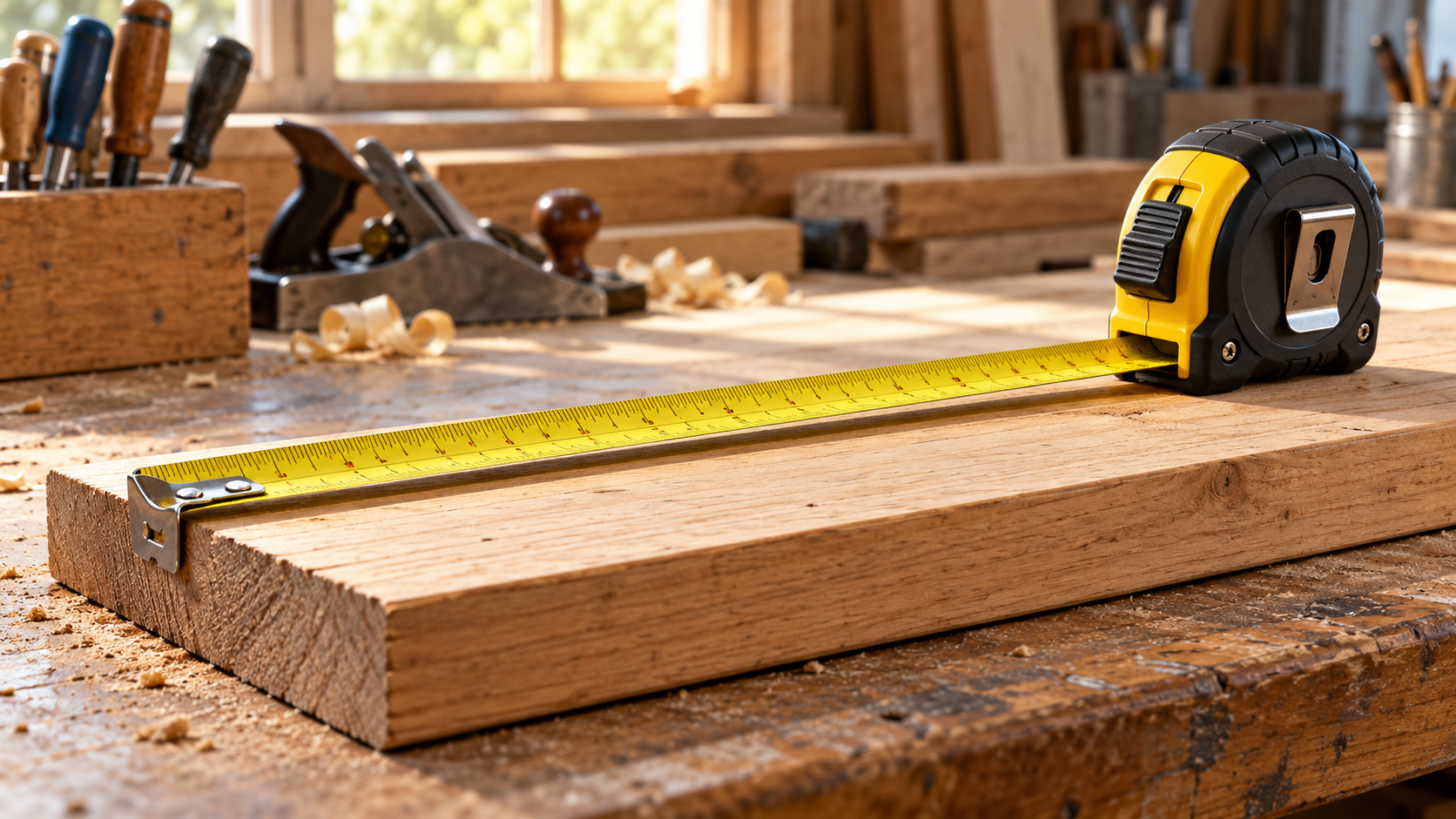
Retractable Tape Measure Explainer
Inside a retractable tape measure, most of the steel blade is wound around a reel. A long flat spring connects the reel to the case. Pulling the blade turns the reel and winds the spring more tightly, storing elastic energy. Releasing the blade lets the spring rotate the reel in the opposite direction and draw the tape back into the housing. The familiar snap is therefore not powered by a motor; it is energy the user stored while extending the tape.
The blade is slightly curved across its width. That cross-sectional arc increases stiffness, allowing a length of tape to extend without immediately folding. The distance it can remain unsupported is called standout. A wider, deeper-curved, or thicker blade may stand out farther but also requires more case space and spring force. If twisted or bent sharply, the arc collapses and the blade kinks, so the stiffness works best when the tape remains aligned.
A sliding thumb lock moves an internal brake toward the blade or reel. In many designs, it wedges a pad against the blade near the case opening, creating enough friction to resist the return spring. Other locks engage teeth on the reel. The button stays in its locked position through a detent or over-center geometry until the user releases it. The mechanism must hold securely without creasing the thin steel, so shaped supports guide the blade through the clamped area.
The metal hook at the free end is intentionally able to slide by approximately its own thickness. When hooked over an outside edge, it pulls outward; when pushed against an inside surface, it shifts inward. That movement compensates for the hook material so both measurements can begin at the blade’s true zero. Loose rivets within the intended travel are not necessarily a defect. A bent hook, clogged slot, or excessive looseness, however, introduces error.
Retraction can move the hook fast enough to cut fingers, strike the case, or damage the first markings. A bumper in the housing absorbs some impact, but the user should guide the blade back at a controlled speed. The tape should not be allowed to whip across people or electrical hazards. Moisture and grit can corrode the blade and contaminate the reel. Wiping it dry during slow retraction protects both the printed surface and the internal spring.
The tape measure combines several forms of mechanical behavior in one pocket tool: a curved beam for temporary stiffness, a spiral spring for energy storage, a friction brake for locking, and a floating hook for zero compensation. None is accurate forever. Kinks, stretched rivets, worn printing, a damaged hook, or a case dropped out of square can affect results. For critical work, the tool should be compared with a known reference and replaced when its mechanism no longer returns or locks predictably.
Pulling the blade turns a reel and winds a flat return spring. A thumb control clamps the blade or reel against that spring. Key terms include blade, cross curve, standout, reel, flat spring, brake, detent, hook, and bumper.
Its travel compensates for the hook’s thickness: it pulls out for outside measurements and pushes in for inside measurements, keeping zero at the work edge.
The return spring can accelerate the hook dangerously. Guiding it prevents cuts, impact damage, kinks, and wear at the case opening.
Explore more "Explainers"
Discover additional explainers across politics, science, business, technology, and other fields. Each explainer breaks down a complex idea into clear, everyday language—helping you better understand how major concepts, systems, and debates shape the world around us.