

On This Day in Lifestyles: March 20, 1852
On March 20, 1852, Harriet Beecher Stowe’s Uncle Tom’s Cabin was published in book form in Boston after appearing serially in the antislavery newspaper The National Era. Its scenes of families separated under slavery, escape, violence, faith, and resistance reached a vast readership in the tense decade before the Civil War. The date matters in lifestyle history because a bestselling novel carried the national conflict over slavery into domestic reading life. Rather than remaining an isolated announcement or demonstration, the moment gave people a new way to think about reading aloud, debating politics at home, attending adaptations, and using fiction to frame moral questions. Its importance became visible through familiar places, objects, and routines, where a broad historical change could be felt at human scale.
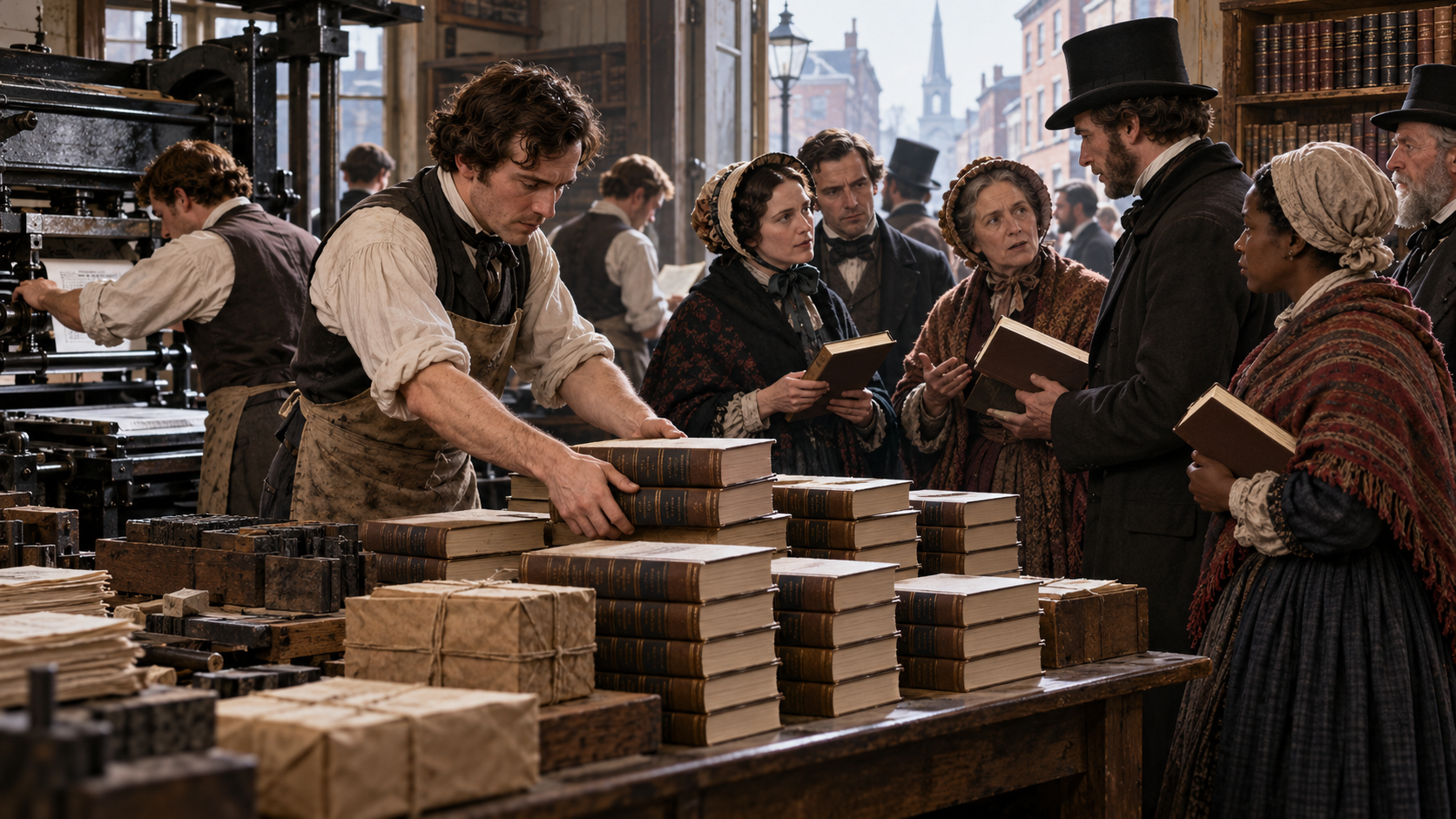
The expansion of print culture allowed a novel to travel through bookshops, parlors, churches, newspapers, lending circles, and public readings. Stowe drew on abolitionist writing, testimony, law, and religious argument, using sentimental fiction to ask readers to treat slavery as a moral and domestic crisis. The setting shaped how contemporaries understood the event. enslaved people, abolitionists, readers, publishers, clergy, actors, critics, and Black writers challenging stereotypes encountered it through newspaper serialization, books, public readings, churches, theater, illustrations, reviews, and political argument. Those details show that social change usually travels through ordinary systems such as workplaces, schools, shops, homes, streets, or public institutions. What seems inevitable in hindsight depended on people testing, organizing, purchasing, teaching, maintaining, or protecting the idea in real time.
The book energized many antislavery readers and provoked fierce proslavery replies, plays, illustrations, products, and political discussion. It also created racial stereotypes that later adaptations exaggerated, making the work influential and harmful in ways that modern study must address together. In daily life, families and communities discussed slavery through characters and scenes that made distant policy feel personal. The episode also exposed questions about antislavery advocacy, racial stereotyping, authorship, commercial spectacle, and whose voices define historical experience. Access and influence were never perfectly even, and later generations adapted the original development to different communities, values, and technologies. Still, the event changed expectations by making wider public attention to the human violence of slavery easier to imagine, recognize, or demand.
Few American novels have had a more visible public afterlife. Reading it now requires attention to enslaved people’s own narratives, Black criticism, performance history, and the difference between mobilizing sympathy and representing lives with full agency. Today, echoes remain in classrooms, archives, scholarship, adaptations, antiracist critique, and continuing study of literature’s political power. Looking back helps separate the documented milestone from the myths that often accumulate around famous anniversaries. It also reminds us that lifestyle history is built from choices about design, health, work, leisure, communication, memory, and public space. On this day, the 1852 publication shows how a book can move public feeling while carrying limits that later readers must confront.
Harriet Beecher Stowe’s Uncle Tom’s Cabin was published in book form in Boston after appearing serially in the antislavery newspaper The National Era. Its scenes of families separated under slavery, escape, violence, faith, and resistance reached a vast readership in the tense decade before the Civil War.
The expansion of print culture allowed a novel to travel through bookshops, parlors, churches, newspapers, lending circles, and public readings. Stowe drew on abolitionist writing, testimony, law, and religious argument, using sentimental fiction to ask readers to treat slavery as a moral and domestic crisis.
The book energized many antislavery readers and provoked fierce proslavery replies, plays, illustrations, products, and political discussion. It also created racial stereotypes that later adaptations exaggerated, making the work influential and harmful in ways that modern study must address together.
The larger theme was that a bestselling novel carried the national conflict over slavery into domestic reading life.
Few American novels have had a more visible public afterlife. Reading it now requires attention to enslaved people’s own narratives, Black criticism, performance history, and the difference between mobilizing sympathy and representing lives with full agency.
Today the story remains visible in classrooms, archives, scholarship, adaptations, antiracist critique, and continuing study of literature’s political power.
Explore more of “This Day in Lifestyles”
Discover more moments in everyday life, design, education, travel, food, fashion, and culture. Each story connects a calendar date with an event that changed how people lived.