

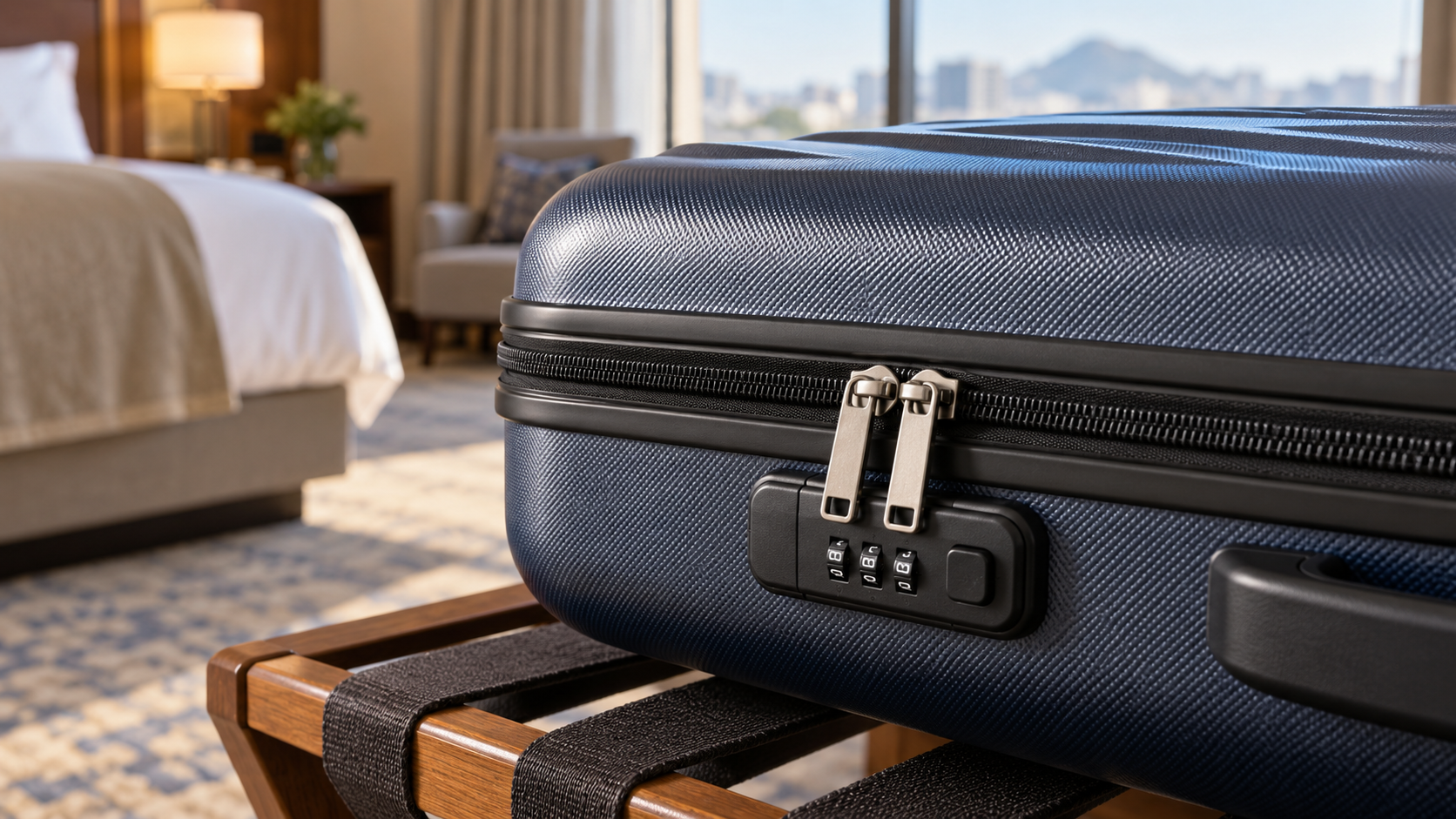
Suitcase Combination Lock Explainer
A typical three-wheel suitcase lock contains numbered dials connected to internal sleeves or discs. Each sleeve has a gate, which is a notch or flat section. Turning a dial rotates its sleeve while the lock is in normal use. A spring-loaded release bar or fence presses against all three sleeves. If even one gate is out of position, solid material blocks the bar. When the chosen numbers align every gate in one row, the bar can move and release the zipper pulls, shackle, or suitcase latch.
The visible numbers are only references for the hidden gate positions. During factory assembly, the sleeve and dial are indexed to a default combination. Resetting temporarily disengages each dial from its sleeve or shifts the mechanism into a code-setting position. The gates are held in the open alignment while the user rotates the visible dials to new numbers. Returning the reset control couples them again, so those numbers will bring the gates back to the release line in future.
The release button does not usually test one number at a time. It tries to move a shared bar across all wheels simultaneously. A compression spring returns the bar and latch after the button is released. Small detents make the dials click into discrete positions and prevent them from drifting between numbers. Tolerances must be loose enough for ordinary travel dirt and case flex yet tight enough that accidental partial alignment does not release the lock.
Many travel locks include a separate inspection key cylinder recognized by an accepted security program. That cylinder moves the same latch through another authorized path without revealing or changing the traveler’s combination. The keyway does not mean a consumer key should be included. Designs vary, and the presence of a symbol or keyhole does not make the lock high security; luggage zippers, fabric, latches, and the case itself may be easier to defeat than the wheel pack.
Misalignment can occur when zipper pulls apply sideways tension, the case is overpacked, a dial rests between detents, or the reset control was not fully returned. Removing pressure from the latch and centering each wheel on its number may restore normal operation. Aggressive probing, drilling, improvised keys, or forcing the slider can damage the case and may be unlawful on property not owned by the user. The manufacturer or a qualified luggage repairer is the proper path for a forgotten or failed combination.
The lock is a compact mechanical AND gate: every wheel must present its opening before one shared part can move. The user experiences that logic as a sequence of digits, while the mechanism experiences it as physical clearance. Resetting changes the relationship between printed wheels and internal gates, not the basic latch. Its value is convenient tamper deterrence and accidental-opening prevention, best combined with identification, careful handling, and realistic expectations about luggage security.
Each numbered wheel turns an internal sleeve with a gate. The release bar moves only when all gates align. Key terms include dial, sleeve, gate, fence, release bar, detent, latch, reset mode, and inspection cylinder.
The printed numbers position hidden notches in the wheel sleeves. Only the correct set aligns all notches with the shared release bar.
Some travel locks provide an authorized inspection key path for screening personnel. The traveler normally opens the lock with the combination.
Explore more "Explainers"
Discover additional explainers across politics, science, business, technology, and other fields. Each explainer breaks down a complex idea into clear, everyday language—helping you better understand how major concepts, systems, and debates shape the world around us.