

On This Day in Lifestyles: March 26, 1953
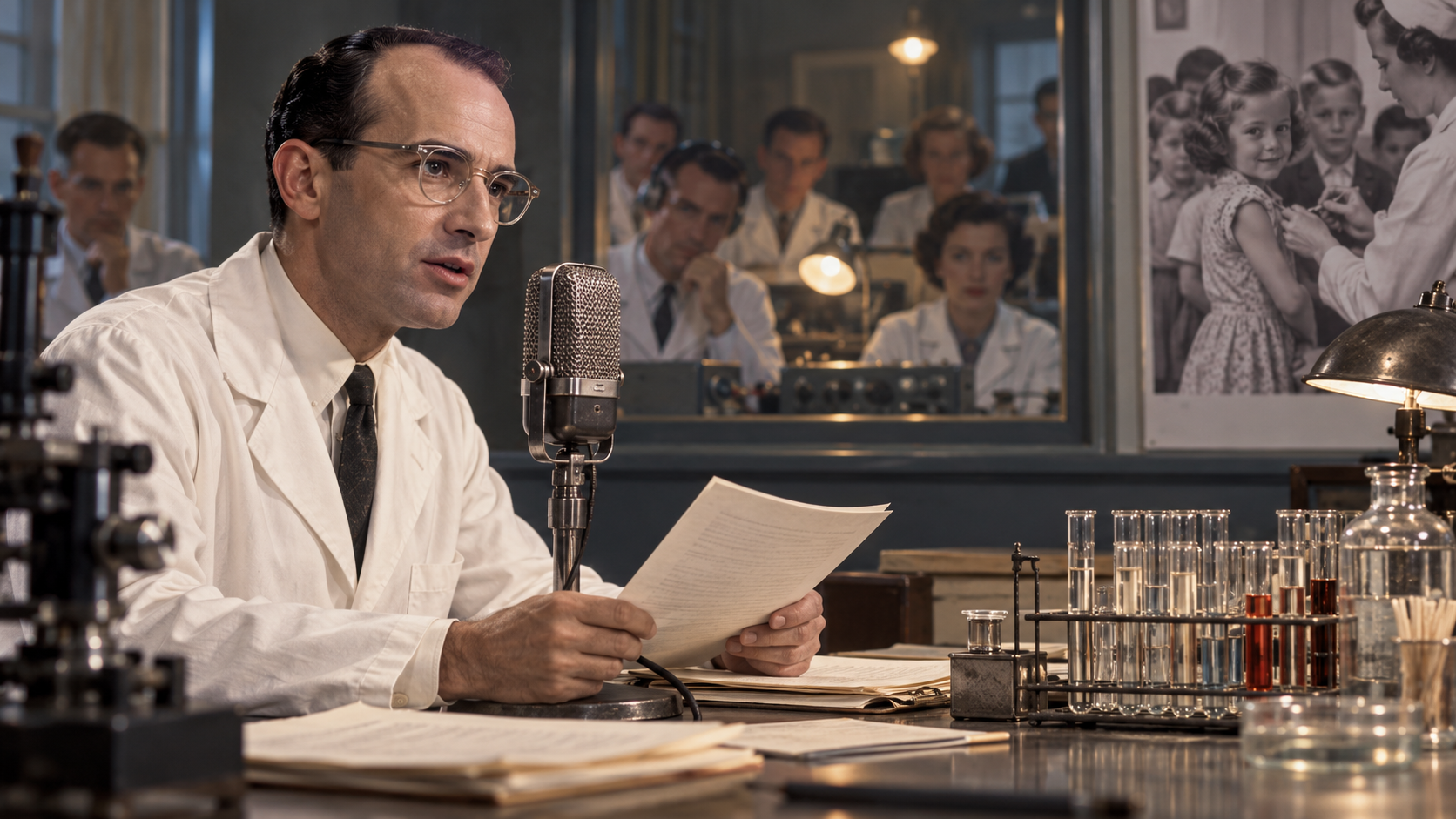
On March 26, 1953, Jonas Salk spoke on national radio about promising preliminary results from tests of an experimental killed-virus polio vaccine. The announcement came before the enormous field trial of 1954 and the 1955 declaration of safety and effectiveness, so the date marks early evidence rather than final proof. The date matters in lifestyle history because preliminary laboratory results opened a path from seasonal fear toward prevention. Rather than remaining an isolated announcement or demonstration, the moment gave people a new way to think about seeking vaccination, following trial evidence, attending clinics, and protecting children through coordinated public health. Its importance became visible through familiar places, objects, and routines, where a broad historical change could be felt at human scale.
Polio outbreaks had filled summers with fear, closed pools and gatherings, and left some children and adults paralyzed or dependent on mechanical breathing support. Researchers pursued several strategies while laboratories, hospitals, volunteers, families, and charitable fundraising supported an unprecedented public effort. The setting shaped how contemporaries understood the event. Salk, laboratory teams, trial volunteers, children, parents, nurses, physicians, statisticians, manufacturers, and donors encountered it through radio, medical journals, laboratories, schools, clinics, public campaigns, consent forms, and mass vaccination programs. Those details show that social change usually travels through ordinary systems such as workplaces, schools, shops, homes, streets, or public institutions. What seems inevitable in hindsight depended on people testing, organizing, purchasing, teaching, maintaining, or protecting the idea in real time.
The radio report brought scientific hope into living rooms while also requiring careful explanation of what remained unknown. Later trials and vaccination campaigns transformed childhood routines, school forms, clinic visits, travel expectations, and parents’ sense of risk. In daily life, families began to organize prevention around scheduled doses and trusted community clinics rather than avoidance alone. The episode also exposed questions about hope versus premature certainty, trial ethics, manufacturing safety, public trust, access, and the shared benefits of vaccination. Access and influence were never perfectly even, and later generations adapted the original development to different communities, values, and technologies. Still, the event changed expectations by making protection from a feared paralytic disease easier to imagine, recognize, or demand.
Vaccination drove polio from the United States and most of the world, though global eradication remains incomplete. The story underscores the importance of staged evidence, transparent safety monitoring, manufacturing quality, public trust, and equitable delivery. Today, echoes remain in polio immunization, eradication campaigns, vaccine-safety systems, survivor advocacy, and lessons for communicating medical evidence. Looking back helps separate the documented milestone from the myths that often accumulate around famous anniversaries. It also reminds us that lifestyle history is built from choices about design, health, work, leisure, communication, memory, and public space. On this day, the 1953 announcement mattered because it offered hope while the hardest testing still lay ahead.
Jonas Salk spoke on national radio about promising preliminary results from tests of an experimental killed-virus polio vaccine. The announcement came before the enormous field trial of 1954 and the 1955 declaration of safety and effectiveness, so the date marks early evidence rather than final proof.
Polio outbreaks had filled summers with fear, closed pools and gatherings, and left some children and adults paralyzed or dependent on mechanical breathing support. Researchers pursued several strategies while laboratories, hospitals, volunteers, families, and charitable fundraising supported an unprecedented public effort.
The radio report brought scientific hope into living rooms while also requiring careful explanation of what remained unknown. Later trials and vaccination campaigns transformed childhood routines, school forms, clinic visits, travel expectations, and parents’ sense of risk.
The larger theme was that preliminary laboratory results opened a path from seasonal fear toward prevention.
Vaccination drove polio from the United States and most of the world, though global eradication remains incomplete. The story underscores the importance of staged evidence, transparent safety monitoring, manufacturing quality, public trust, and equitable delivery.
Today the story remains visible in polio immunization, eradication campaigns, vaccine-safety systems, survivor advocacy, and lessons for communicating medical evidence.
Explore more of “This Day in Lifestyles”
Discover more moments in everyday life, design, education, travel, food, fashion, and culture. Each story connects a calendar date with an event that changed how people lived.