

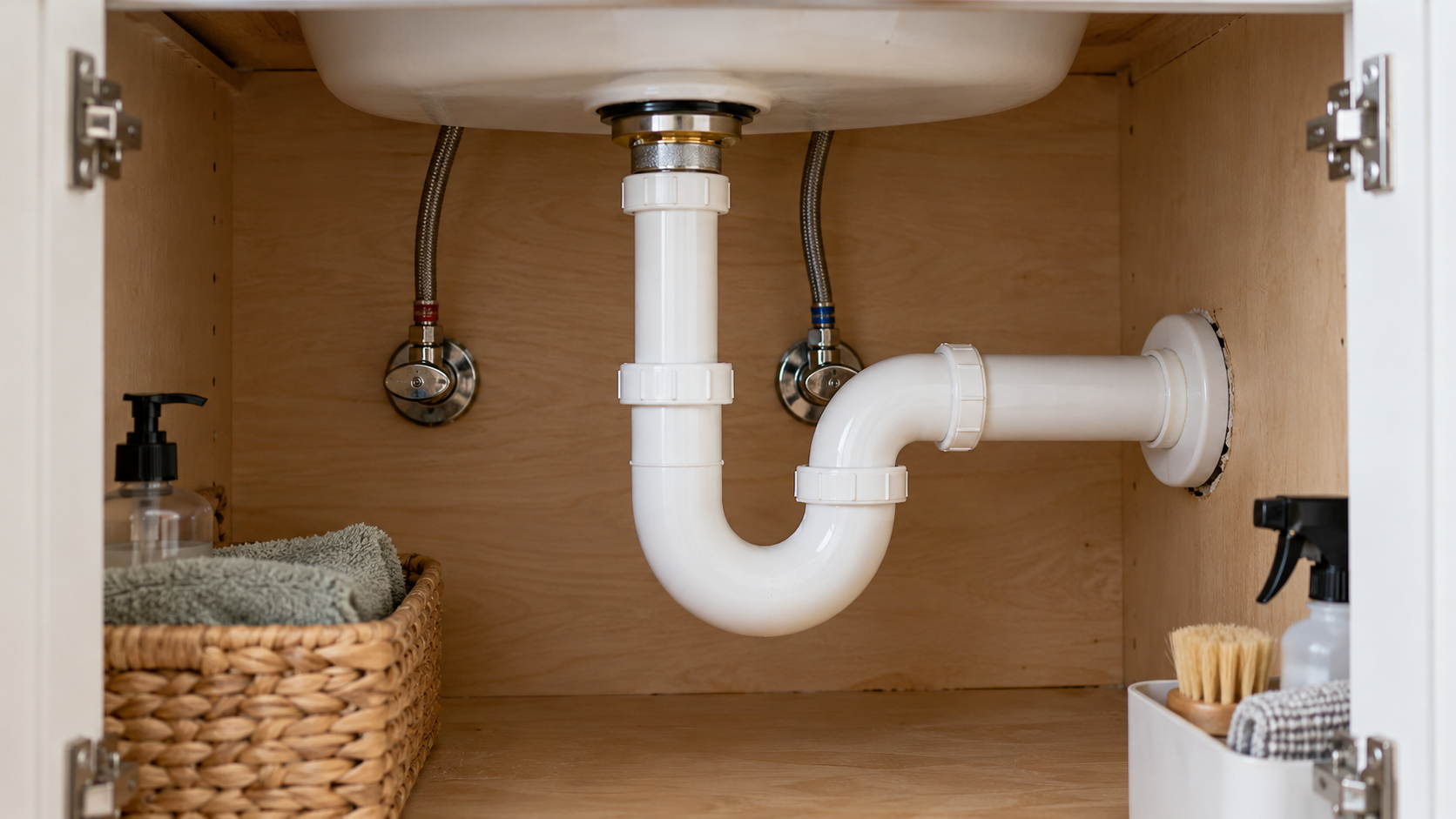
Sink P-Trap Explainer
A sink P-trap is the curved section of drainpipe directly below the fixture. Every time water runs, some remains in the bottom of the bend after the flow stops. That standing water forms a liquid plug between the room and the drainage system. Wastewater can push through the seal, but sewer gases normally cannot travel backward through it. The trap’s side profile resembles a letter P when its curved bend and horizontal trap arm are viewed together, which gives the fitting its common name.
Water leaving the sink drops through the tailpiece into the bend, displacing the water already there. The moving stream rises over the downstream side and enters the trap arm leading to the wall. When the faucet stops, gravity leaves both sides of the bend at the same level. The depth between that resting surface and the bend’s outlet is the trap seal. Plumbing codes specify acceptable geometry because a seal that is too shallow is easily lost, while an overly deep trap can drain poorly.
The nearby vent system protects that seal. A large slug of wastewater moving down a pipe can lower pressure behind it and siphon water out of an unvented trap. Positive pressure can push gas or water back toward the fixture. A vent provides a path for air so pressure stays near atmospheric while the drain flows. The trap arm must therefore connect to a properly arranged vented drain, with the slope and distance required for the pipe size and local code.
Traps also catch objects and sediment, but that is a side effect rather than their primary purpose. Hair, soap residue, grease, and food particles can accumulate at the low point until the sink drains slowly. Slip-joint traps can often be disassembled over a bucket after water is shut off and the cabinet is protected. Glued fittings, corroded metal, persistent leaks, or repeated clogs may require a plumber. Chemical drain cleaners can damage materials and create a hazard when the trap is later opened.
A dry trap no longer blocks gas. Water can evaporate from a rarely used sink, be siphoned by a vent problem, or leak through a loose joint. Running water refills a simply evaporated seal, but recurring odors call for inspection of the trap, venting, cleanout caps, seals, and nearby fixtures. A trap is not designed to contain pressure or compensate for a blocked building sewer. Gurgling, backups, or multiple slow drains point to a broader drainage problem.
The P-trap is effective because water is renewable, conforms to the pipe, and reseals itself after ordinary drainage. It has no motor or moving valve, yet it separates occupied space from an unpleasant and potentially hazardous gas pathway. Its success depends on correct shape, an unobstructed outlet, sound joints, and balanced air pressure. Seeing the bend as a deliberately maintained water seal explains both why every fixture needs a trap and why an empty or siphoned trap produces odors.
The curved trap retains water after a sink drains. That water creates a seal that blocks gases while fresh wastewater passes through. Key terms include tailpiece, bend, trap seal, trap arm, vent, siphonage, and cleanout.
A vent lets air enter or leave the drainage system so moving wastewater does not create pressure changes strong enough to siphon or blow out the trap seal.
Yes. Water can evaporate from a rarely used fixture or disappear because of leakage or siphoning. Refill an unused trap, and investigate if the loss repeats.
Explore more "Explainers"
Discover additional explainers across politics, science, business, technology, and other fields. Each explainer breaks down a complex idea into clear, everyday language—helping you better understand how major concepts, systems, and debates shape the world around us.