

Baking Soda Leavening Explainer
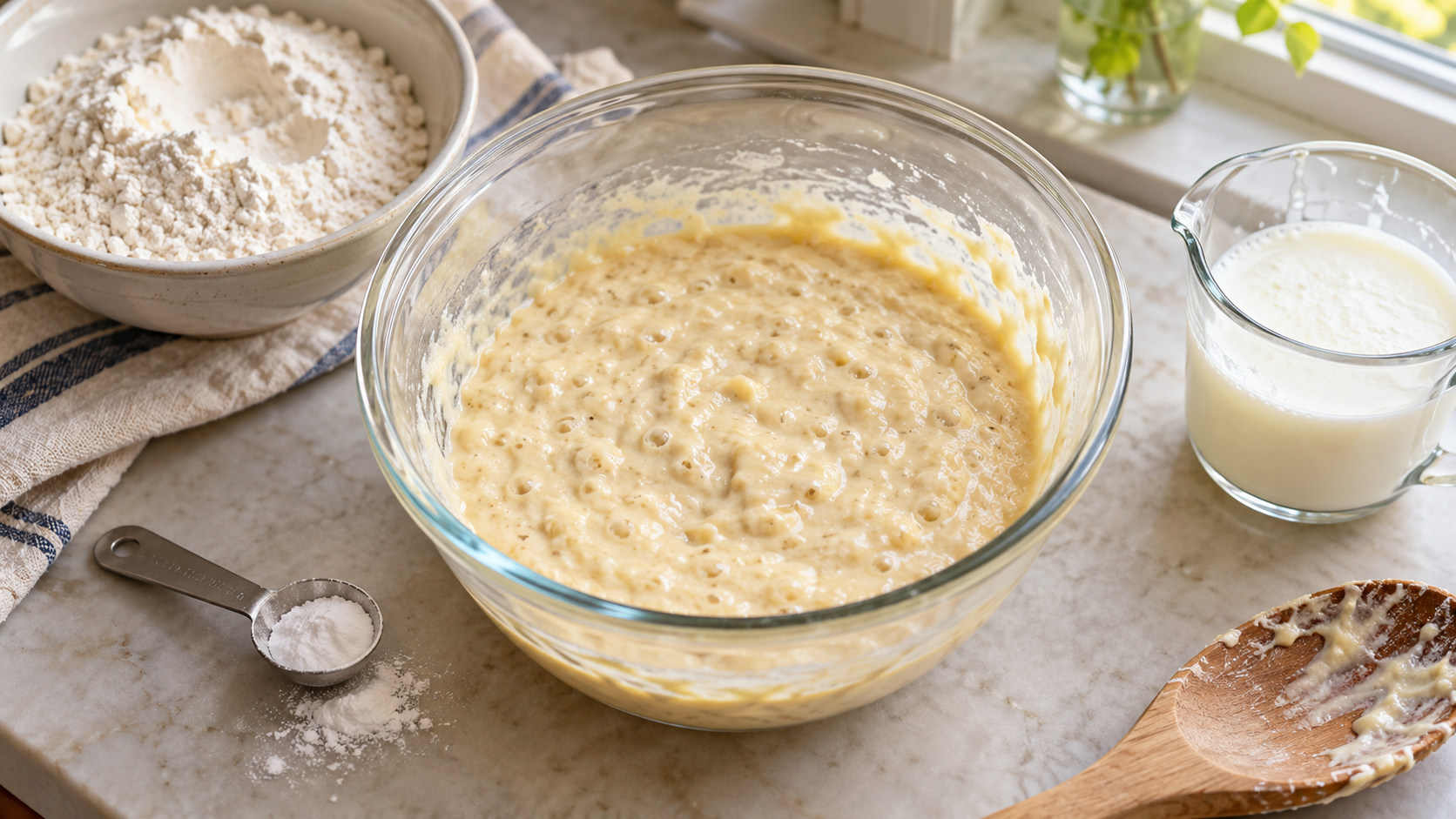
Baking soda is sodium bicarbonate, an alkaline compound that releases carbon dioxide when it reacts with an acid in the presence of moisture. Recipes pair it with ingredients such as buttermilk, yogurt, molasses, natural cocoa, citrus juice, or brown sugar. Once the ingredients are mixed, gas begins forming in the batter or dough. Proteins and starches surround the small bubbles, and heat later expands the gas and water vapor, increasing volume before the structure sets.
The simplified acid-base reaction converts bicarbonate and hydrogen ions into carbonic acid, which quickly separates into carbon dioxide and water. The visible fizz in a glass experiment is the same gas-making chemistry, but successful baking depends on trapping rather than losing those bubbles. Thick batters, gluten networks, egg proteins, and emulsions all help. If a mixed batter waits too long before baking, some gas may escape before heat can stabilize the expanded structure.
Baking powder differs because it contains both sodium bicarbonate and one or more dry acids, plus starch to limit premature reaction. It needs moisture, and many products are double acting: part of the gas appears during mixing and more forms when heated. Baking soda contains no added acid, so the recipe must supply enough acidity. The two leaveners are not interchangeable spoon for spoon because their chemical balance, strength, flavor effects, and sodium content differ.
Amount matters. Too little bicarbonate may leave a dense result or fail to neutralize strong acidity. Too much can leave an alkaline, soapy, or metallic taste and encourage excessive spreading. Higher pH also speeds Maillard browning, which is why a carefully measured amount can deepen color and flavor. Recipe developers balance the available acid against bicarbonate while accounting for structure, mixing, pan size, and oven heat. Measuring with level spoons is more reliable than estimating.
Carbon dioxide does not create a finished crumb by itself. Heat expands existing air, steam, and reaction gas while starch gelatinizes and proteins coagulate. If the framework sets too early, expansion is limited; if it remains weak too long, bubbles merge and collapse. Overmixing can develop excessive gluten in tender cakes, while undermixing leaves pockets of dry ingredients. Leavening chemistry works inside a larger physical system whose timing determines whether gas becomes fine texture or large tunnels.
Freshness can affect performance because baking soda can absorb moisture and odors, although it is generally stable when sealed and dry. A kitchen acid test may show whether it fizzes, but following storage dates and recipe instructions is more dependable. The useful mental model is a controlled gas generator: moisture brings the partners together, acid supplies hydrogen ions, bicarbonate releases carbon dioxide, and the batter captures that gas long enough for oven heat to turn bubbles into a permanent airy structure.
Recipe acid and sodium bicarbonate react after moistening to release carbon dioxide. The batter traps the gas and heat expands it. Key terms include bicarbonate, acid-base reaction, carbon dioxide, batter, bubble, gelatinization, coagulation, and Maillard browning.
Baking powder packages bicarbonate together with dry acids, so it supplies both sides of the reaction. Baking soda relies on acidic ingredients already in the recipe.
Excess bicarbonate remains alkaline after the available acid is used. That high pH can produce an unpleasant taste, extra spreading, and overly dark browning.
Explore more "Explainers"
Discover additional explainers across politics, science, business, technology, and other fields. Each explainer breaks down a complex idea into clear, everyday language—helping you better understand how major concepts, systems, and debates shape the world around us.