

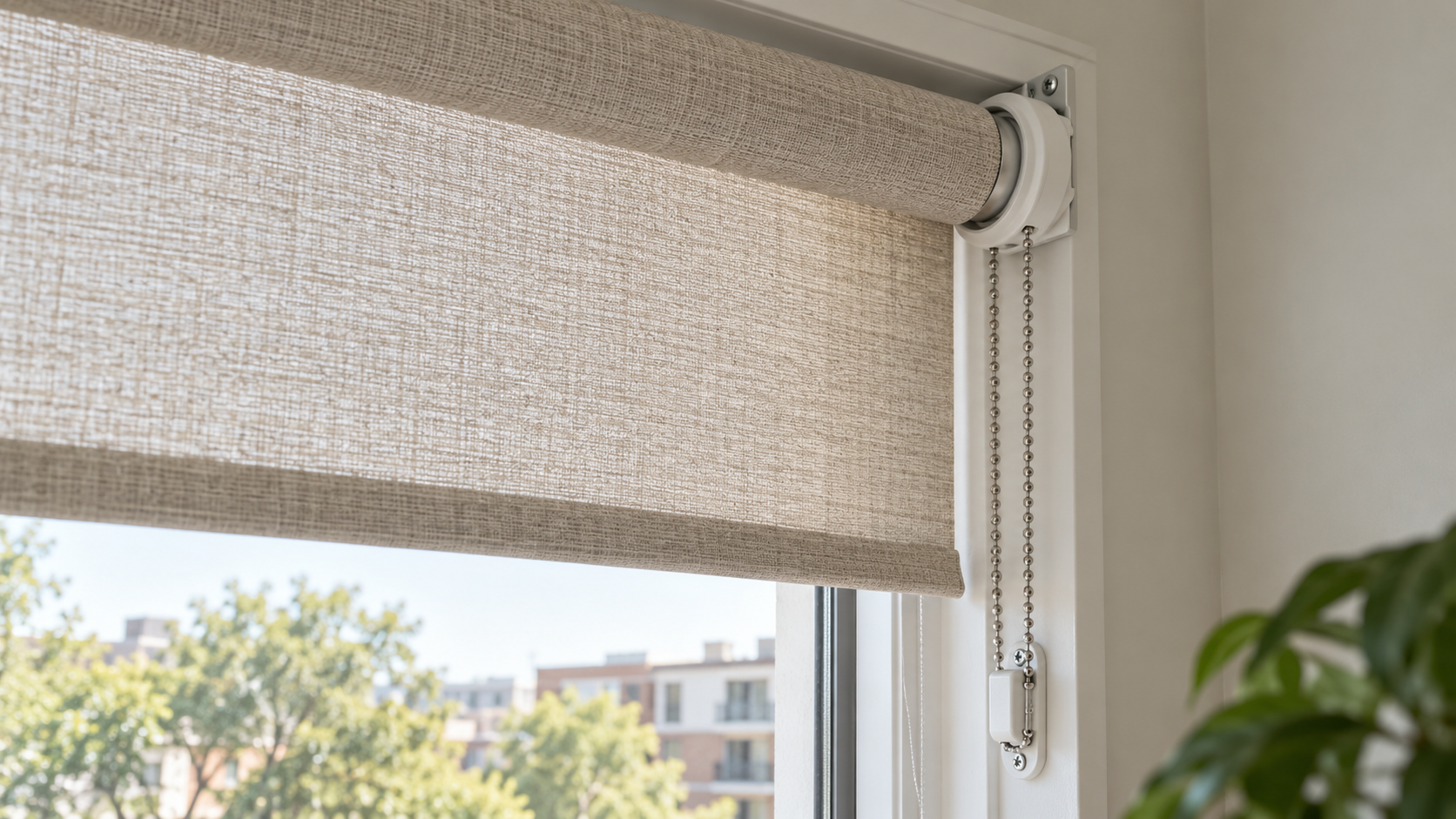
Roller Shade Clutch Explainer
A manual roller shade wraps fabric around a hollow tube mounted above the window. At one end, a clutch converts movement of a looped bead chain into rotation of that tube. Pulling one side of the loop turns a sprocket inside the clutch and rolls fabric onto the tube, raising the shade. Pulling the other side reverses the tube and releases fabric downward. The opposite tube end rests on an idler pin that supports the load while allowing rotation.
The clutch also has to hold the tube when the user lets go. Inside many designs, a coiled spring or friction element tightens against a stationary housing under the torque produced by the hanging shade. Pulling the chain rotates a driver that slightly releases or overcomes that friction in the commanded direction. Once movement stops, the spring grips again. This self-braking action prevents the shade’s weight from unwinding the tube on its own.
Clutch size must match the tube diameter, shade weight, and drop. A larger shade creates more torque at the drive end and may need a stronger clutch and larger tube to prevent deflection. The tube also changes effective radius as layers of fabric build up. That is why chain travel and hand effort can vary between the bottom and top. System tables specify allowable areas and weights so the brake can hold and the components are not overloaded.
Installation alignment matters. Brackets must be level and spaced so the clutch and idler are fully seated without squeezing the tube. Fabric should enter the roll squarely. If one edge leads, the material can telescope sideways and rub a bracket. Small corrections may be possible by re-leveling hardware or adjusting how the first layer sits on the tube, but forcing a badly skewed shade can crease fabric, pull chain, or damage the clutch.
Looped operating chains create an entanglement hazard for young children. Current safety practice uses a properly installed tension device or another compliant control that keeps the loop secured and taut, positioned according to instructions. Furniture and climbable objects should be kept away. A frayed chain, loose tensioner, cracked clutch, or bracket that allows the shade to fall requires prompt service. Cordless or motorized alternatives can remove the continuous loop when their design suits the window.
The clutch is therefore both transmission and brake. The chain gives a convenient mechanical advantage, the sprocket selects direction, the drive turns the roller tube, and internal friction holds the selected height. It works without electricity and can stop anywhere within its travel. Proper sizing keeps operating force reasonable, while careful alignment protects the fabric. The visible motion is just cloth rolling up or down, but the small end fitting manages all of the load.
Pulling the bead chain turns a clutch sprocket and the roller tube. An internal spring or friction brake holds the tube when the chain stops. Key terms include bead chain, sprocket, clutch, brake spring, roller tube, idler, bracket, and tension device.
Torque from the hanging fabric makes the clutch’s internal brake grip its stationary housing. Operating the chain temporarily overcomes that grip to move the tube.
A continuous loose loop can entangle a child. A correctly installed safety tension device keeps it secured and operating as intended.
Explore more "Explainers"
Discover additional explainers across politics, science, business, technology, and other fields. Each explainer breaks down a complex idea into clear, everyday language—helping you better understand how major concepts, systems, and debates shape the world around us.