

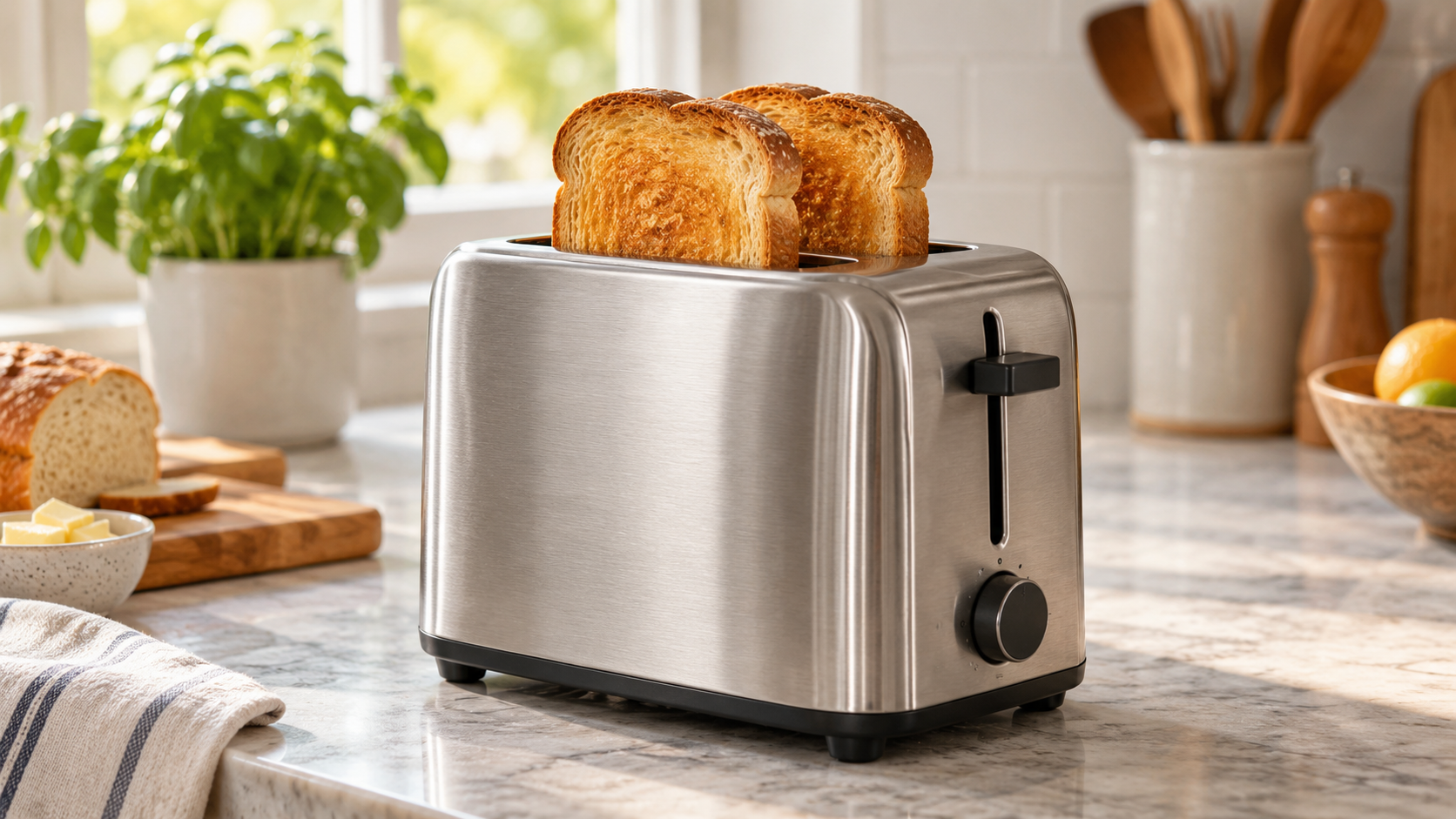
Pop-Up Toaster Timing Explainer
A pop-up toaster lowers bread on a carriage between rows of electric resistance wire. Pressing the lever compresses a lift spring and engages a latch that holds the carriage down. At the same time, electrical contacts energize the heating elements. Current passing through the high-resistance alloy turns electrical energy into heat, much of it radiating toward the bread. When the control decides the selected interval is complete, an electromagnet or mechanical latch releases the carriage and the spring raises the toast.
Older automatic toasters often used a bimetal strip. Heat bends two bonded metals by different amounts until the moving strip trips the latch. Because the strip responds to temperature, it can partly reflect how warm the toaster already is. Modern products may use an electronic timing circuit, temperature sensing, or a combination. The shade dial generally changes time or a control threshold; it does not directly inspect the bread’s color, and the same setting can produce different results with different foods.
Bread browns through Maillard reactions between amino compounds and reducing sugars, along with moisture loss and some sugar caramelization. Thick, moist, frozen, sweet, or dense slices require different energy than thin dry bread. The first cycle in a cold appliance also warms internal metal, while later cycles begin with stored heat. Centering guides try to keep each face a consistent distance from the elements, but warped slices and crumbs can disturb exposure and airflow.
The latch and release are designed to fail toward the raised position when control power ends. In many designs, the electromagnet holds the carriage only while a low-voltage circuit is active; cutting power removes the magnetic hold and the spring pops up. A cancel button deliberately interrupts that hold. The mechanical lift must provide enough travel to clear the hot slot, while removable crumb trays collect fallen particles away from the energized elements for later cleaning.
A toaster is a high-temperature appliance with exposed internal heaters. Metal utensils can contact live parts or damage the wire, so stuck food should be addressed only after unplugging and cooling, using the manufacturer’s method. The appliance needs a clear countertop away from curtains and combustible clutter. Crumbs should be removed regularly without shaking debris into controls, and a damaged cord, jammed carriage, persistent smoke, or failure to shut off warrants replacement or qualified service.
The toaster therefore does not truly “see” perfect toast. It repeats a calibrated heating period while its geometry tries to deliver similar radiant exposure. The user’s setting shifts that period, sensors compensate to varying degrees, and the release mechanism converts the end signal into a safe upward motion. Consistency improves with similar slice thickness, starting temperature, and consecutive-cycle conditions, but the food remains variable, which is why the shade control is an estimate rather than a color guarantee.
Lowering the lever latches a spring-loaded carriage and energizes resistance heaters. A timer or heat-responsive control releases the latch. Key terms include carriage, lift spring, latch, heating element, bimetal strip, timer, electromagnet, and centering guide.
Usually no. It changes a heating time or control threshold. Bread type, thickness, moisture, and whether the toaster is already warm all affect the result.
Many designs use powered holding or release controls so loss of the holding force lets the compressed lift spring raise the carriage.
Explore more "Explainers"
Discover additional explainers across politics, science, business, technology, and other fields. Each explainer breaks down a complex idea into clear, everyday language—helping you better understand how major concepts, systems, and debates shape the world around us.