

Airport Baggage Carousel Explainer
The baggage carousel passengers see is the last part of a larger handling system. After an aircraft is unloaded, workers place bags on belt conveyors or carts feeding the terminal. Barcode or radio-frequency identification systems may associate each bag tag with its flight and route. Controls direct the stream through merges and intermediate belts to the correct reclaim device. An inclined conveyor then raises or lowers bags to the carousel’s loading point, often hidden behind a wall.
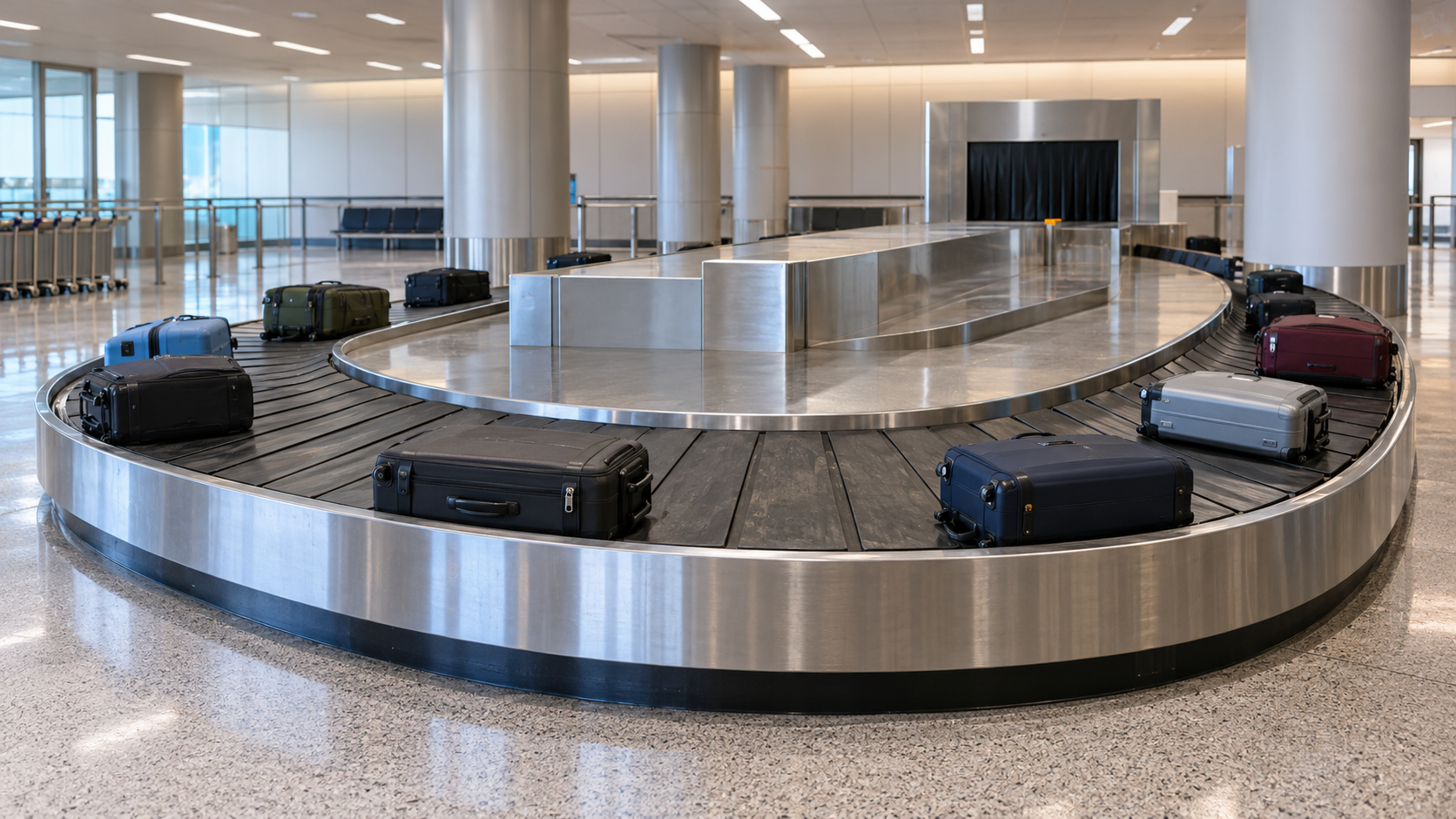
Many claim carousels use overlapping metal or polymer slats attached to a continuous chain beneath the floor. The articulated slats can follow horizontal curves while presenting a broad moving surface. A motor and gearbox drive the chain at a slow walking pace. Side rails keep luggage on the deck, and the overlapping arrangement prevents large gaps as the path bends. Other installations use flat plate conveyors or oval belts, but all circulate bags through a controlled pickup zone.
Photoelectric sensors detect bags approaching a merge or blocked loading area. Programmable controllers start and stop upstream belts, space items, and prevent two feeds from colliding. Operators can hold unloading if the claim area becomes crowded. Because soft luggage, hard cases, straps, and odd shapes behave differently, the system cannot rely only on perfect automation. Loose straps may snag, and oversized or fragile items are commonly delivered to a separate point.
A carousel usually continues looping until bags are removed or staff stop the flight’s delivery. The machine does not identify which passenger owns a case; the tag and traveler perform that final match. Airports may display a flight number above the assigned belt, but assignments can change as gates, connections, or equipment availability shift. Bags that miss a route, lose a readable tag, or require inspection may arrive late or be directed to baggage service instead of the main stream.
Safety zones around the feed opening and moving edges use guards, curtains, emergency stops, and warning controls. Passengers should stand back until they see their bag, keep children off the equipment, and lift luggage clear rather than dragging it against a side panel. Entering the loading opening or climbing onto the deck is dangerous because the public surface connects to powered machinery and inaccessible conveyors beyond the wall.
The familiar loop therefore acts as a buffer between a variable upstream flow and many individual pickups. Conveyors deliver batches, sensors and controls meter entry, the articulated deck circulates each item repeatedly, and travelers remove bags at different times. A delay at the carousel may originate anywhere from aircraft unloading to screening, sorting, transport, or a temporary jam; the visible belt is only the final circulating queue.
Upstream conveyors and controls route flight bags to a reclaim unit, where linked slats circulate them until passengers remove them. Key terms include bag tag, conveyor, merge, controller, feed belt, slat carousel, sensor, and emergency stop.
Overlapping articulated plates provide a nearly continuous carrying surface while allowing the chain beneath them to follow curves around the reclaim loop.
No. Routing systems associate the tag with a flight and destination. The passenger matches and removes the individual bag at reclaim.
Explore more "Explainers"
Discover additional explainers across politics, science, business, technology, and other fields. Each explainer breaks down a complex idea into clear, everyday language—helping you better understand how major concepts, systems, and debates shape the world around us.