

On This Day in Business: April 16, 1991
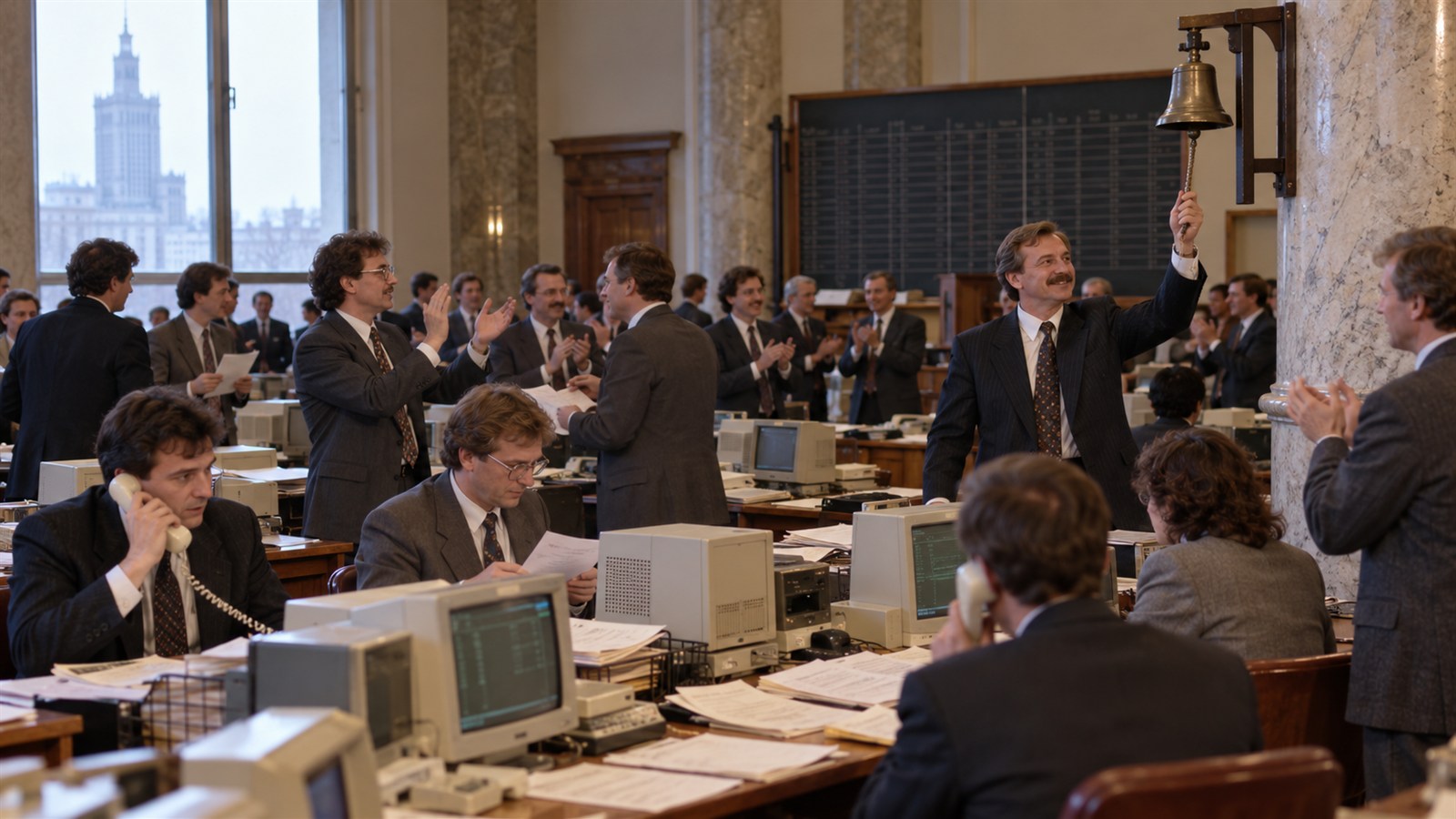
On April 16, 1991, the Warsaw Stock Exchange held its first trading session in the former headquarters of Poland's communist party. Five companies were listed, and orders were matched during a brief weekly session using procedures developed with foreign technical assistance. The symbolism was powerful: a building associated with central planning now housed a market intended to price private ownership. Poland was moving rapidly from state control toward a market economy, and the exchange supplied a public venue where newly privatized companies could attract capital and investors could trade shares under common rules.
Creating an exchange required more than opening a room and ringing a bell. Poland needed securities law, a regulator, listing standards, brokerage firms, settlement arrangements, disclosure practices, and public confidence. Many citizens and managers had little experience with equity markets, while the value and governance of former state enterprises were difficult to assess. The founding act was signed shortly before trading began, and early activity remained small. Yet the exchange established a transparent reference point for ownership and valuation at a time when much of the economy was being reorganized.
The market expanded as additional companies listed, trading became more frequent, and electronic systems replaced the early call-auction process. The WIG index provided a benchmark, while foreign investors and domestic pension reforms later added liquidity. Growth was uneven and exposed companies to market volatility, governance disputes, and the discipline of public reporting. The exchange also connected Warsaw more closely to international finance. Its development paralleled the broader transformation of Polish business, from privatization and entrepreneurship to integration with European capital markets.
The first session illustrates how markets are institutions rather than spontaneous gatherings. Prices become meaningful only when participants trust the rules, ownership records, disclosures, and settlement process. Those systems had to be built while the assets themselves were changing hands and the legal environment was still developing. The former party headquarters made that institutional shift visible, but the deeper work occurred in regulations, accounting, technology, and professional skills. April 16 marks a small trading day whose larger significance lay in teaching companies and investors how a public capital market could operate after decades without one. Public trading also changed behavior inside listed companies. Executives had to explain results, shareholders could compare performance, and market prices offered an imperfect but continuous signal about expectations. That discipline could improve governance while also encouraging short-term reactions to price movements. The young exchange therefore introduced both accountability and volatility. Building a healthy capital market required investors and managers to learn how to use prices without treating every fluctuation as a complete judgment of underlying value.
Poland's post-communist reforms required institutions that could transfer ownership, value companies, and direct savings toward private enterprise.
Lawmakers, regulators, and market organizers created listing, brokerage, disclosure, and settlement rules with international technical support.
The Warsaw Stock Exchange opened its first session on April 16, 1991, listing five companies in the former communist party headquarters.
Early trading was limited because the market, investor knowledge, and supply of privatized securities were all still developing.
More listings, electronic trading, benchmarks, and international participation turned Warsaw into an important Central European capital market.
The exchange's reopening demonstrates that reliable markets depend on legal and operational infrastructure as much as on buyers and sellers.
Explore more of "On This Day ..."
Discover more events from the same date across news, politics, technology, sports, and other fields. Each link highlights significant moments that shaped history on different fronts.