

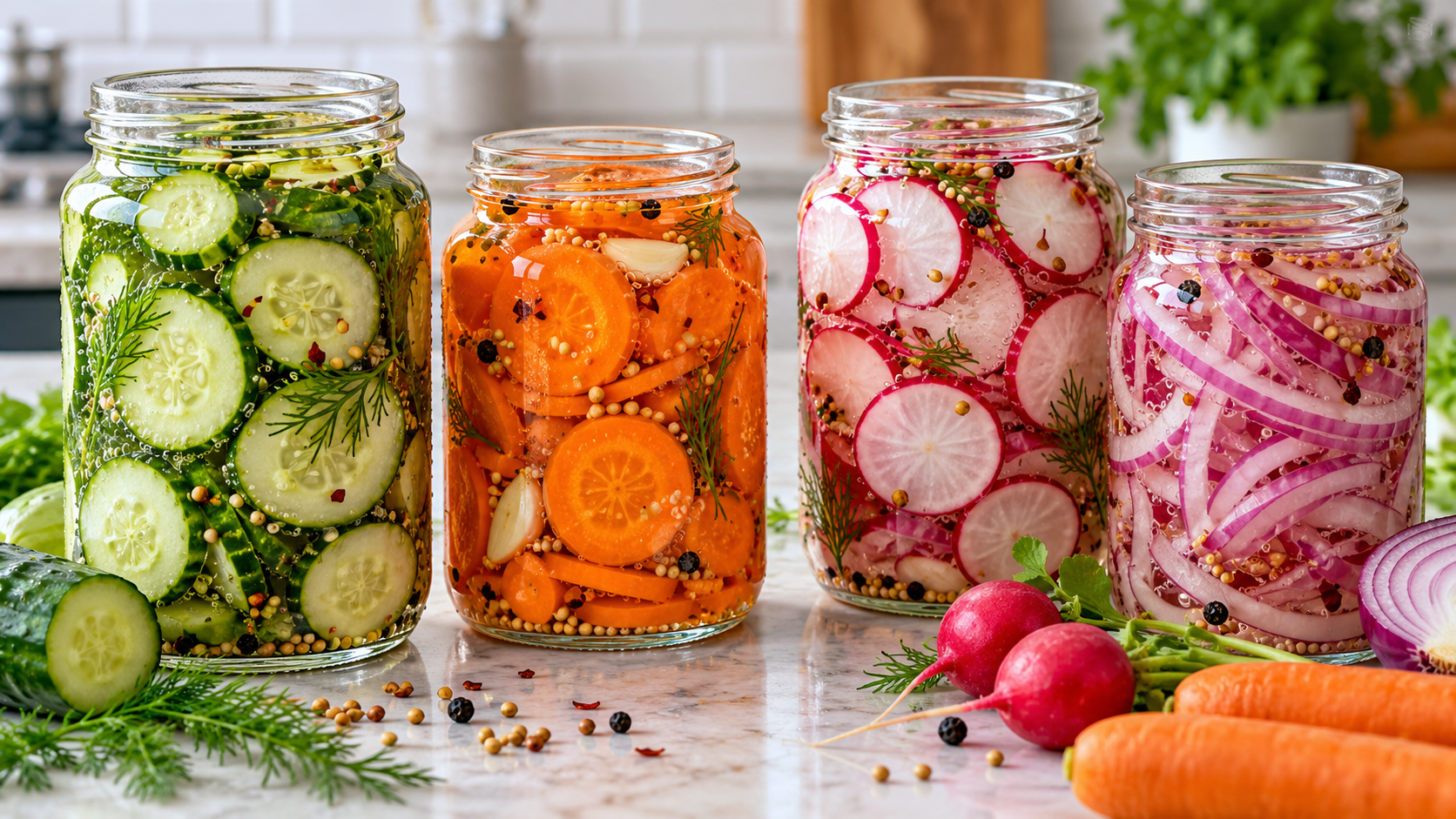
Quick Pickling Explainer
Quick pickling changes vegetables by surrounding them with an acidified brine, usually based on vinegar. Acetic acid lowers pH and creates conditions that inhibit many spoilage and disease-causing microbes. Salt and sugar contribute flavor and influence water movement, but vinegar is the primary acid in an unfermented quick pickle. Unlike fermented pickles, which rely on bacteria to produce acid over time, quick pickles receive their acidity directly and can develop their characteristic tang within hours or days.
Brine moves into cut vegetable tissue while water and dissolved compounds move outward. Smaller pieces expose more surface area and shorten the diffusion distance, so slices change faster than whole cucumbers. Heating can soften tissue, drive out trapped air, and speed flavor exchange, while a cold refrigerator brine preserves more fresh crunch. Spices supply aromatic molecules that migrate at different rates. The final taste is therefore the result of acid concentration, salt, sugar, temperature, size, and time.
Texture depends on plant cell walls and processing. Fresh, firm produce starts with intact pectin and turgid cells. Excessive heat, long storage, blossom-end enzymes, or damaged vegetables can soften the structure. Calcium salts in tested recipes may strengthen pectin interactions and improve crispness. Cutting off the blossom end of cucumbers is sometimes specified because it can contain softening enzymes. These adjustments improve quality but do not replace the acid level required for safety.
Refrigerator pickles and shelf-stable canned pickles are not interchangeable. A refrigerated recipe assumes continuous cold storage and has a limited life. A canning recipe controls vinegar strength, ingredient proportions, jar size, headspace, and boiling-water processing so heat penetrates predictably and acidity remains adequate. Diluting vinegar, adding low-acid vegetables, or changing jar size can defeat those controls. Tested extension or national preservation recipes should guide any product intended for room-temperature storage.
Clean jars and utensils reduce the initial microbial load, and produce should be washed and trimmed. Vinegar labeled with the acidity specified by the recipe is important; homemade vinegar can vary. Bulging lids, leakage, spurting liquid, mold, off odors, or unusual softness are warning signs, not invitations to taste. Refrigerator pickles return promptly to the refrigerator, and utensils should not introduce crumbs or contaminants into the brine.
Quick pickling is thus controlled acidification plus flavor transfer. Vinegar establishes the hostile pH, brine carries seasonings, and diffusion moves those components through the food. Heat and calcium can modify texture, while refrigeration or a validated canning process determines how the product is stored. The method feels flexible at the table, but preservation safety depends on respecting measured acidity and the exact boundary between a fresh refrigerated pickle and a shelf-stable canned one.
Vinegar brine directly lowers pH while salt, sugar, heat, and time move flavor through the vegetable. Key terms include acetic acid, pH, brine, diffusion, turgor, refrigeration, processing, and tested recipe.
Quick pickles receive acid from vinegar. Fermented pickles develop acid as beneficial microbes convert sugars over time under controlled conditions.
No. Shelf-stable canning requires tested proportions, vinegar strength, jar size, and heat processing. A refrigerator recipe is designed to stay cold.
Explore more "Explainers"
Discover additional explainers across politics, science, business, technology, and other fields. Each explainer breaks down a complex idea into clear, everyday language—helping you better understand how major concepts, systems, and debates shape the world around us.