

On This Day in Business: May 8, 1886
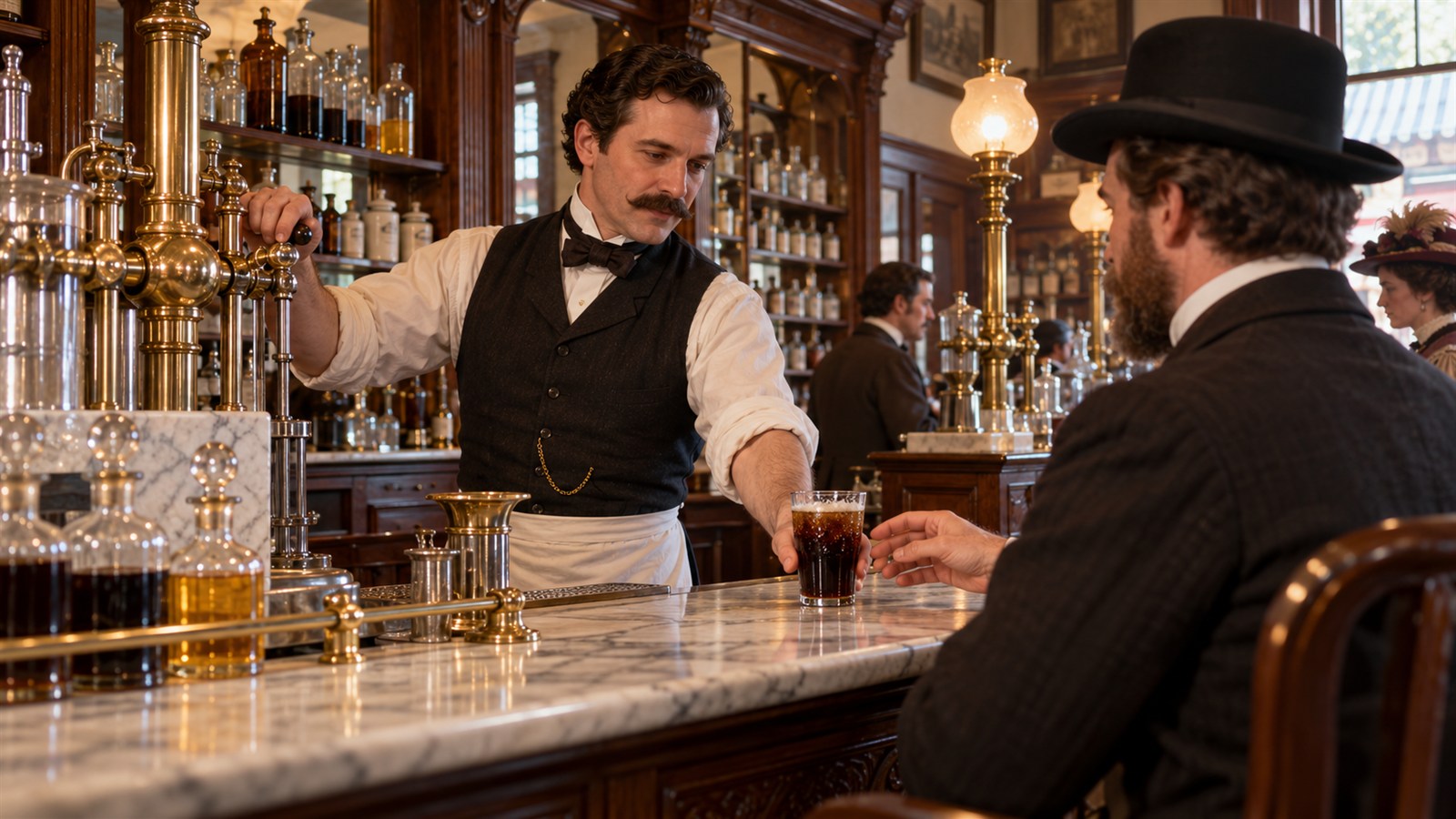
On May 8, 1886, a new fountain drink created by Atlanta pharmacist John Stith Pemberton was first served at Jacobs’ Pharmacy. Syrup was mixed with carbonated water and sold by the glass for five cents. Pemberton’s bookkeeper, Frank Robinson, supplied the name Coca-Cola and wrote it in a flowing script that became central to the brand. Sales were modest—about nine drinks a day during the first year according to company history—but the product combined a repeatable formula, an appealing name, and access to the era’s soda-fountain distribution network.
Pemberton was an inventor of patent medicines rather than the builder of the company that later emerged. He sold interests in the formula and business as his health declined, producing a confusing period of competing claims. Atlanta businessman Asa Candler gradually consolidated control and transformed the beverage into a marketed product. Coupons encouraged first trials, painted signs and newspaper advertisements spread the name, and syrup shipments allowed independent fountain operators to prepare the drink. The company could expand without owning every retail counter because concentrate traveled more efficiently than a finished glass.
Bottling created the next major growth platform. At first, company leaders doubted packaged Coca-Cola, but independent bottlers acquired territorial rights and invested in plants, bottles, delivery routes, and local sales. Standardization became critical: customers expected the same drink even when water, equipment, and operators varied. The contour bottle and extensive trademark protection helped distinguish the product from imitators. Advertising linked a simple beverage to refreshment and shared occasions, while a franchise-like network multiplied physical availability across towns and later across national borders.
The first serving matters because it began with an ordinary transaction, not an instant mass-market success. Coca-Cola became valuable as a system of formula control, brand identity, local distribution, and repeated consumption. Pemberton supplied the product; Robinson contributed naming; Candler built demand; and bottlers provided capital and reach. The story shows how different participants can create layers of value around one recipe. It also demonstrates that consumer brands compound through consistency. Every correctly mixed glass, recognizable sign, and dependable delivery reinforced the same promise, turning a five-cent experiment at one pharmacy into an asset far larger than its ingredients. The bottling system also distributed risk. Local operators paid for plants, bottles, trucks, and sales relationships, while the central company protected syrup quality and the brand. Expansion could therefore move faster than wholly owned distribution. The bargain worked only when standards were enforced, because one weak bottler could damage the promise made by every advertisement.
John Pemberton developed a flavored syrup in Atlanta while soda fountains served as important retail and social spaces.
Jacobs’ Pharmacy first sold the drink mixed with carbonated water for five cents on May 8, 1886.
Frank Robinson named Coca-Cola and created a script identity that helped the product stand apart.
Asa Candler consolidated control and used sampling, advertising, and syrup distribution to widen demand.
Independent bottlers invested locally, turning a fountain product into a packaged beverage available across territories.
The company’s durable advantage came from aligning formula, trademark, promotion, and distribution around a consistent experience.
Explore more of "On This Day ..."
Discover more events from the same date across news, politics, technology, sports, and other fields. Each link highlights significant moments that shaped history on different fronts.