

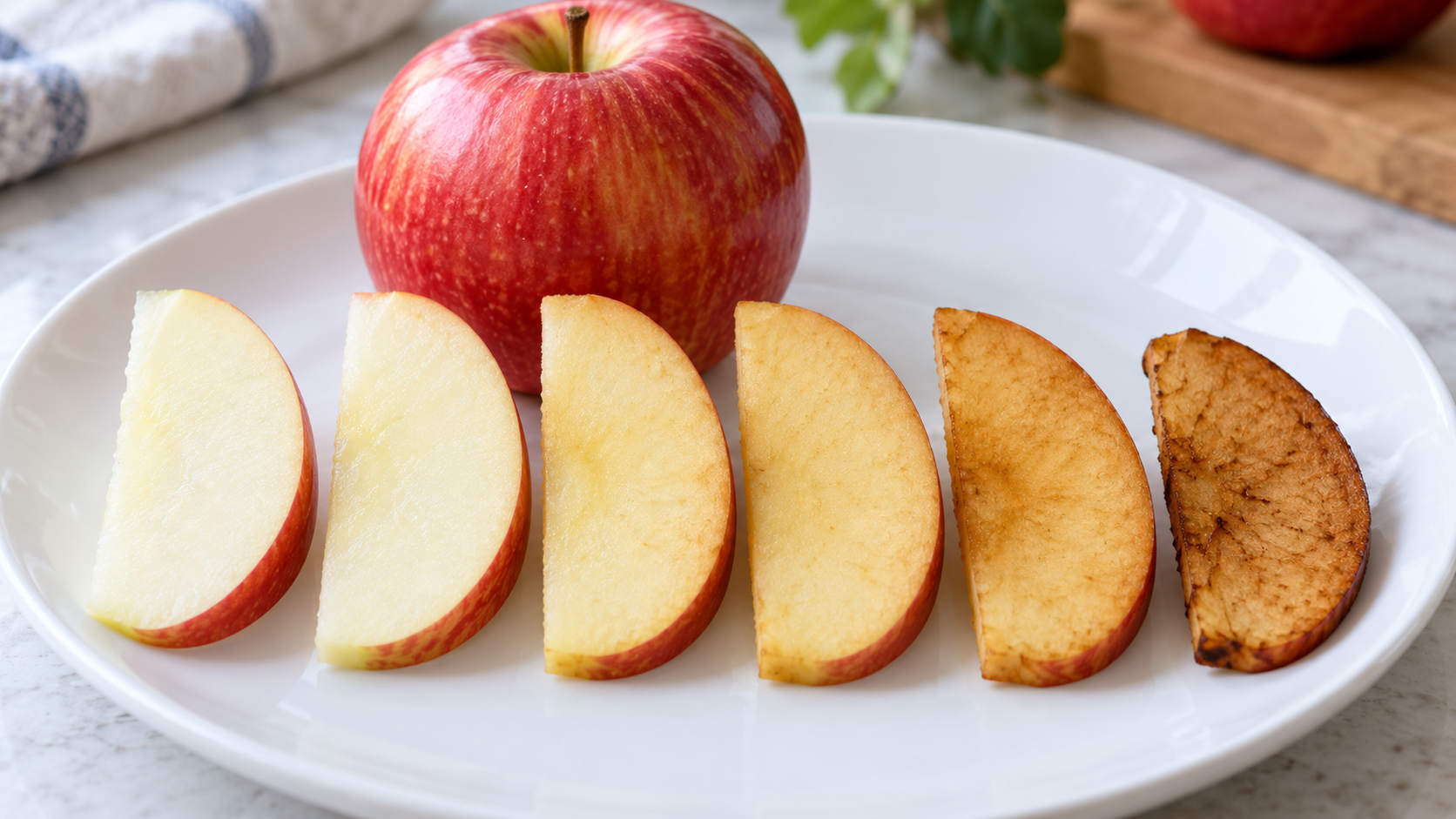
Apple Enzymatic Browning Explainer
An intact apple keeps several reactive ingredients separated inside organized cells. Cutting, peeling, or bruising tears cell membranes and releases an enzyme called polyphenol oxidase, along with phenolic compounds from other compartments. Oxygen from the air reaches the damaged tissue at the same time. The enzyme then accelerates oxidation reactions that would occur far more slowly while the cells remained intact.
Polyphenol oxidase helps convert certain phenols into reactive quinones. Those compounds continue reacting with one another and with other molecules, eventually forming larger brown pigments. The color is therefore not ordinary dirt or simple drying. It is the visible product of an enzyme-assisted chemical pathway at the wounded surface, where substrate, enzyme, and oxygen have finally been brought together.
Cultivar, ripeness, growing conditions, and tissue location affect browning because apples differ in enzyme activity and phenolic content. Temperature and acidity matter too. Cool storage slows molecular motion and enzyme reactions. Lower pH reduces the enzyme’s activity. Limiting oxygen with close wrapping or modified atmosphere also delays the reaction, although no ordinary kitchen covering removes every trace of oxygen.
Acidic lemon juice can slow browning by lowering surface pH, and its ascorbic acid can reduce newly formed quinones back toward colorless compounds until the antioxidant is consumed. Brief heat treatment can inactivate enzymes but changes the apple’s raw texture. Salt or sugar solutions may alter enzyme action or oxygen contact, yet they also change flavor. The appropriate method depends on how the slices will be used.
Browning alone is not a reliable indicator of food safety. It can make fruit less appealing and eventually alter flavor or texture, but separate handling rules determine whether cut fruit is safe. Clean utensils, prompt refrigeration when required, and protection from contamination remain important. A slice kept pale by acid is not automatically safe after improper storage, just as a brown fresh slice is not necessarily spoiled.
The color change is a rapid wound response made visible. Cutting removes cellular barriers, air supplies oxygen, polyphenol oxidase produces reactive intermediates, and those intermediates assemble into darker compounds. Prevention methods work by interrupting one part of that chain—slowing the enzyme, changing pH, consuming reactive products, reducing oxygen, or limiting time and temperature—rather than by reversing a fully browned surface.
Cutting mixes polyphenol oxidase and phenolic compounds with oxygen, producing quinones that form brown pigments. Key terms include cell damage, oxygen, enzyme, polyphenol oxidase, phenol, quinone, oxidation, and pigment.
Its acidity reduces enzyme activity, and ascorbic acid can convert early oxidized products back toward colorless forms until the antioxidant is used up.
Not by itself. Browning is mainly a quality reaction. Safety depends separately on cleanliness, storage temperature, time, and other handling conditions.
Explore more "Explainers"
Discover additional explainers across politics, science, business, technology, and other fields. Each explainer breaks down a complex idea into clear, everyday language—helping you better understand how major concepts, systems, and debates shape the world around us.