

Propane Grill Pressure Regulator Explainer
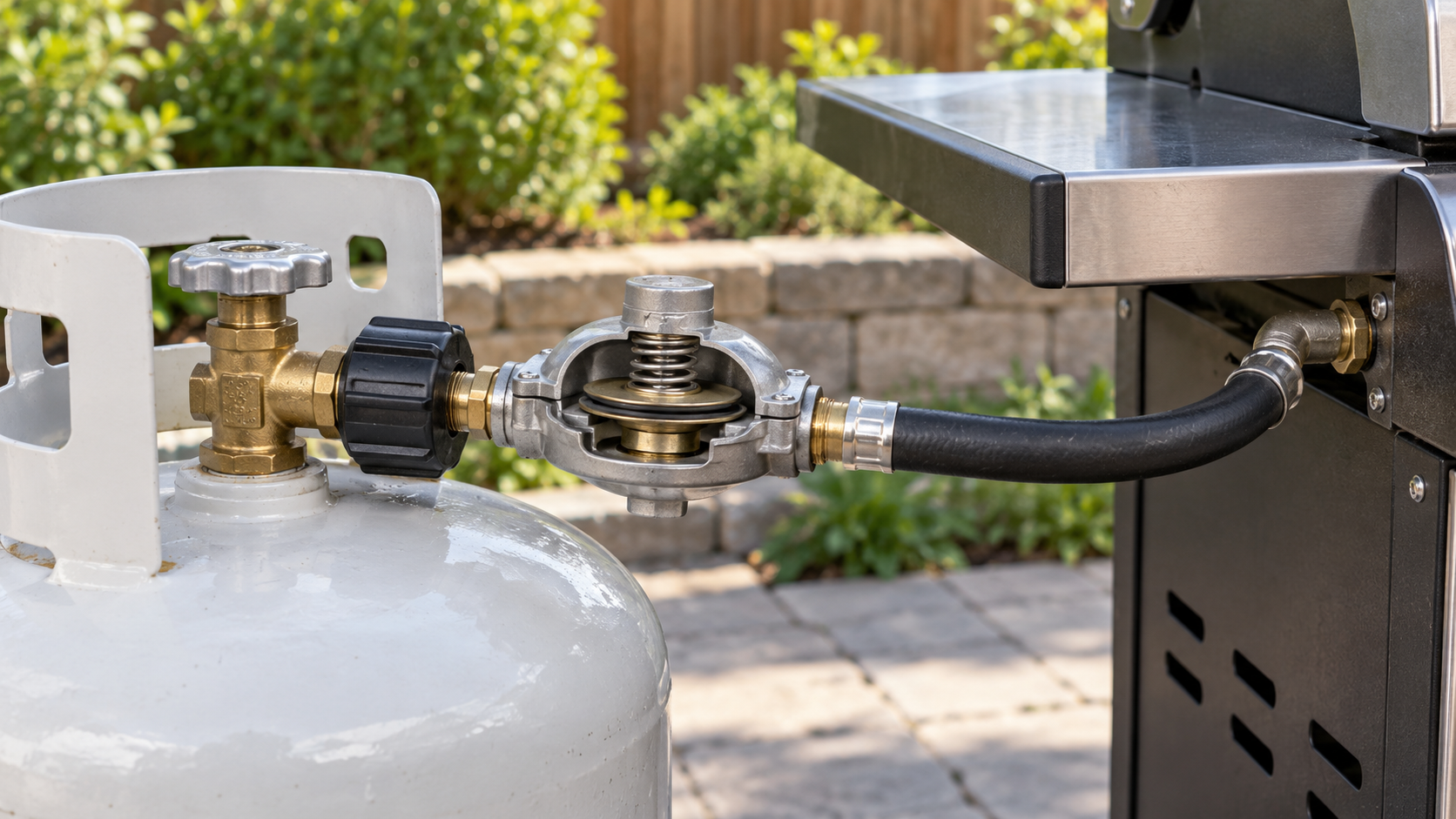
A propane cylinder stores fuel at a pressure far higher than a grill burner can use directly. The regulator between the cylinder valve and grill hose reduces that pressure to a low, controlled outlet pressure. Inside its housing, a flexible diaphragm senses pressure on the grill side. A spring pushes on the diaphragm in one direction, while outlet gas pressure pushes back in the other. Their balance positions a small valve that meters incoming fuel.
When the burners begin consuming gas, outlet pressure falls slightly. The spring then moves the diaphragm and linked valve farther from its seat, admitting more propane from the cylinder. As outlet pressure rises toward the regulator’s set point, the diaphragm moves back and narrows the opening. This continuous mechanical feedback compensates for changing burner demand and for the much higher cylinder pressure, without needing an electronic sensor.
A small vent lets the air side of the diaphragm communicate with the atmosphere so it can move freely. The vent must remain unobstructed and oriented as the manufacturer directs. Many modern grill connections also include excess-flow features that restrict gas if flow suddenly becomes abnormally high, such as after a major downstream opening. That protective restriction can also be triggered by opening the cylinder valve too quickly or with burner controls already on.
The regulator controls pressure, but the burner valves and orifices determine how much gas enters each mixing tube. Air joins the fuel before combustion so the burner ports can produce a stable flame. A regulator cannot correct blocked burners, wrong orifices, damaged hoses, or a grill designed for another fuel. Frost, humming, or temporary condensation can have several causes, but gas odor, visible damage, or persistent abnormal flame requires shutdown and qualified evaluation.
Connections are checked only by approved procedures such as a soap-and-water leak test described by the grill maker, never with a flame. Cylinders stay upright outdoors, away from heat and ignition sources. A damaged, corroded, or altered regulator assembly is replaced with the correct listed part rather than repaired casually. The cylinder valve is closed when the grill is not in use, and lighting follows the sequence in the owner’s manual.
The regulator is therefore a self-adjusting pressure-reducing valve. Its spring establishes the target force, the diaphragm measures the outlet pressure mechanically, and the valve responds to their difference. Gas demand opens the path; recovered pressure narrows it. This balance lets the burners receive predictable low-pressure fuel even as cylinder conditions change, but safe operation still depends on sound fittings, open ventilation, correct components, and disciplined outdoor use.
A spring and diaphragm move a valve to reduce high cylinder pressure to the low outlet pressure required by the grill. Key terms include regulator, diaphragm, spring, valve seat, vent, outlet pressure, excess-flow device, and orifice.
Some connectors interpret the sudden high flow as a possible leak and activate an excess-flow restriction, leaving the burners with unusually low fuel flow.
No. Pressure, capacity, fittings, certification, and fuel configuration must match the appliance maker’s requirements.
Explore more "Explainers"
Discover additional explainers across politics, science, business, technology, and other fields. Each explainer breaks down a complex idea into clear, everyday language—helping you better understand how major concepts, systems, and debates shape the world around us.