

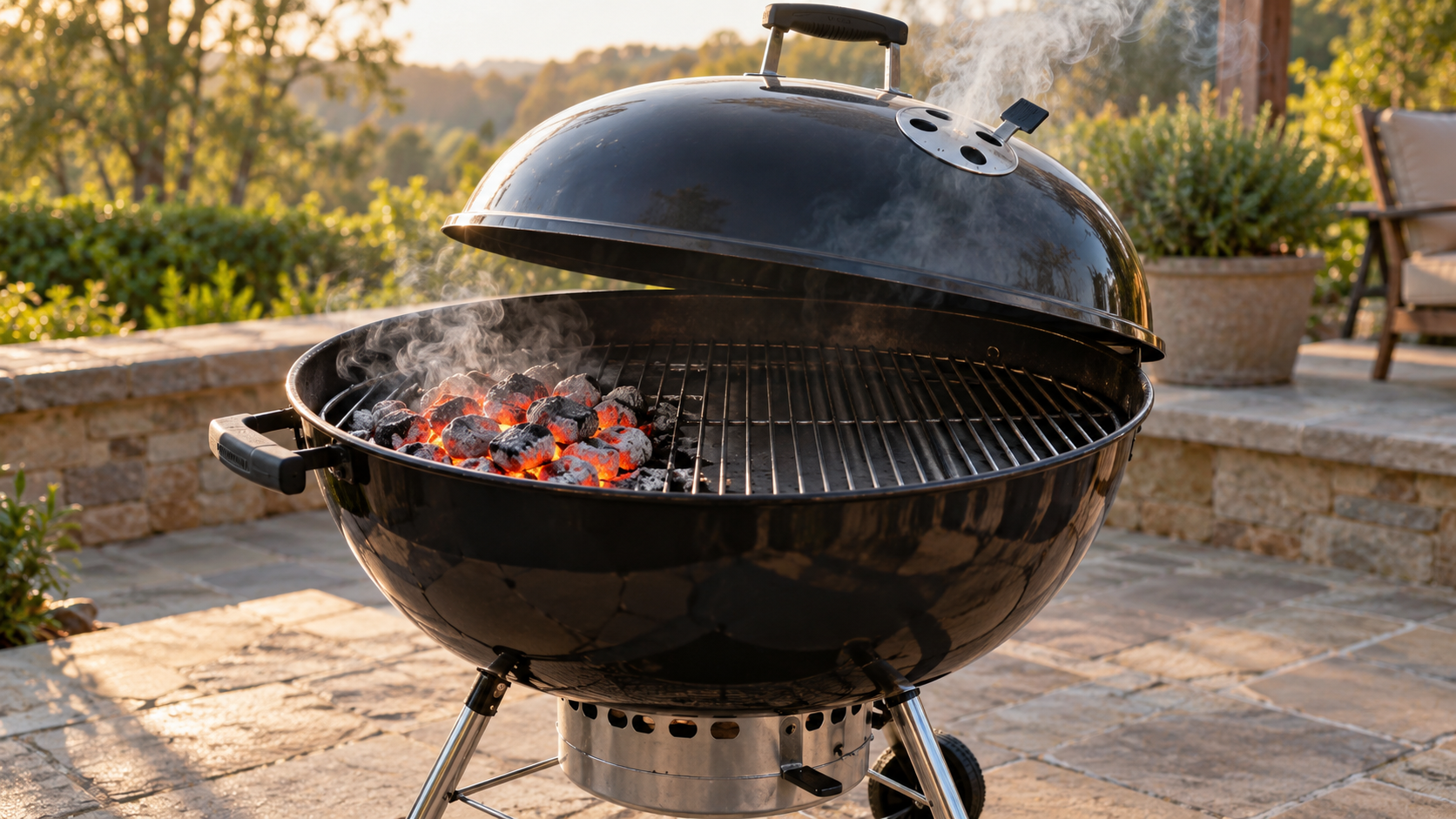
Charcoal Grill Airflow Explainer
Charcoal heat depends on combustion, and combustion depends on oxygen. A covered charcoal grill uses lower intake vents to admit fresh air beneath or beside the fuel and an upper exhaust vent to let hot gases escape. Opening the airflow path supplies more oxygen, allowing more charcoal to burn actively and usually raising heat output. Restricting the path slows the reaction, although the grill responds gradually rather than like an instant electric control.
The lower vent has the strongest direct influence on the oxygen reaching the coals. Air entering below the fuel warms, rises through the charcoal, and carries heat, water vapor, and smoke into the cooking chamber. The lid vent completes that draft. If the exhaust is closed too far, flow can stagnate, combustion can weaken, and smoke may become dense. Small adjustments are given time to affect the fire before another change is made.
Fuel quantity and arrangement work with the vents. A larger bed of fully lit charcoal can release more heat than a small bed at the same vent setting. In direct cooking, food sits above the coals and receives strong radiant heat. In indirect cooking, the coals are placed to one side or around the perimeter, and the lid guides hot air past food in the cooler zone before it exits through the vent.
The lid changes the system from an open brazier into a more controlled chamber. It reduces direct heat loss, shields the coals from gusts, and encourages convection around the food. Opening it releases hot air but also gives the fire a sudden dose of oxygen. Ash buildup can block the lower vent, while wind, cold weather, damp fuel, and repeated lid opening all change the temperature reached by a particular setting.
Vent positions are not universal temperature numbers. Grill size, fuel type, weather, food load, and thermometer location create differences. The temperature of the cooking chamber is also not the internal temperature of food, which is checked separately with a suitable thermometer. A charcoal grill is used outdoors on a stable noncombustible site, away from structures and never in an enclosed area where fire and carbon monoxide can accumulate.
The vents function as the grill’s breathing controls. The intake meters oxygen into the fuel bed, the exhaust sustains a path for rising gases, and the lid contains and redirects much of the released heat. Together with the amount and placement of charcoal, they set the rate and distribution of energy. Stable cooking comes from clean passages, a planned fuel arrangement, modest vent changes, and enough waiting time for the fire to reach a new balance.
Lower vents admit oxygen to the charcoal, while the lid vent lets hot gases leave and sustains draft. Key terms include combustion, oxygen, intake, exhaust, draft, radiant heat, convection, and indirect cooking.
The open lid releases chamber heat but also exposes the fuel to a rush of oxygen, which can intensify combustion before the lid is replaced.
Normally it remains at least partly open so combustion gases can leave and air can continue moving through the coals. Closing every vent can extinguish the fire.
Explore more "Explainers"
Discover additional explainers across politics, science, business, technology, and other fields. Each explainer breaks down a complex idea into clear, everyday language—helping you better understand how major concepts, systems, and debates shape the world around us.