

On This Day in Business: June 13, 1902
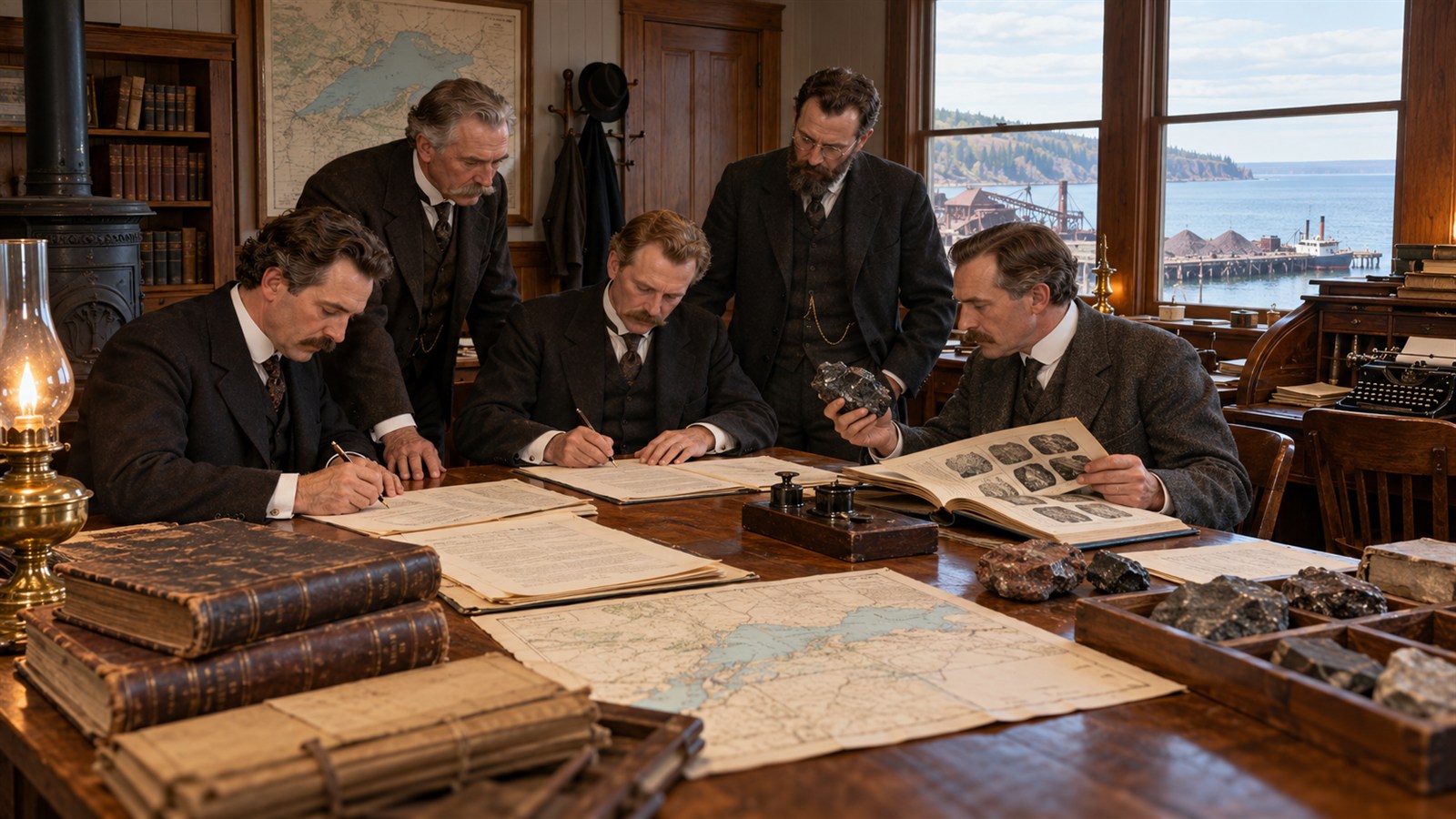
On June 13, 1902, five businessmen signed articles creating the Minnesota Mining and Manufacturing Company in Two Harbors, Minnesota. They intended to mine corundum, a hard mineral used to make grinding wheels and abrasives, from a property near Lake Superior. The venture began in attorney John Dwan's small office with $5,000 in initial capital and confidence that the mineral deposit could supply an industrial market. The deposit proved to be anorthosite, a softer rock unsuitable for the planned products. The company that would become 3M therefore started with a mistaken resource assessment and an operating model that could not work as designed.
Survival required abandoning the original advantage without abandoning the customer problem. The company moved toward manufacturing sandpaper with imported minerals, relocated operations, and sought new investment. Even then, quality failures threatened the business when abrasive grains separated from the backing. Employees investigated materials and processes rather than treating complaints as isolated sales problems. That persistence helped create a culture in which laboratory work supported practical products. 3M eventually achieved stability and paid its first dividend in 1916, fourteen years after incorporation. The long interval shows how slowly a physical-product company can recover from errors in geology, sourcing, manufacturing, and quality.
Later innovations such as waterproof sandpaper, masking tape, transparent tape, reflective materials, and many specialized industrial products expanded the company far beyond mining. Management encouraged technical employees to pursue ideas and share knowledge across divisions. Diversification reduced dependence on any single market, but it also required disciplined research, manufacturing, and sales channels able to connect specialized solutions with customers. The familiar 3M identity emerged from this portfolio rather than from the founders' quarry. Failure became part of the corporate story because the organization repeatedly converted operational problems into reasons to learn about materials and applications.
The founding matters because perseverance is useful only when it includes revision. Continuing to mine worthless rock would have been stubbornness, not resilience. The founders and later managers preserved the enterprise by changing inputs, location, processes, products, and capabilities while keeping attention on industrial users who needed better abrasives. Modern companies often celebrate experimentation, but 3M's beginnings reveal its cost: capital is consumed, quality must be rebuilt, and a new business may take years to support itself. A failed premise does not automatically produce innovation. Value appears when evidence changes the plan and the organization develops a repeatable way to turn lessons into products.
Five founders incorporated Minnesota Mining and Manufacturing in Two Harbors on June 13, 1902 with a mining plan.
The supposed corundum deposit was actually low-value anorthosite, invalidating the venture's central resource assumption.
The company shifted toward sandpaper made with imported minerals and endured relocation, financing, and quality problems.
Investigation of product failures helped establish a habit of applied materials research tied closely to customer use.
Waterproof abrasives, tapes, reflective products, and many technical markets later replaced mining as the company's growth engine.
3M's origin shows that resilience requires changing a disproven plan while preserving the capacity to learn from the failure.
Explore more of "On This Day ..."
Discover more events from the same date across news, politics, technology, sports, and other fields. Each link highlights significant moments that shaped history on different fronts.