

On This Day in Business: June 28, 1926
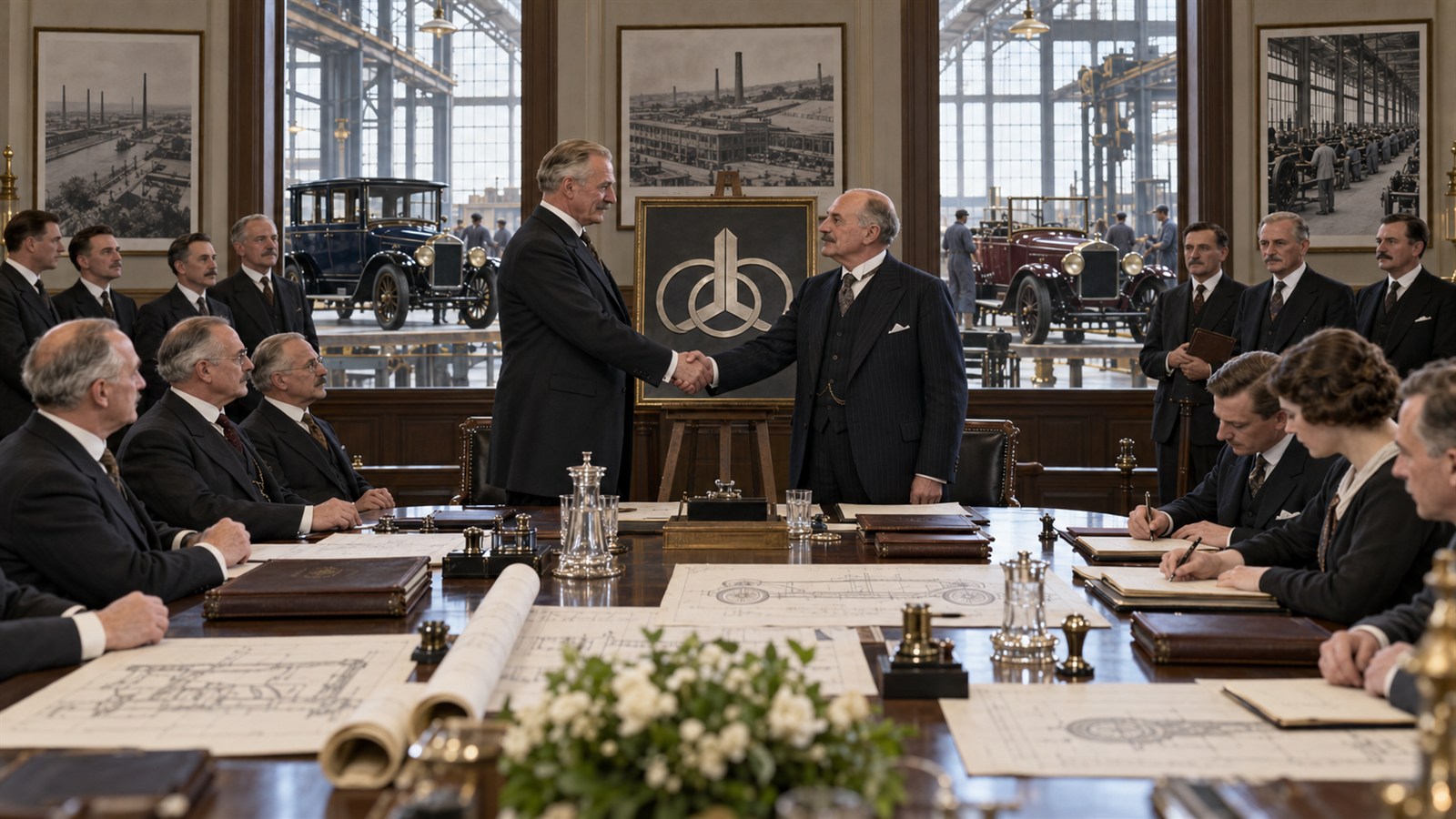
On June 28, 1926, shareholders of Benz & Cie. met in Mannheim to approve a merger with Daimler-Motoren-Gesellschaft; a corresponding Daimler meeting followed in Stuttgart on June 29. The combination created Daimler-Benz AG and joined two companies rooted in the earliest development of the automobile. Germany's difficult postwar economy, inflation, excess capacity, and intense competition had already pushed the firms into a cooperative agreement covering purchasing, sales, and advertising. Full merger promised deeper rationalization while preserving the engineering heritage associated with Carl Benz, Gottlieb Daimler, Wilhelm Maybach, and the Mercedes name.
The transaction combined overlapping factories, product lines, patents, distribution, and brands. That offered potential economies in procurement and development, but also created political and operational questions about which plants, models, and managers would lead. The new Mercedes-Benz trademark brought Daimler's three-pointed star together with the Benz laurel wreath, giving the organization a visible symbol of equality and continuity. Brand architecture mattered because dealers and customers already recognized the predecessor names. A successful integration had to present combination as added strength rather than as the disappearance of trusted identities.
Daimler-Benz coordinated passenger cars, commercial vehicles, engines, and motorsport under the merged enterprise. Shared engineering and scale helped it compete internationally, while premium positioning made technical quality central to the brand promise. The company's later history included major achievements and grave responsibilities, including armaments production and exploitation of forced labor under the Nazi regime. Corporate longevity therefore requires more than celebrating inventions and products. It also demands an honest account of how assets, management, and labor were used under changing political conditions.
The merger matters because consolidation creates value only when integration choices are clear. Purchasing leverage and shared research do not appear automatically when companies sign papers; product portfolios, factories, governance, and market identities must be reconciled. Daimler and Benz used a combined emblem to communicate continuity while reorganizing operations behind it. Modern mergers face the same tension between efficiency and heritage. Cutting every difference can destroy the capabilities customers valued, while preserving every duplication defeats the economic purpose. The 1926 combination built one of the world's most recognizable automotive identities by joining complementary histories, but its full business record also shows why enduring corporations must manage both inherited strengths and inherited accountability. Financial sponsorship also influenced the combination. Deutsche Bank played an important role in bringing the companies together, showing how creditors and capital providers can shape industrial consolidation when stand-alone firms face prolonged pressure. The resulting governance must still serve customers and operating needs rather than only the transaction.
Benz shareholders approved the merger on June 28, with Daimler shareholders completing the paired approval the following day.
Postwar economic pressure and excess capacity had already led the companies to cooperate in purchasing, sales, and advertising.
The transaction combined factories, product lines, patents, distribution, engineering talent, and two established names.
A new emblem joined Daimler's star and the Benz laurel wreath, signaling continuity to dealers and customers during integration.
Scale strengthened engineering and international competition, while later history imposed serious responsibilities that celebration cannot omit.
The merger demonstrates that value comes from deliberate integration of operations and identity, not from the legal combination alone.
Explore more of "On This Day ..."
Discover more events from the same date across news, politics, technology, sports, and other fields. Each link highlights significant moments that shaped history on different fronts.