

On This Day in Business: July 14, 1853
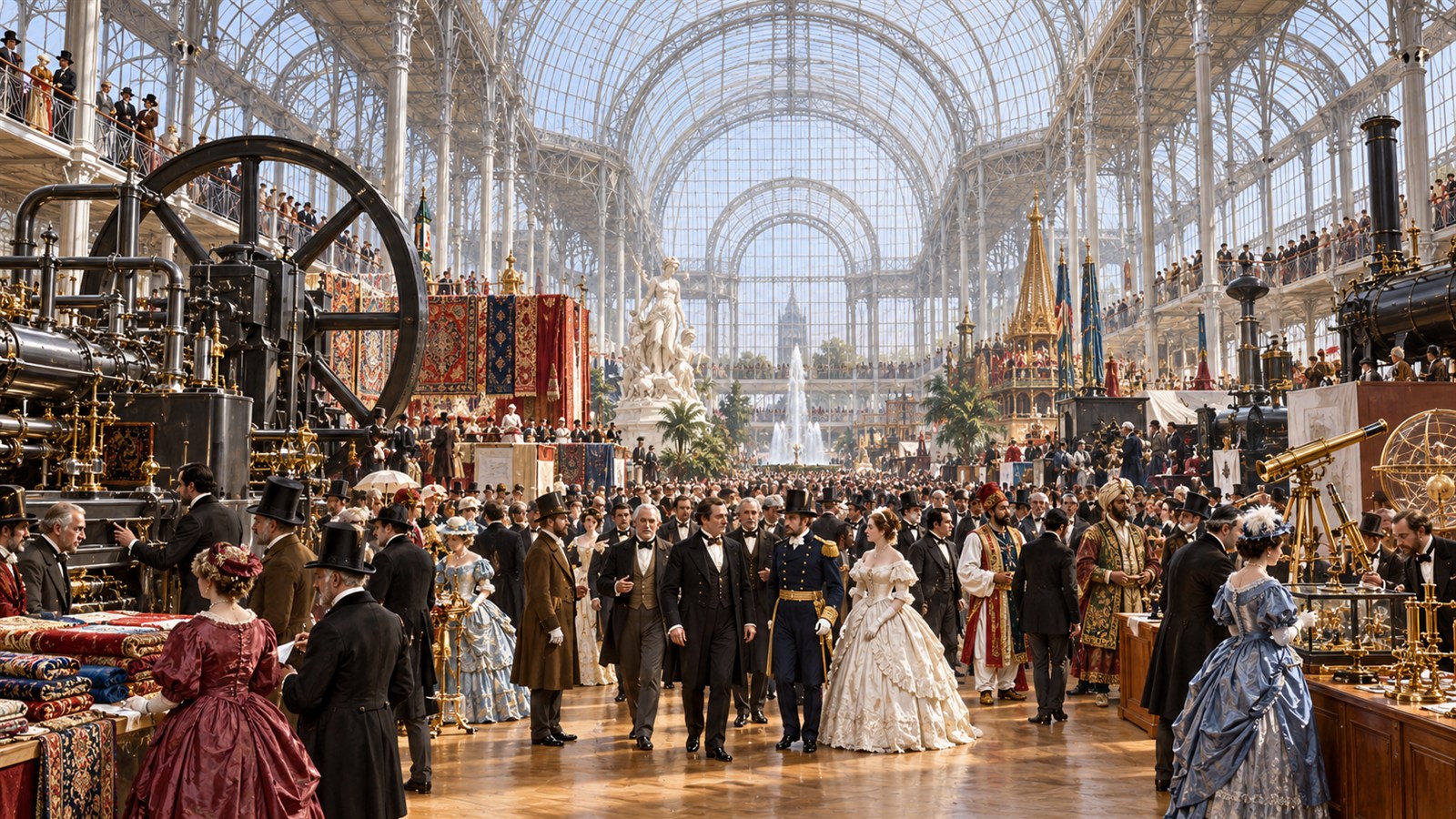
On July 14, 1853, the Exhibition of the Industry of All Nations opened in New York's Crystal Palace at Reservoir Square. Inspired by London's Great Exhibition, the event occupied a dramatic glass-and-iron building crowned by a dome. President Franklin Pierce attended the opening, and exhibitors displayed machinery, manufactured goods, scientific instruments, textiles, art, and luxury products from the United States and abroad. The palace gave visitors a concentrated view of industrial capability at a time when railroads, mechanization, and growing cities were changing American production and consumption.
The exhibition functioned as a marketplace for attention. Manufacturers could demonstrate machines that were difficult to explain in advertisements, compare their work with international rivals, and meet dealers, investors, engineers, and customers. Awards and press coverage supplied third-party validation. Visitors paid admission for education and spectacle, helping finance the event while becoming potential buyers and advocates. The building itself served as proof of modern materials and prefabricated construction, making architecture part of the commercial message.
The enterprise struggled financially despite large attendance and later management changes. The location was less convenient than organizers hoped, costs were high, and enthusiasm did not automatically produce sufficient revenue. The palace continued to host exhibitions after the fair and was destroyed by fire in 1858. Yet the event influenced public understanding of technology and helped elevate industrial design, including through displays associated with figures such as Elisha Otis. It belonged to a broader international movement in which world's fairs combined trade promotion, national competition, education, entertainment, and urban development.
The opening matters because exhibitions reduce the distance between an unfamiliar product and an audience. A working machine, material sample, or finished object could be judged directly instead of through description. That value attracted exhibitors and visitors even when the organizer's own economics remained fragile. Modern trade shows, product launches, and demonstration centers follow the same logic: gather a market temporarily, concentrate comparison, and convert spectacle into credibility. The Crystal Palace also offers a caution. A platform can create value for participants without capturing enough of that value to secure its own future. Exhibitors also learned from one another. A manufacturer could inspect foreign materials, mechanisms, finishes, and display methods, then reconsider its own production. That knowledge spillover made the fair valuable even when no immediate sale occurred. It also complicated protection of designs, reminding participants that visibility can attract partners and customers while making successful ideas easier for rivals to study.
New York built a glass-and-iron exhibition hall to present industrial products from the United States and abroad.
The Exhibition of the Industry of All Nations opened on July 14, 1853, with President Franklin Pierce attending.
Working machinery, samples, awards, and press coverage helped manufacturers explain products and establish credibility.
Admission revenue turned visitors into both paying spectators and potential customers for the exhibitors.
High costs and uneven finances troubled the enterprise even though the fair influenced technology, design, and public taste.
The event anticipated modern trade shows while showing that a valuable platform may still struggle to capture enough revenue.
Explore more of "On This Day ..."
Discover more events from the same date across news, politics, technology, sports, and other fields. Each link highlights significant moments that shaped history on different fronts.