

On This Day in Business: July 25, 1909
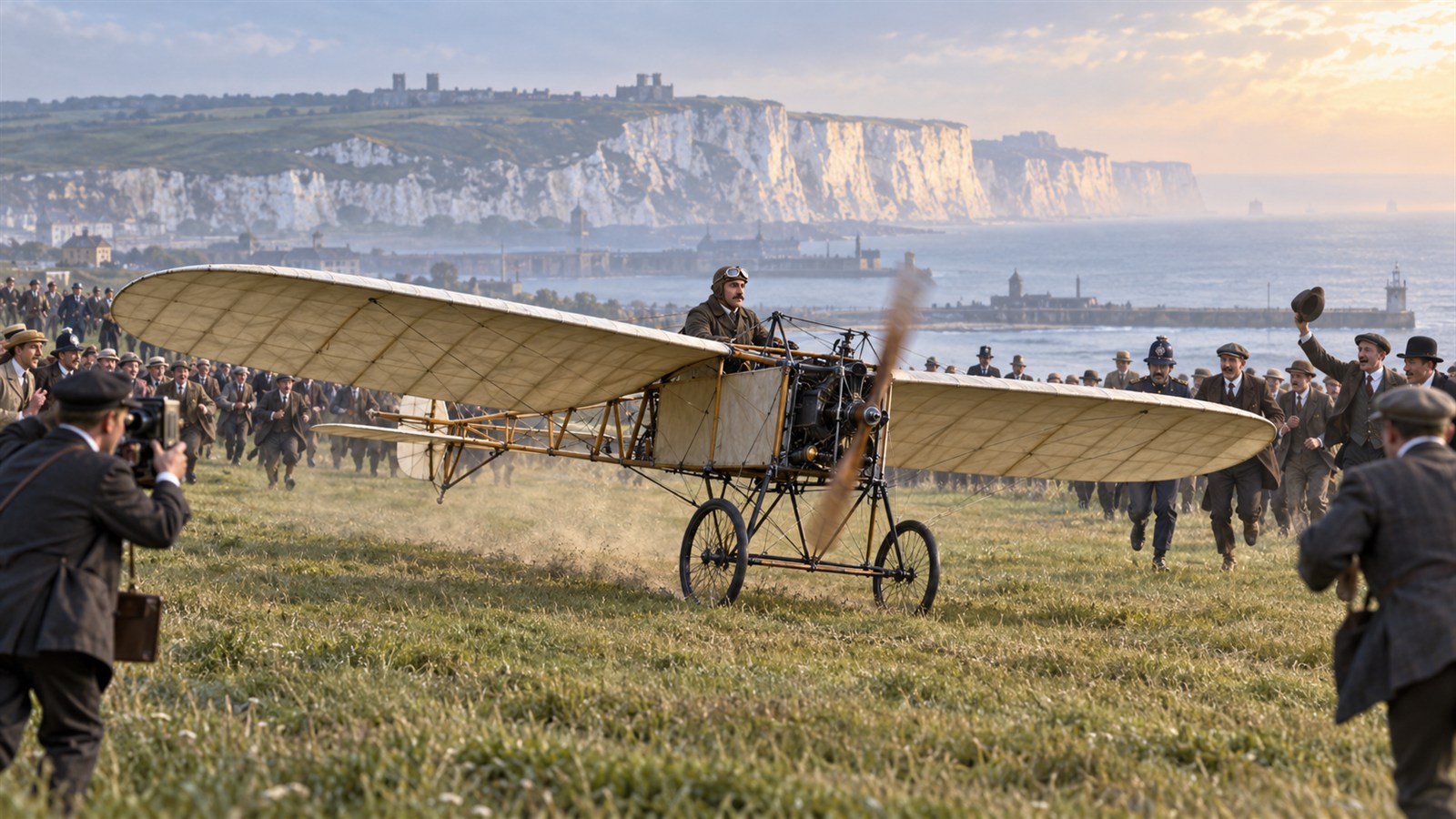
On July 25, 1909, French aviator and manufacturer Louis Blériot flew his Type XI monoplane from near Calais to a field outside Dover. The journey across the English Channel took roughly thirty-seven minutes and covered water that offered no safe landing place. Blériot flew with an injured foot, uncertain weather, a small engine, and limited navigation guidance. He won the £1,000 prize offered by the Daily Mail, whose owner used aviation contests to attract readers and encourage technical progress. The landing made Blériot an international celebrity.
The flight was a demonstration with immediate commercial value. Blériot had spent heavily on aircraft experiments and experienced repeated crashes. Crossing the Channel gave customers evidence that his monoplane could travel beyond a controlled field. Military officials, sportsmen, and aspiring pilots placed orders, while licensed production spread the design. The Type XI combined a lightweight wooden frame, fabric covering, wing warping, and a compact engine in a configuration that influenced early aviation.
Newspaper prizes created a market for public proof before ordinary passenger demand existed. Publishers gained dramatic stories and circulation; inventors gained funding, deadlines, and attention; spectators learned what aircraft might do. The same competitions also exposed danger and unreliability. Aviation still needed better engines, controls, training, weather knowledge, airfields, maintenance, and regulation. Blériot's success did not solve those problems, but it persuaded institutions to invest in them.
The crossing matters because a difficult milestone can compress years of marketing into one observable result. Blériot did not explain that flight over water might become useful; he did it under conditions the public understood. The prize aligned media incentives with technical risk and converted the achievement into worldwide distribution of a story. Modern demonstration races and challenge prizes follow similar logic. They make performance measurable, attract participants, and give emerging technologies a narrative. Lasting business value arrives only when the spectacle leads to repeatable products, training, service, and safer operations. The Type XI's simplicity helped it spread. A relatively clear airframe layout made the machine understandable to builders and pilots, while the flight supplied a dramatic endorsement. Orders nevertheless required workshops capable of consistent materials and assembly. Early aircraft businesses therefore combined craft production with the first pressures toward standard parts, documentation, and organized pilot support. Insurance and finance also followed improved proof. When aircraft could complete recognized routes and manufacturers supplied standardized machines, investors had more evidence for valuing operations and risks. The demonstration did not make aviation safe, but it began replacing pure speculation with performance records that institutions could compare.
Louis Blériot used his lightweight Type XI monoplane to attempt a flight from France to England.
He crossed the Channel and landed near Dover on July 25, 1909, after about thirty-seven minutes.
The Daily Mail's £1,000 prize gave inventors a public target while giving the newspaper a powerful story.
The feat brought aircraft orders, licensed production, celebrity, and new interest from military and private customers.
Commercial aviation still required stronger machines, training, airfields, maintenance, navigation, weather knowledge, and rules.
The crossing shows how a measurable demonstration can reduce market uncertainty and turn performance into demand.
Explore more of "On This Day ..."
Discover more events from the same date across news, politics, technology, sports, and other fields. Each link highlights significant moments that shaped history on different fronts.