

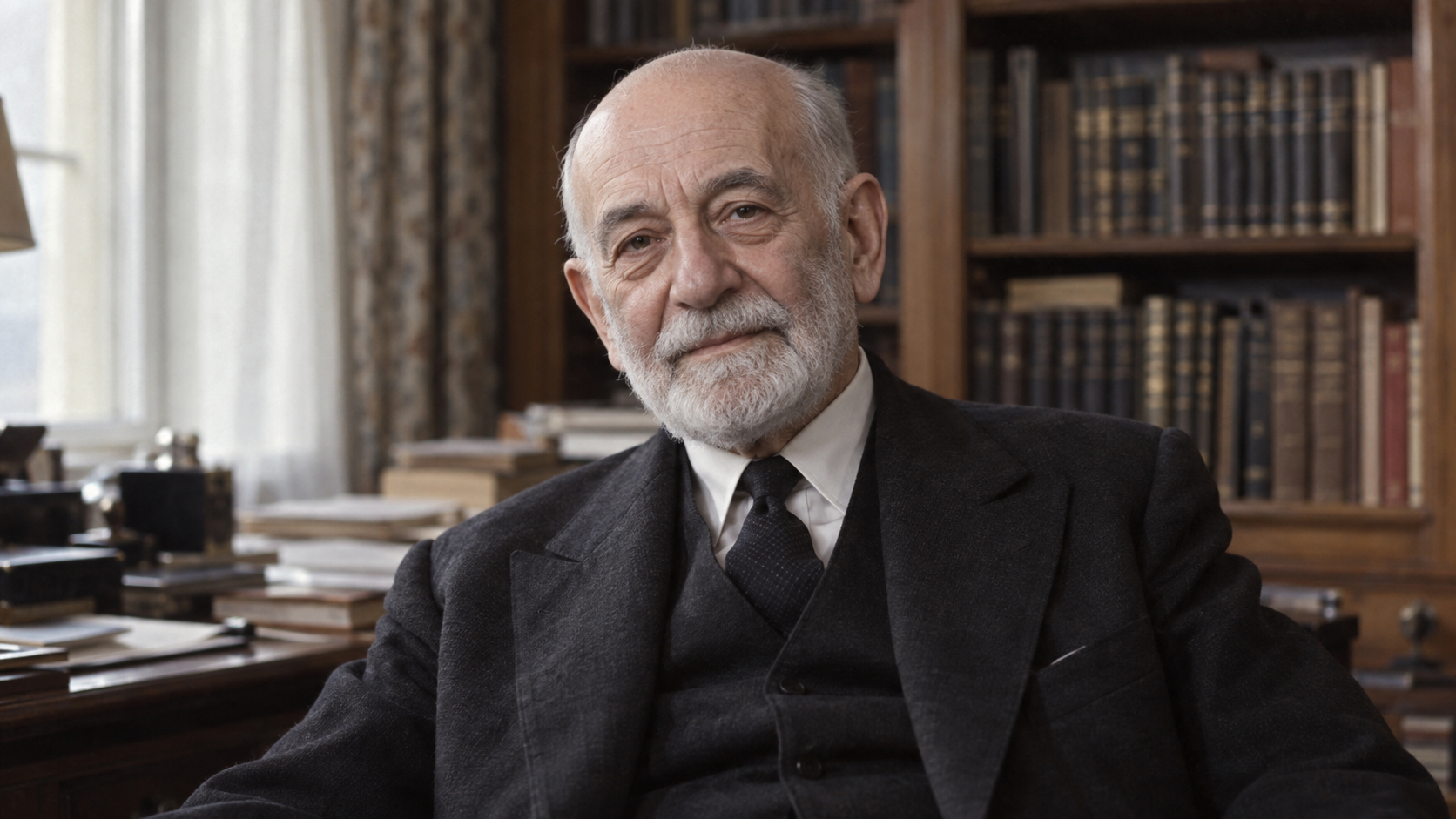
“But reason alone is not enough.”
A sound argument still needs people willing to carry its responsibilities into practice. René Cassin explored that relationship in his Nobel lecture on December 11, 1968. The featured sentence appears in the published English translation of his French address, The Charter of Human Rights. Near the conclusion, he had discussed education, limits on armaments, and solidarity with people experiencing hunger. He then argued that reason by itself could not supply everything the work of peace required. The line is not a rejection of thought. It introduces his concern that emotional commitment and a sense of justice also influence what people will defend.
Cassin was a French jurist and a major participant in the development of the Universal Declaration of Human Rights. That work involved many contributors, so describing him as its sole author would obscure the collaborative process. His Nobel lecture came twenty years after the declaration’s adoption in 1948. He considered protection at national, universal, and regional levels and emphasized the importance of guarantees people could actually use. The English wording featured here corresponds to a short sentence in the original French text. Reading both versions confirms its place in an argument about building peace around human dignity and practical protections.
Reason can explain why a rule is fair, how an institution should function, or what a proposed change is likely to cost. A sense of justice helps explain why people should care enough to uphold those conclusions when doing so becomes inconvenient. The relationship can become dangerous if feeling is used to replace evidence or to excuse cruelty. Cassin’s surrounding argument points in another direction: humane emotional commitments should not be left for destructive movements to manipulate. Concern for others can strengthen public reasoning when it encourages people to examine whose suffering is being ignored and whose protection remains incomplete.
That connection has consequences for how rights are taught and defended. A formal statement may be accurate yet distant from the experience of the people it concerns. Examples, testimony, and opportunities to participate can help make the principle intelligible without sacrificing its universality. At the same time, a compelling story still needs procedures that protect others who never become visible to a wider audience. The quotation invites a union of moral attention and institutional discipline. Laws need reasons, remedies, and responsible administration; the people who sustain them also need a reason to care. A culture of protection becomes stronger when those demands support one another instead of competing for attention.
Cassin delivered the Nobel lecture on December 11, 1968. The featured wording is the published English translation of his French speech.
The English and French texts place the sentence near the conclusion, after discussion of practical efforts toward peace.
The sentence adds moral commitment to rational planning. Cassin does not abandon the value of evidence or careful reasoning.
His concern includes a sense of justice: emotional energy can serve protection and solidarity rather than hatred.
Connect human rights principles with the experiences of people who need protection, while preserving fair procedures for everyone.
A moving example can encourage attention, but durable remedies require institutions capable of acting consistently.
Explore more "Quotes of The Day"
Discover more notable quotes from influential voices across politics, science, business, technology, sports, and culture. Each quote offers insight into how ideas, beliefs, and decisions shape the world around us.