

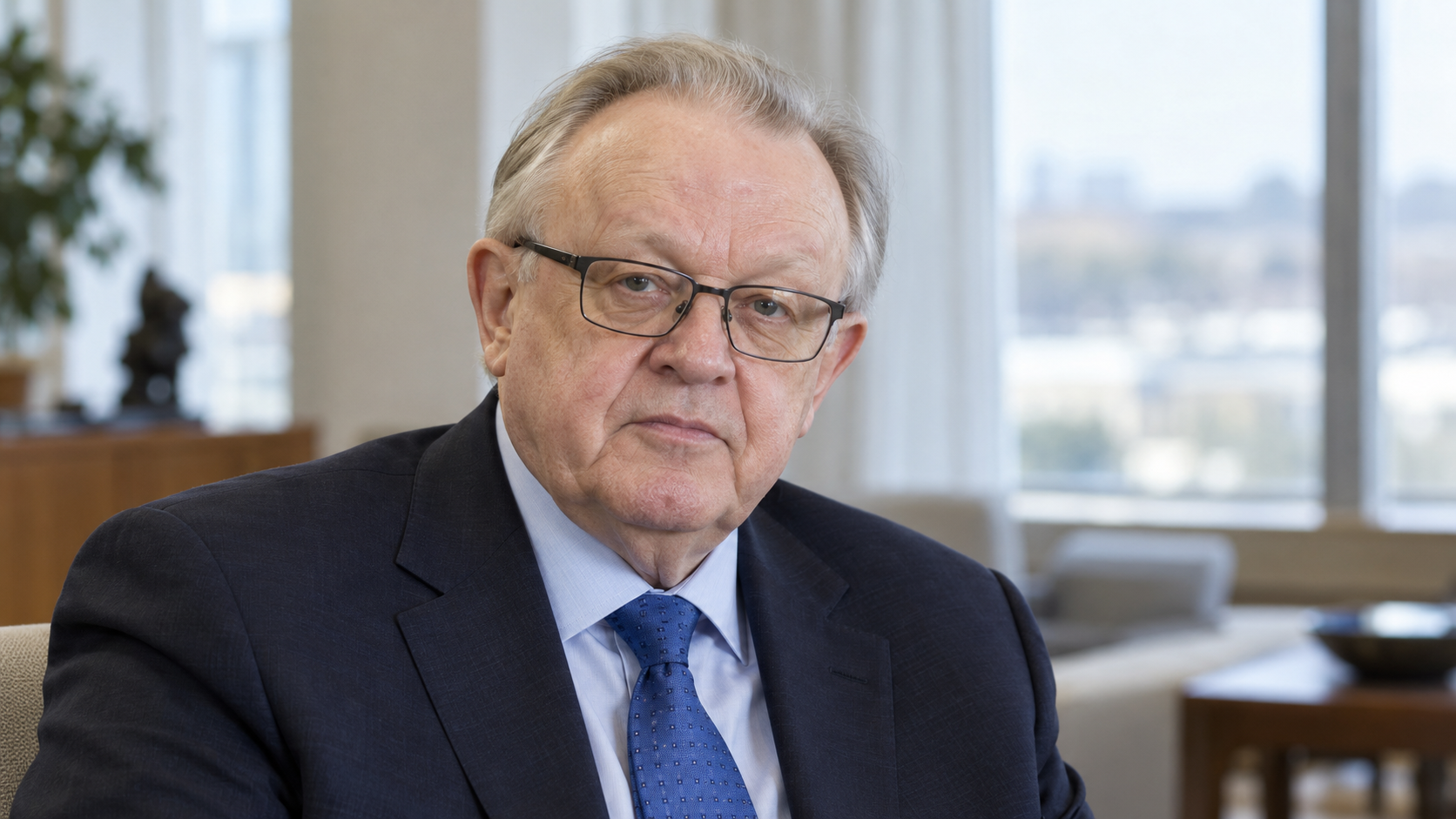
“Peace is a question of will.”
A peace agreement begins with choices that someone must be willing to make. Martti Ahtisaari distilled that responsibility into the closing sentence of his Nobel lecture on December 10, 2008. The former Finnish president and international mediator had discussed the practical work of resolving conflicts and the obligations of the parties involved. His final line emphasizes commitment, but it should not be read as a promise that wishing strongly enough can settle any dispute. In the lecture, will belongs to a wider account of negotiation, cooperation, and sustained effort. The words challenge resignation while leaving the difficult work of implementation clearly in view.
Ahtisaari drew on decades of mediation, including work involving Namibia, Aceh, and other conflicts. He emphasized that the people engaged in a conflict must make peace, while mediators and the international community can help create conditions for agreement. That allocation of responsibility matters. An outside negotiator cannot simply produce a settlement that everyone else has no part in shaping. The speech also discussed the support and resources needed after an agreement is reached. Its hopeful conclusion therefore rested on experience with both negotiation and follow-through. It described a demanding political task rather than an uncomplicated technique that could be applied mechanically everywhere.
Will becomes visible through conduct. Parties may have to keep talking after an unwelcome proposal, explain a compromise to their supporters, or accept a procedure whose outcome they cannot fully control. Supporters may need to commit resources and attention long after the conflict stops leading the news. Those choices distinguish an expressed preference for peace from a sustained effort to make it workable. The quotation encourages readers to look for such evidence. A promise is stronger when it identifies responsibilities, provides ways to address violations, and gives people affected by the settlement a meaningful place in deciding how it will operate.
The sentence does not remove the weight of history, unequal power, fear, or material conditions. A responsible effort must understand those obstacles instead of treating reluctance as a simple failure of character. Commitment becomes useful when it is informed by the situation and translated into credible steps. That can include building trust, strengthening practical protections, and revisiting arrangements that do not deliver what they promised. Ahtisaari’s line closes the month with an active understanding of peace: something people choose to pursue and then maintain together. The test of that choice is the patient work that follows, when the agreement must become a reality people can recognize in their own lives.
Ahtisaari ended his Nobel lecture on December 10, 2008, with this sentence. He repeated it when discussing the lecture the following year.
His account drew on practical mediation and emphasized the role of the parties in making their own peace.
Will means sustained commitment within negotiation and implementation. It does not make obstacles disappear through optimism.
Mediators can help, but parties, communities, and supporting institutions must carry responsibilities after an agreement.
Look for commitments that identify practical steps, resources, accountability, and participation by affected people.
Judge a settlement by the conditions it creates over time, including whether it can respond to problems after the initial agreement.
Explore more "Quotes of The Day"
Discover more notable quotes from influential voices across politics, science, business, technology, sports, and culture. Each quote offers insight into how ideas, beliefs, and decisions shape the world around us.