

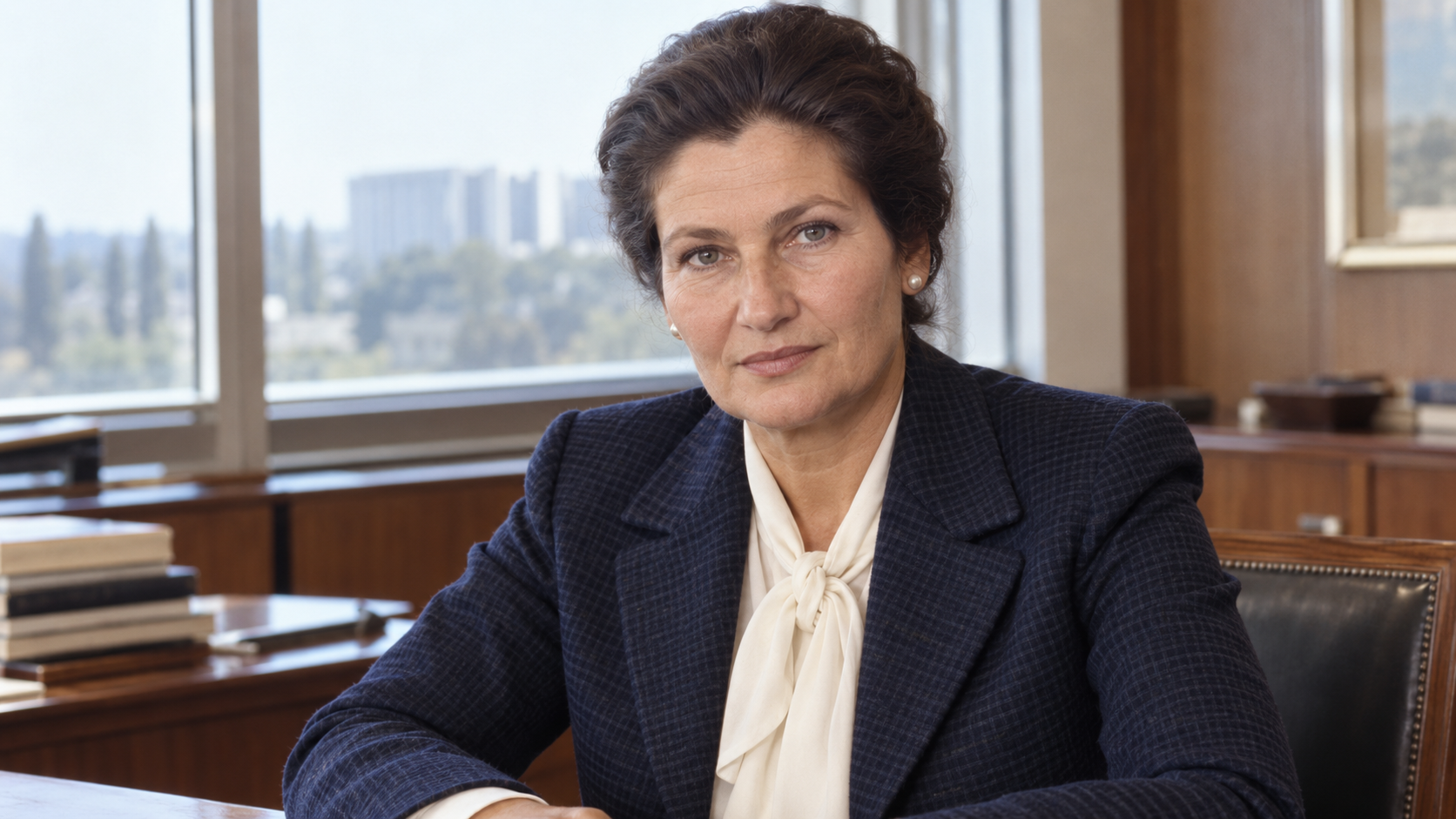
“Let us begin with the challenge of peace.”
Simone Veil spoke these words in Strasbourg on July 17, 1979, after her election as president of the first directly elected European Parliament. In the official English version of her address, she identified peace, freedom, and prosperity as major challenges facing the European Community. Beginning with peace, she warned that the security enjoyed by its members should not be taken for granted. Her speech connected the assembly’s new democratic legitimacy with a responsibility extending beyond ordinary political rivalry. The quotation marks the start of that argument, placing the preservation of peaceful relationships at the center of the institution’s work.
Describing peace as a challenge gives it a different character from a settled achievement. A society can become accustomed to the absence of war and overlook the arrangements that help sustain it. Those arrangements may include regular communication, procedures for resolving disagreements, and opportunities to cooperate on shared problems. Their value is not always visible during an uneventful period. The quotation asks political actors to remember that continuity has conditions. A stable relationship can require maintenance long before a dispute becomes a crisis, just as trust may need attention before a broken promise reveals how fragile it has become.
An elected assembly also has to work across differences without pretending that those differences do not matter. Members represent distinct constituencies and disagree about priorities, costs, and the distribution of authority. Shared responsibility does not erase those disagreements. It establishes a reason to keep them within institutions where arguments can be heard and choices examined. The phrase sets an initial priority: begin by identifying what everyone has a duty to preserve, then debate how best to preserve it. This can give cooperation a public purpose that is clearer than a general request for harmony. It also leaves room to question a proposal whose claims about peace are unsupported by its likely effects or by the evidence offered for it.
For readers considering politics today, Veil’s sentence invites attention to the work hidden behind a reassuring outcome. Which relationships make peaceful disagreement possible, and how are they being maintained? Who can scrutinize decisions that affect them, and what happens when cooperation breaks down? These questions do not guarantee agreement about particular institutions or policies. They do encourage an assessment of political conduct over time. The quotation treats peace as something people inherit with responsibilities attached, rather than a possession that remains secure by itself. Its continuing force lies in asking leaders and citizens to make preservation an active part of democratic life.
Veil addressed the European Parliament in Strasbourg on July 17, 1979. She had become president of its first directly elected assembly and the first woman to hold the presidency.
The quotation follows her identification of peace, freedom, and prosperity as common challenges. It introduces her discussion of the fragility of peace and the assembly's responsibility to sustain it.
Calling peace a challenge emphasizes continuing work rather than a completed achievement. Cooperation and procedures for handling disputes can matter most before their absence becomes obvious.
A shared responsibility need not remove democratic disagreement. It provides a reason to keep disagreement within institutions where citizens can examine arguments and hold decision-makers accountable.
The sentence encourages attention to the relationships and public procedures that make peaceful politics possible. These require maintenance even during periods that appear stable.
Readers can assess whether particular decisions strengthen those conditions, while remaining open to disagreement about the means. The quotation supplies a purpose for scrutiny rather than an automatic endorsement of every proposal.
Explore more "Quotes of The Day"
Discover more notable quotes from influential voices across politics, science, business, technology, sports, and culture. Each quote offers insight into how ideas, beliefs, and decisions shape the world around us.