

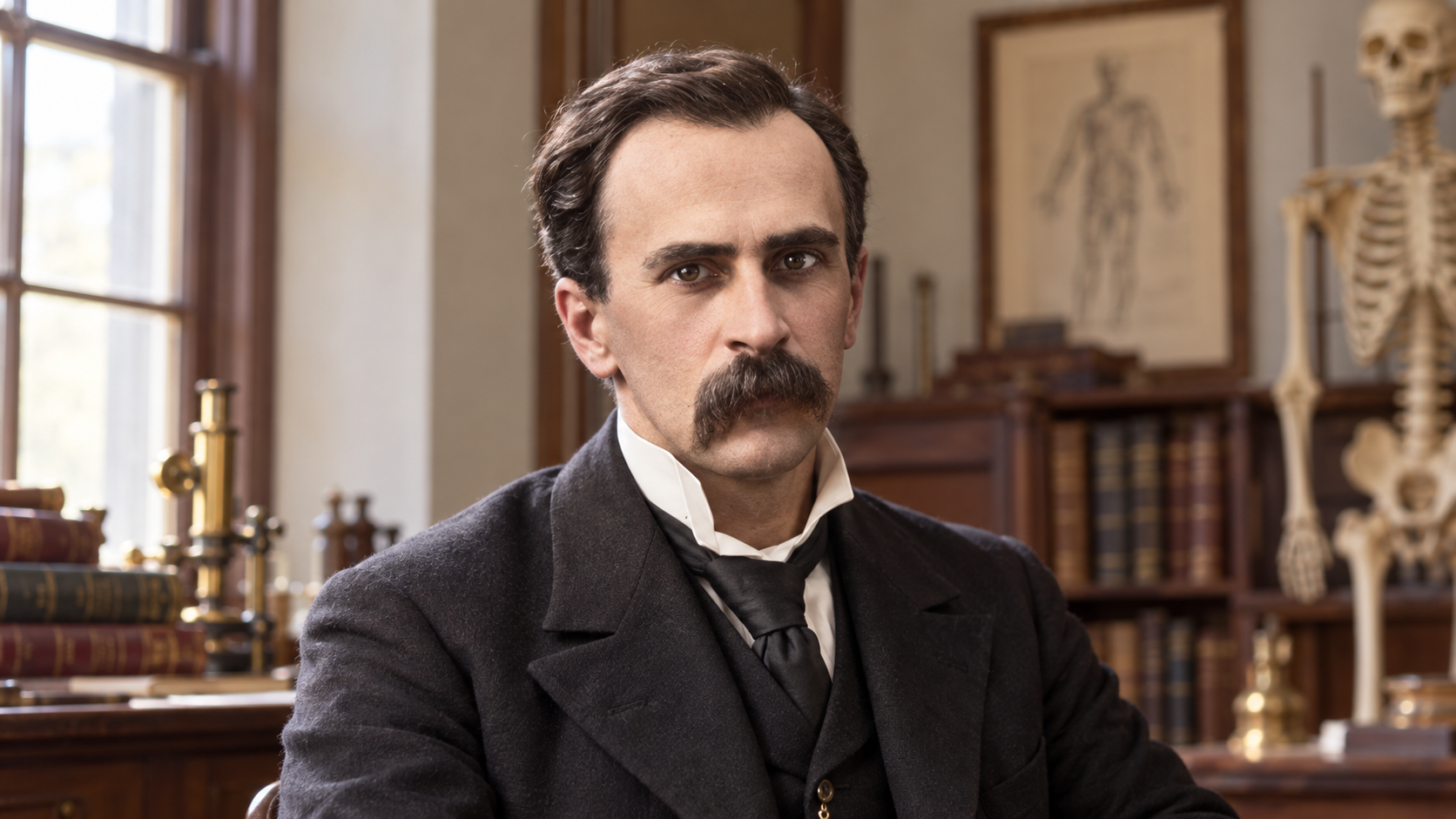
“Medicine is a science of uncertainty and an art of probability.”
William Osler’s description of medicine is often cited when physicians discuss the limits of certainty in clinical work. The American Medical Association’s Journal of Ethics records the sentence and cites a 1950 collection of Osler’s aphorisms. That documented route is more careful than assigning the line to an unverified lecture or inventing the date of its first delivery. Osler’s formulation brings scientific inquiry and practical judgment into the same sentence. Knowledge about illness can be rigorous while a decision about a particular person remains uncertain. The point is not that evidence is useless or that clinicians are free to guess without discipline. It is that medicine frequently asks people to act before every possible doubt has been removed. A responsible decision must therefore consider both what is known and how confidently that knowledge applies to the situation at hand.
Probability becomes especially important when several explanations fit the information available. A symptom may suggest one condition more strongly than another without proving either. A test can add useful evidence while still requiring interpretation in light of the person’s circumstances. These examples illustrate the aphorism; they are not instructions for diagnosing an illness from a single result. The art Osler names can be understood as the judgment involved in bringing evidence, observation, and the patient’s concerns together. That judgment should remain answerable to new information. Confidence can change when the clinical picture changes, and revising a conclusion need not mean that the earlier reasoning was careless. Equally, the existence of uncertainty should not excuse a failure to explain the basis of a decision. A thoughtful account distinguishes a conclusion that is well supported from one that is tentative, and it makes room for appropriate follow-up when the answer is not yet clear.
The quotation gives patients and clinicians a language for conversations that otherwise become frustrating. Someone seeking help may understandably want a definite answer, while a professional may need to describe several possibilities. Clear communication can make that gap easier to navigate by explaining what the current evidence suggests, what remains unresolved, and what would prompt a reassessment. It is also important to acknowledge that uncertainty can impose practical and emotional burdens; naming it does not make those burdens disappear. Osler’s sentence asks for humility without surrendering the pursuit of better knowledge. Its continuing relevance lies in that combination. Scientific progress can improve decisions, yet no brief slogan can remove the need to consider the individual case carefully. Medicine earns trust when it communicates the strength and limits of its reasoning, rather than presenting every estimate as a certainty. The aphorism therefore supports a disciplined willingness to learn, reconsider, and explain, all while keeping the person affected by the decision in view.
The AMA Journal of Ethics quotes the aphorism and cites the 1950 collection of Osler’s sayings. This is a documented source route, not a verified date of first utterance.
The sentence also appears in a scholarly discussion of uncertainty in emergency medicine. Its continuing use concerns clinical reasoning rather than an anniversary.
Osler joins science and judgment because general knowledge must be applied to an individual case. Uncertainty does not cancel the obligation to use good evidence.
A conclusion may need revision as information changes. That possibility calls for explanation and follow-up, rather than an unsupported claim of certainty.
The aphorism can help frame a conversation about what is known, what remains unclear, and when a decision should be revisited.
It offers a perspective on professional judgment. It is not a method for interpreting a particular test or making a personal treatment choice.
Explore more "Quotes of The Day"
Discover more notable quotes from influential voices across politics, science, business, technology, sports, and culture. Each quote offers insight into how ideas, beliefs, and decisions shape the world around us.