

On This Day in Business: August 21, 1888
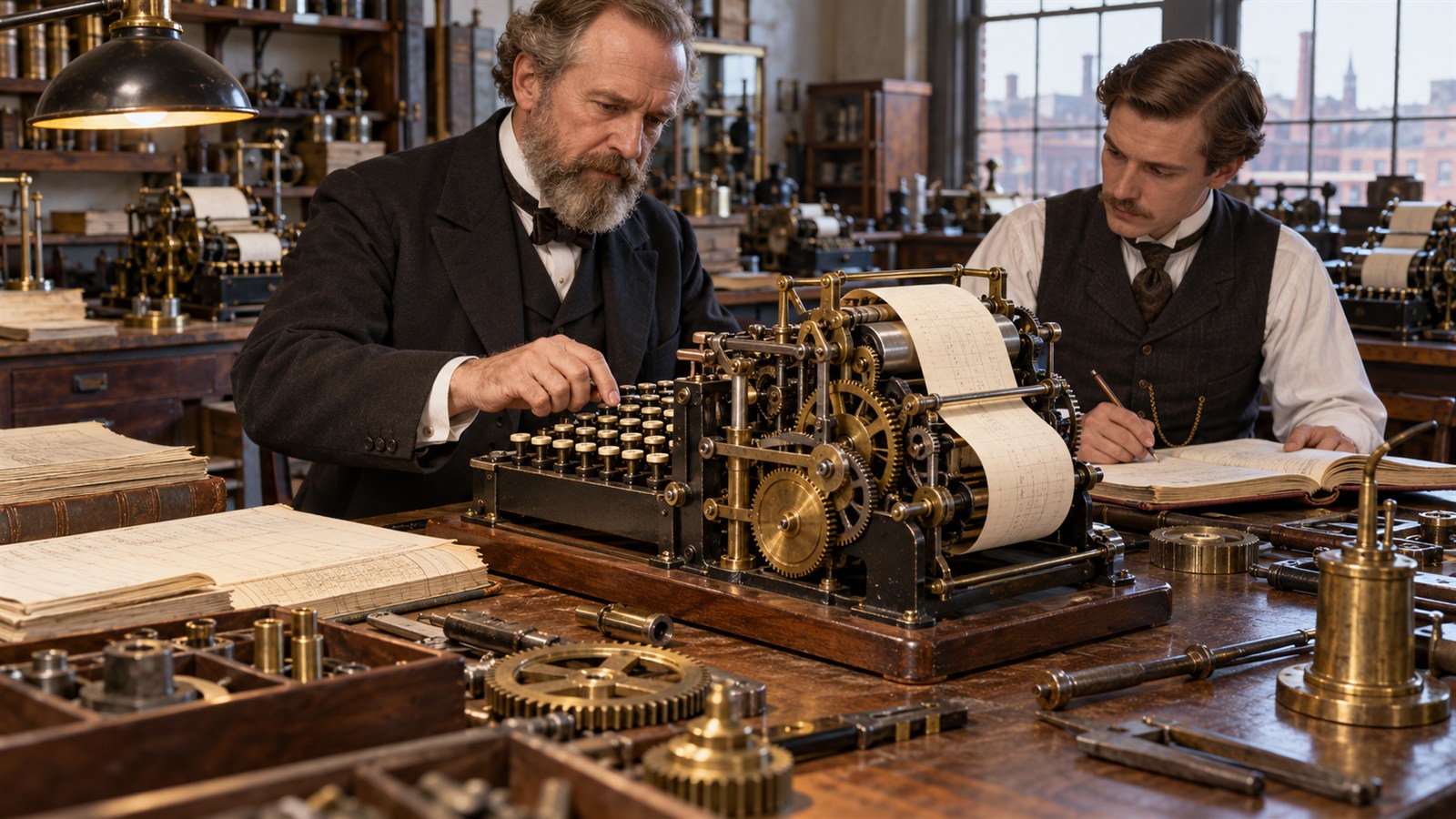
On August 21, 1888, William Seward Burroughs received a U.S. patent for a calculating machine. A former bank clerk, Burroughs understood the fatigue and error involved in repetitive arithmetic. His machine used keys and mechanical linkages to add figures, with later designs printing results on paper. The earliest commercial units were difficult to operate and did not immediately succeed, but Burroughs continued improving them. Within a growing economy of banks, railroads, insurers, retailers, and government offices, the demand for faster and more auditable calculation was expanding.
Mechanical calculation changed office work by moving part of the process from trained mental arithmetic into a standardized device. A clerk still entered numbers and checked the context, but the machine could execute repetitive operations consistently. Printed records strengthened accountability because totals could be reviewed against individual entries. That feature mattered to businesses handling cash, invoices, payrolls, and ledgers. The value was not simply speed; it was the combination of speed, repeatability, and a paper trail that managers and auditors could inspect.
Commercializing the invention required patience. Burroughs and his backers produced an initial run, gathered experience from users, and redesigned mechanisms that proved unreliable or confusing. The company developed sales, training, and service capabilities because office machines needed demonstration and maintenance. Successful adoption often demanded changes in workflow and employee habits as well as hardware. Over time, Burroughs became a major name in adding machines and later computing, illustrating how a firm can grow by following its customers' information-processing needs from one generation of technology to another.
Electronic calculators and software eventually displaced mechanical adding machines, but the business problem Burroughs addressed remains familiar. Organizations seek tools that reduce error, increase throughput, and preserve evidence of how a result was produced. His patent marks an important stage in the mechanization of administrative work, a process that would culminate in digital accounting and enterprise systems. It also offers a practical innovation lesson: an imperfect first product can still found an industry when the underlying customer problem is real and the company learns faster than the mechanism wears out. The printed total also separated calculation from personal reputation. Managers could verify output rather than trust that a particular clerk had remembered every carry correctly. That institutional reliability made it easier for offices to grow, divide work among employees, and process more transactions without losing control. Mechanization expanded administrative capacity as surely as machinery expanded factory output.
William S. Burroughs received his calculating-machine patent on August 21, 1888.
His banking experience exposed the cost of repetitive arithmetic and clerical error.
Mechanical calculation standardized operations that had depended heavily on manual skill.
Printing results created an auditable record useful for finance and administration.
Early machines were difficult to use, making redesign, training, sales, and service essential.
The business eventually followed customers from adding machines into later information-processing technology.
Explore more of "On This Day ..."
Discover more events from the same date across news, politics, technology, sports, and other fields. Each link highlights significant moments that shaped history on different fronts.