

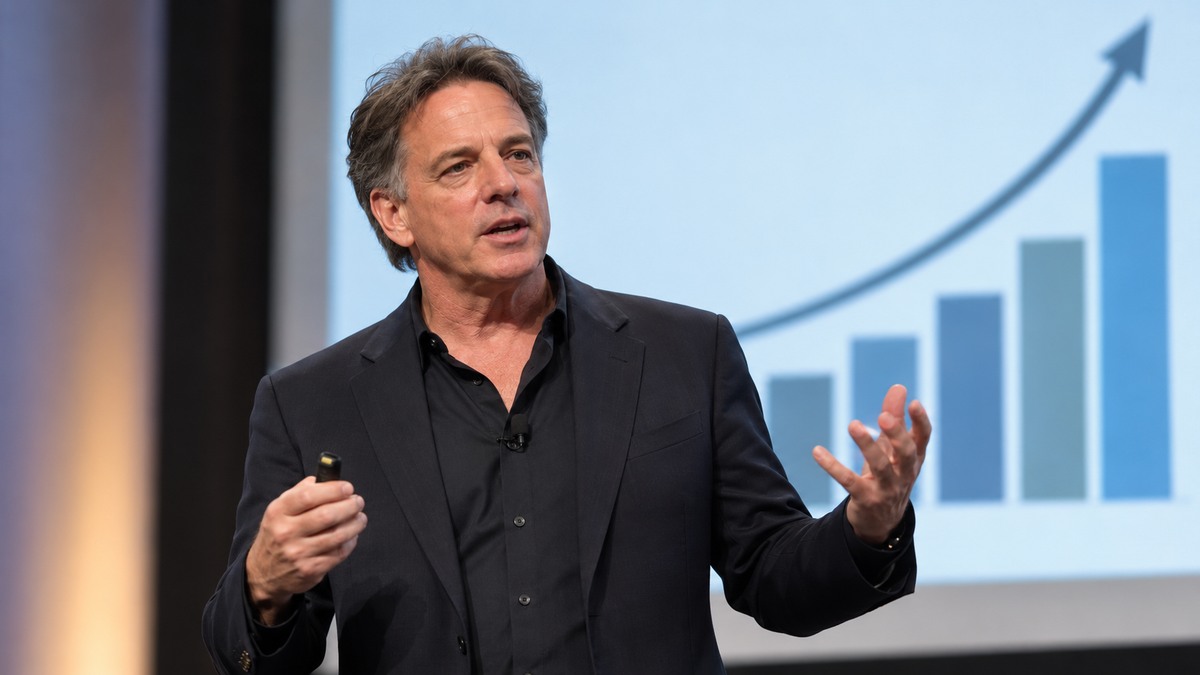
“The next time you’re looking at a charity, don’t ask about the rate of their overhead. Ask about the scale of their dreams.”
Dan Pallotta closed his 2013 TED talk on charitable giving with this challenge. He argued that evaluating nonprofits primarily by overhead ratios can discourage investment in talent, fundraising, systems, and experimentation even when those investments might expand the scale and durability of social impact. The broader business lesson is that a cost category says little without its relationship to outcomes. Low administrative spending may indicate efficiency, but it can also reflect weak infrastructure or an artificially narrow ambition. Responsible evaluation connects resources, capability, reach, and evidence of impact. Behind the concise wording is a claim about how organizations create results. It encourages leaders to look beyond individual effort and examine design, incentives, information, relationships, and the customer context that determine whether a good intention becomes reliable performance.
Boards and funders can review total cost per outcome, learning systems, fundraising efficiency over time, and the capacity required for responsible growth. Organizations should explain how investment in people or technology improves mission delivery instead of asking stakeholders to accept scale as proof. Managers can translate the claim into a small experiment with a baseline, an owner, a defined customer or employee outcome, and a review date. Specificity protects the work from drifting into broad language that nobody can challenge or verify.
A large dream does not excuse waste, poor governance, or unsupported impact claims. Beneficiaries need voice, and independent evidence matters. Overhead ratios are incomplete, but financial controls, reserves, executive compensation, and transparency remain legitimate parts of stewardship. Responsible use also requires naming the tradeoff. Speed, cost, autonomy, safety, equity, and learning may not all improve at once. People closest to the consequences should have a meaningful voice, and uncertainty should be reported instead of hidden behind confidence.
Digital fundraising and social media can rapidly expand attention while rewarding emotionally vivid claims. Donors and leaders need measures that distinguish reach from durable change, and nonprofits need room to test, learn, and retain capable staff without disguising the true cost. Review one mission-driven budget and connect each major capability expense to an intended outcome, time horizon, and evidence source. Remove a wasteful item if found, but do not cut the infrastructure required to learn whether the mission is succeeding. Evidence from the experiment can guide scaling, revision, or stopping. The durable lesson is to join purpose with measurement and human judgment, so the organization becomes better at seeing reality and responding before a local success or failure hardens into mythology. Recording the decision and its limits gives colleagues a foundation they can inspect, challenge, and improve instead of asking them to rely on memory, authority, or an unexplained result.
Dan Pallotta closed his 2013 TED talk on charitable giving with this challenge. He argued that evaluating nonprofits primarily by overhead ratios can discourage investment in talent, fundraising, systems, and experimentation even when those investments might expand the scale and durability of social impact.
The broader business lesson is that a cost category says little without its relationship to outcomes. Low administrative spending may indicate efficiency, but it can also reflect weak infrastructure or an artificially narrow ambition. Responsible evaluation connects resources, capability, reach, and evidence of impact.
Boards and funders can review total cost per outcome, learning systems, fundraising efficiency over time, and the capacity required for responsible growth. Organizations should explain how investment in people or technology improves mission delivery instead of asking stakeholders to accept scale as proof.
A large dream does not excuse waste, poor governance, or unsupported impact claims. Beneficiaries need voice, and independent evidence matters. Overhead ratios are incomplete, but financial controls, reserves, executive compensation, and transparency remain legitimate parts of stewardship.
Digital fundraising and social media can rapidly expand attention while rewarding emotionally vivid claims. Donors and leaders need measures that distinguish reach from durable change, and nonprofits need room to test, learn, and retain capable staff without disguising the true cost.
Review one mission-driven budget and connect each major capability expense to an intended outcome, time horizon, and evidence source. Remove a wasteful item if found, but do not cut the infrastructure required to learn whether the mission is succeeding.
Explore more "Quotes of The Day"
Discover more notable quotes from influential voices across politics, science, business, technology, sports, and culture. Each quote offers insight into how ideas, beliefs, and decisions shape the world around us.