

“Business can change the world.”
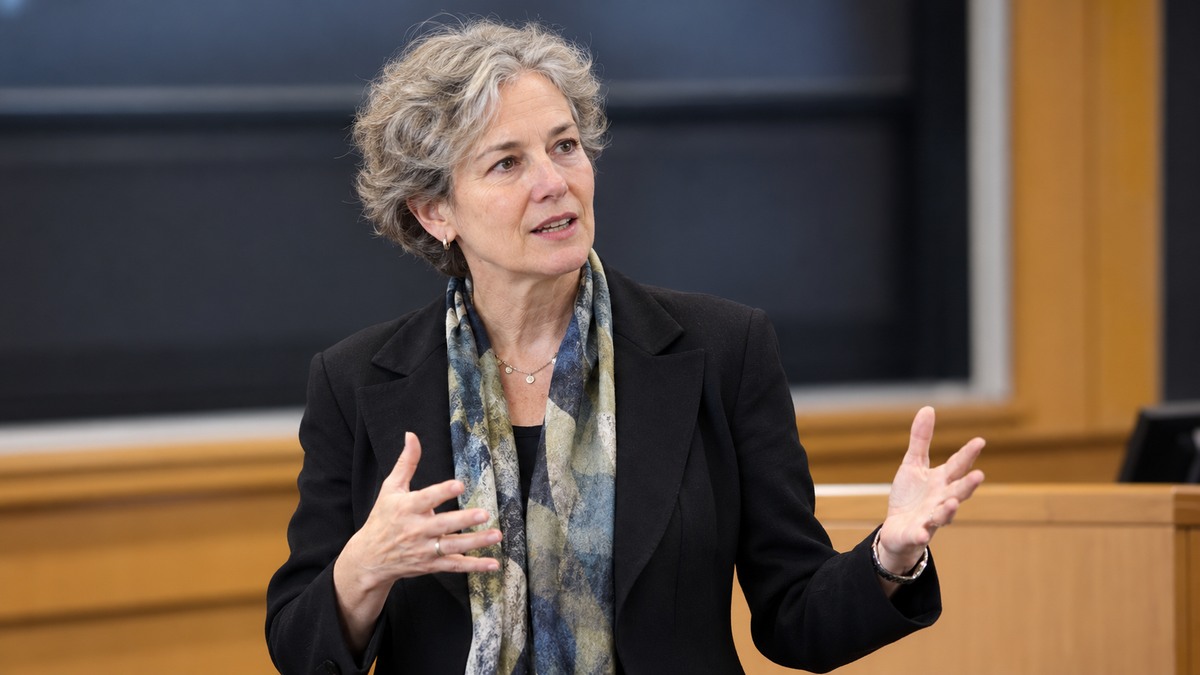
Rebecca Henderson placed this proposition at the center of her 2020 book Reimagining Capitalism in a World on Fire. Drawing on research and company cases, she argued that business can help address climate change, inequality, and institutional weakness when purpose, strategy, cooperation, and public rules reinforce one another. The line is a statement of capacity, not innocence. Companies control investment, innovation, jobs, products, and political influence, but those powers can improve or damage shared systems. Change becomes credible when purpose affects resource allocation and when market rules reward responsible competition. The business value of the line appears when it changes a real decision. It directs attention toward assumptions that routine can hide and invites a team to examine the system behind an outcome instead of treating the visible result as a complete explanation.
Executives can define a purpose tied to a real need, identify the capabilities through which the firm contributes, and connect the claim to capital budgets, incentives, and product choices. Collaboration can help solve collective-action problems, while public policy sets enforceable minimums. Application therefore requires an explicit mechanism: what should people do differently, what signal should move, and when will the team examine the result? Writing those elements down turns general agreement into a testable management practice.
Voluntary purpose cannot replace regulation, competition, labor rights, or democratic accountability. Leaders may face genuine costs and conflicts between stakeholders. Transparent governance and external verification are essential so a noble mission does not become protection from scrutiny. Context matters because an idea that improves one situation can create harm in another. Leaders need boundaries, dissent, representative evidence, and a way to correct course. Accountability cannot be delegated to the quotation or the tool used to implement it.
Decarbonization, trustworthy technology, and resilient supply chains require coordinated investment that few governments or firms can accomplish alone. Businesses can move faster when they combine innovation with common standards and policies that prevent responsible actors from being undercut by free riders. Take one statement of purpose and trace it to a product decision, a capital expenditure, an incentive, and a policy position. Where the chain breaks, identify the change required and the stakeholder who can verify whether the commitment reaches practice. The review should preserve what was known when the choice was made, document what changed, and share the learning beyond one team. Repeated with discipline, that cycle converts a memorable sentence into better judgment rather than another short-lived management theme. It also makes the cost of assumptions visible, allowing future teams to reuse proven knowledge while recognizing the point at which a different customer, risk, or operating environment requires fresh testing.
Rebecca Henderson placed this proposition at the center of her 2020 book Reimagining Capitalism in a World on Fire. Drawing on research and company cases, she argued that business can help address climate change, inequality, and institutional weakness when purpose, strategy, cooperation, and public rules reinforce one another.
The line is a statement of capacity, not innocence. Companies control investment, innovation, jobs, products, and political influence, but those powers can improve or damage shared systems. Change becomes credible when purpose affects resource allocation and when market rules reward responsible competition.
Executives can define a purpose tied to a real need, identify the capabilities through which the firm contributes, and connect the claim to capital budgets, incentives, and product choices. Collaboration can help solve collective-action problems, while public policy sets enforceable minimums.
Voluntary purpose cannot replace regulation, competition, labor rights, or democratic accountability. Leaders may face genuine costs and conflicts between stakeholders. Transparent governance and external verification are essential so a noble mission does not become protection from scrutiny.
Decarbonization, trustworthy technology, and resilient supply chains require coordinated investment that few governments or firms can accomplish alone. Businesses can move faster when they combine innovation with common standards and policies that prevent responsible actors from being undercut by free riders.
Take one statement of purpose and trace it to a product decision, a capital expenditure, an incentive, and a policy position. Where the chain breaks, identify the change required and the stakeholder who can verify whether the commitment reaches practice.
Explore more "Quotes of The Day"
Discover more notable quotes from influential voices across politics, science, business, technology, sports, and culture. Each quote offers insight into how ideas, beliefs, and decisions shape the world around us.