

On This Day in Business: October 12, 1492
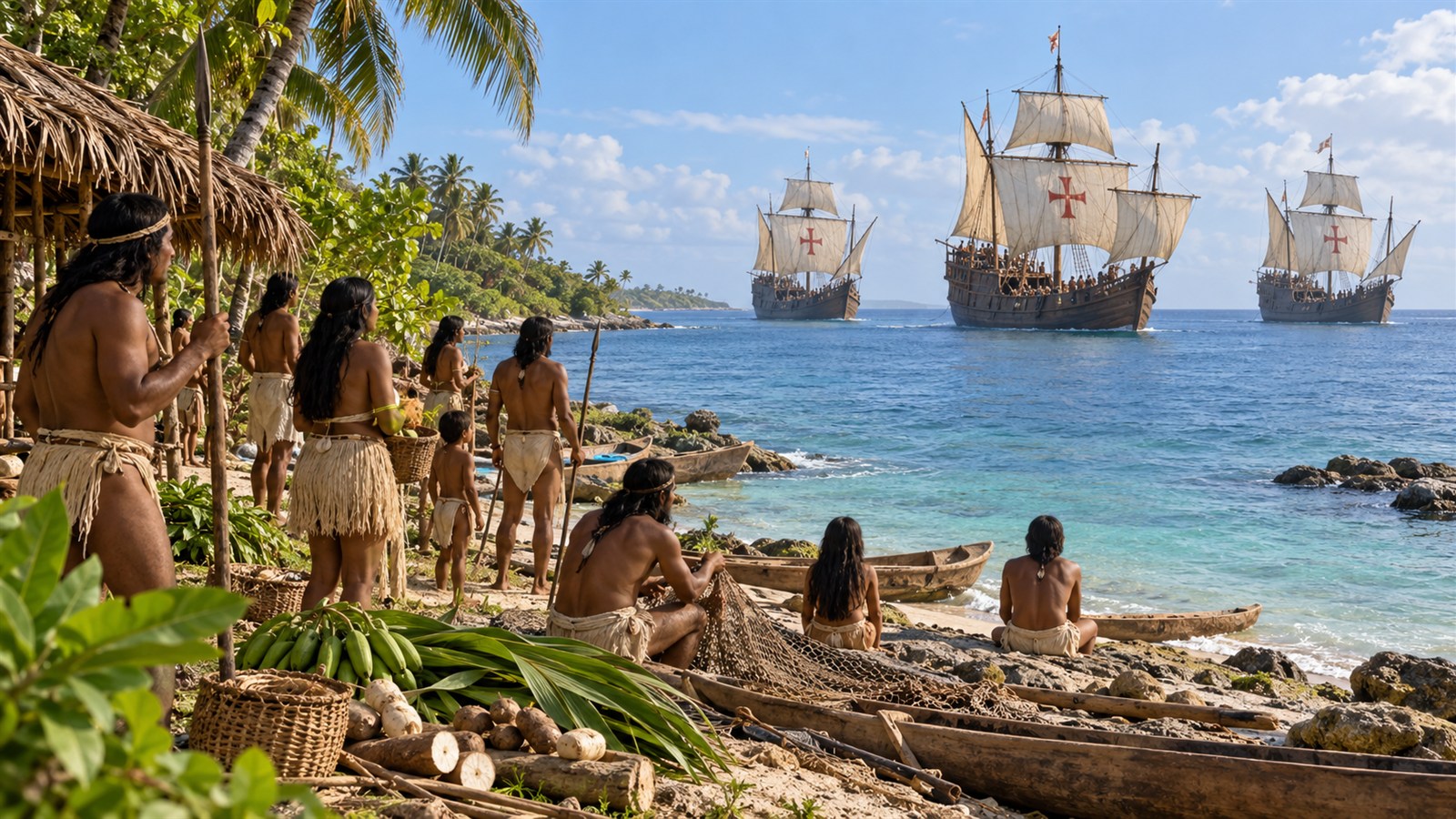
On October 12, 1492, an expedition led by Christopher Columbus reached an island in the Bahamas after sailing west under the sponsorship of the Spanish monarchs. The island was already inhabited by Taíno people; it was not an empty world waiting to be discovered. Columbus named the place San Salvador and claimed it for Spain, while the Indigenous name recorded in his journal was Guanahaní. The landing began sustained contact between Europe and the Americas. It also opened a violent era of conquest, forced labor, enslavement, disease, dispossession, and extraction that devastated Indigenous communities while redirecting resources and power across the Atlantic.
The voyage was financed as a commercial and geopolitical venture. European rulers and merchants wanted access to Asian goods and sought routes that could bypass existing intermediaries. The expedition combined royal authority, private ambition, maritime knowledge, vessels, credit, provisions, and promises of titles and profit. Columbus had badly underestimated Earth's circumference, but the existence of the Americas turned that miscalculation into a route with consequences far beyond the original plan. Later voyages created imperial supply chains linking ports, settlers, soldiers, missionaries, administrators, and merchants under systems enforced by state violence.
The resulting Columbian Exchange moved crops, animals, pathogens, people, and commodities between hemispheres. American maize, potatoes, tomatoes, and cacao altered diets and agriculture elsewhere; horses, cattle, wheat, and sugar reshaped American landscapes. Silver extraction influenced global finance and trade with Asia. Plantation economies generated enormous European wealth through the forced labor of Indigenous people and millions of enslaved Africans transported across the Atlantic. These were not neutral market exchanges. Prices and profits were built on coercion, unequal law, ecological disruption, and demographic catastrophe.
October 12 belongs in business history because modern global commerce cannot be understood apart from colonization. The new Atlantic networks expanded shipping, insurance, banking, manufacturing, and consumption, but the distribution of gains reflected conquest rather than consent. Indigenous nations survived, resisted, traded, adapted, and continue to assert sovereignty; they should not be described only as victims or as peoples of the past. A responsible commercial account therefore holds two truths together: sustained transatlantic contact integrated distant economies on an unprecedented scale, and that integration was structured through profound human theft. The event warns against measuring an enterprise solely by the volume of trade it creates while ignoring who controls the terms. Modern accounting cannot repair those harms, but it can refuse to hide them. Examining who supplied labor, who held legal power, and who absorbed environmental loss produces a more accurate picture of the systems from which present-day companies and states inherited wealth.
Columbus's expedition reached an inhabited island in the Bahamas on October 12, 1492.
The voyage sought a commercially valuable westward route to Asian markets under Spanish sponsorship.
Sustained contact redirected goods, crops, animals, disease, labor, and capital across the Atlantic.
Conquest, forced labor, enslavement, and epidemic disease devastated Indigenous societies.
Plantation and mining wealth depended heavily on coercion and the transatlantic slave trade.
The event shows why the scale of commerce cannot be separated from sovereignty, consent, and human cost.
Explore more of "On This Day ..."
Discover more events from the same date across news, politics, technology, sports, and other fields. Each link highlights significant moments that shaped history on different fronts.