

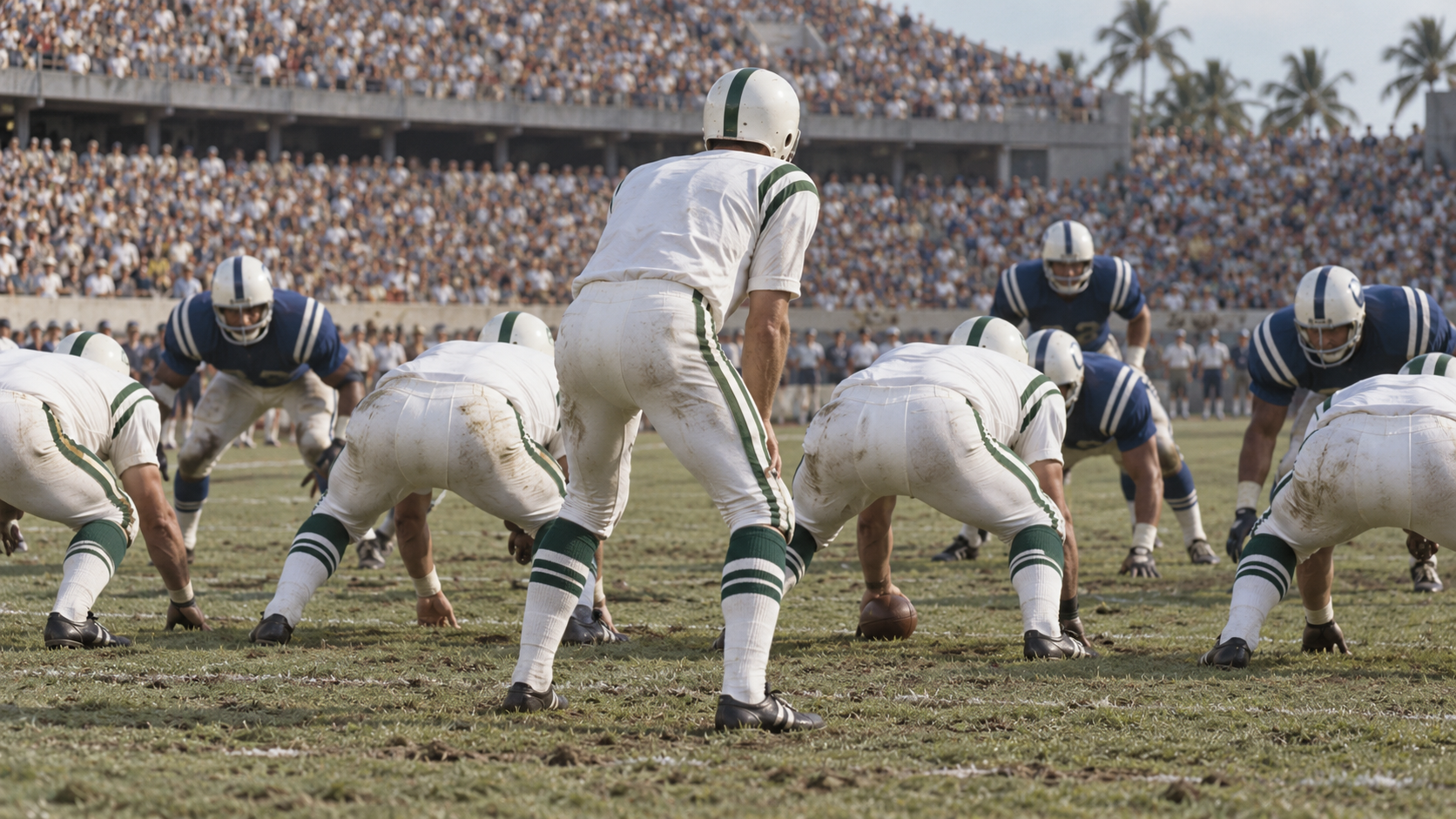
On This Day in Sports: January 12, 1969
On January 12, 1969, at the Orange Bowl in Miami, the New York Jets defeated the Baltimore Colts 16–7 in Super Bowl III, producing one of professional football’s most consequential upsets. Baltimore had gone 13–1 during the regular season and then won two playoff games by a combined score of 58–14. The older NFL was widely regarded as superior to the American Football League, whose champion had lost the first two AFL–NFL title games. Jets quarterback Joe Namath intensified the attention by publicly guaranteeing a victory. New York then supported that confidence with ball control, defense, and a game plan designed to avoid unnecessary risks.
The Jets took the lead early in the second quarter after Namath directed a 12-play drive that ended with Matt Snell’s four-yard touchdown run. New York’s defense intercepted Baltimore quarterback Earl Morrall three times in the first half, preventing the favored Colts from establishing momentum. Snell repeatedly attacked the interior of Baltimore’s defense and finished with 121 rushing yards. Namath completed 17 of 28 passes for 206 yards, using short and intermediate throws while changing plays at the line. He did not throw a touchdown pass, but his control of the offense helped the Jets keep possession and protect their advantage.
Jim Turner added three field goals as New York extended the score to 16–0 after three quarters. Baltimore coach Don Shula eventually replaced Morrall with Johnny Unitas, who had missed much of the season because of an elbow injury. Unitas moved the Colts effectively enough to produce a late touchdown, but the comeback began too late. New York finished with 337 total yards, and its defense had already created the margin the offense needed. Namath was selected as the game’s most valuable player, though Snell’s rushing and the defense’s takeaways were equally central to the result. The 16–7 final confirmed that the upset rested on a complete team performance.
The victory gave the AFL its first win in the championship series and changed perceptions before the two leagues completed their merger in 1970. Kansas City reinforced the point by defeating Minnesota in the next Super Bowl, but the Jets had supplied the breakthrough. Super Bowl III also helped turn the event itself into a national spectacle built around personalities, predictions, and competing football traditions. Namath’s guarantee became inseparable from the result, yet the game’s lasting lesson was more practical: an underdog could narrow a talent gap through preparation, turnovers, and control of possession. The Jets have not returned to the Super Bowl, making the Miami victory both a league milestone and the franchise’s defining championship.
Baltimore entered after a 13–1 regular season and two dominant playoff wins. The NFL champion was expected to extend its league’s control of the title series.
Joe Namath’s guarantee focused attention on the AFL’s credibility, but New York’s plan emphasized Snell’s running, short passes, and protection of the football.
The Jets intercepted Earl Morrall three times in the first half, built a 16–0 lead, and won 16–7 despite Baltimore’s late rally behind Johnny Unitas.
Namath earned MVP honors without throwing a touchdown. Matt Snell’s 121 rushing yards and the defense’s takeaways were essential to New York’s controlled victory.
The result gave the AFL its first Super Bowl win and strengthened confidence in competitive balance before the leagues completed their merger.
Namath’s guarantee helped define Super Bowl storytelling, while the game remains the Jets’ only championship and the franchise’s enduring historical reference point.
Explore more "On This Day in Sports"
Discover more landmark games, records, championships, and turning points from sports history. Each day revisits the athletes, teams, and moments that shaped competition and culture.