

How Basketball’s Possession Arrow Works Explainer
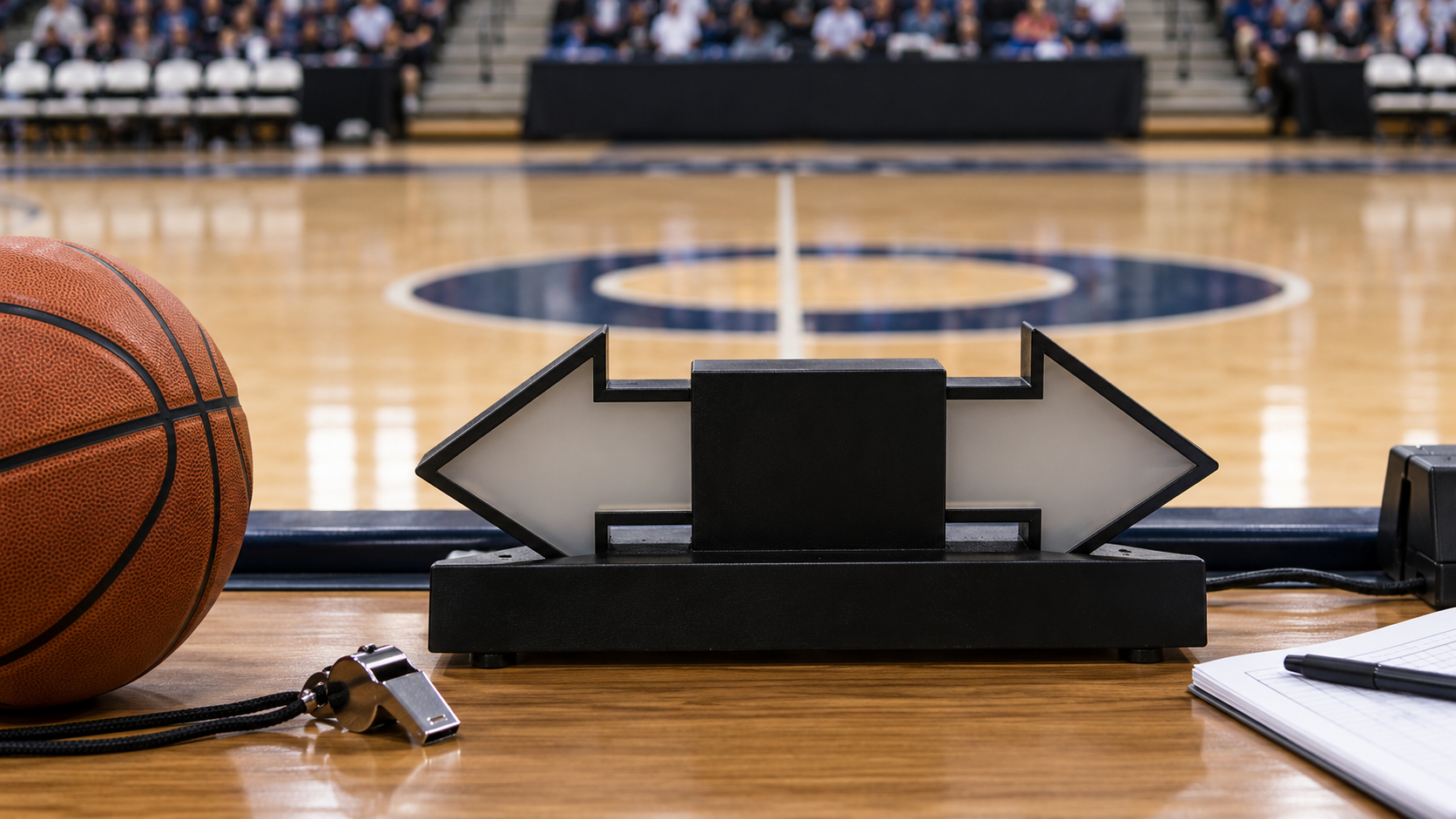
The possession arrow is an alternating-possession system used in college and many amateur basketball games. After the opening jump ball, most later held balls lead to a throw-in for the team indicated by the arrow instead of another jump.
The opening tip sets the sequence. Once one team gains control, the arrow points toward the opponent, giving that opponent the first alternating-possession opportunity. After a qualifying throw-in legally ends, the scorer reverses the arrow.
The arrow may also resolve certain simultaneous violations and determine possession to start later periods. It does not change simply because an official points toward it; a foul or violation before the throw-in ends can affect whether the entitlement is consumed.
Alternating possession creates a predictable rotation and avoids repeated jump balls that may favor taller players. Professional leagues may use actual jump balls, so viewers must apply the procedure of the competition being played.
The opening jump determines first control.
The arrow is then set for the opposing team’s first alternating throw-in.
The scorer changes the arrow after the throw-in legally ends.
A stoppage beforehand may leave the entitlement unchanged.
Held balls and specified dead-ball situations trigger it in NCAA play.
Some professional leagues use a new jump ball instead.
Explore more "Explainers"
Discover additional explainers across politics, science, business, technology, and other fields. Each explainer breaks down a complex idea into clear, everyday language—helping you better understand how major concepts, systems, and debates shape the world around us.