

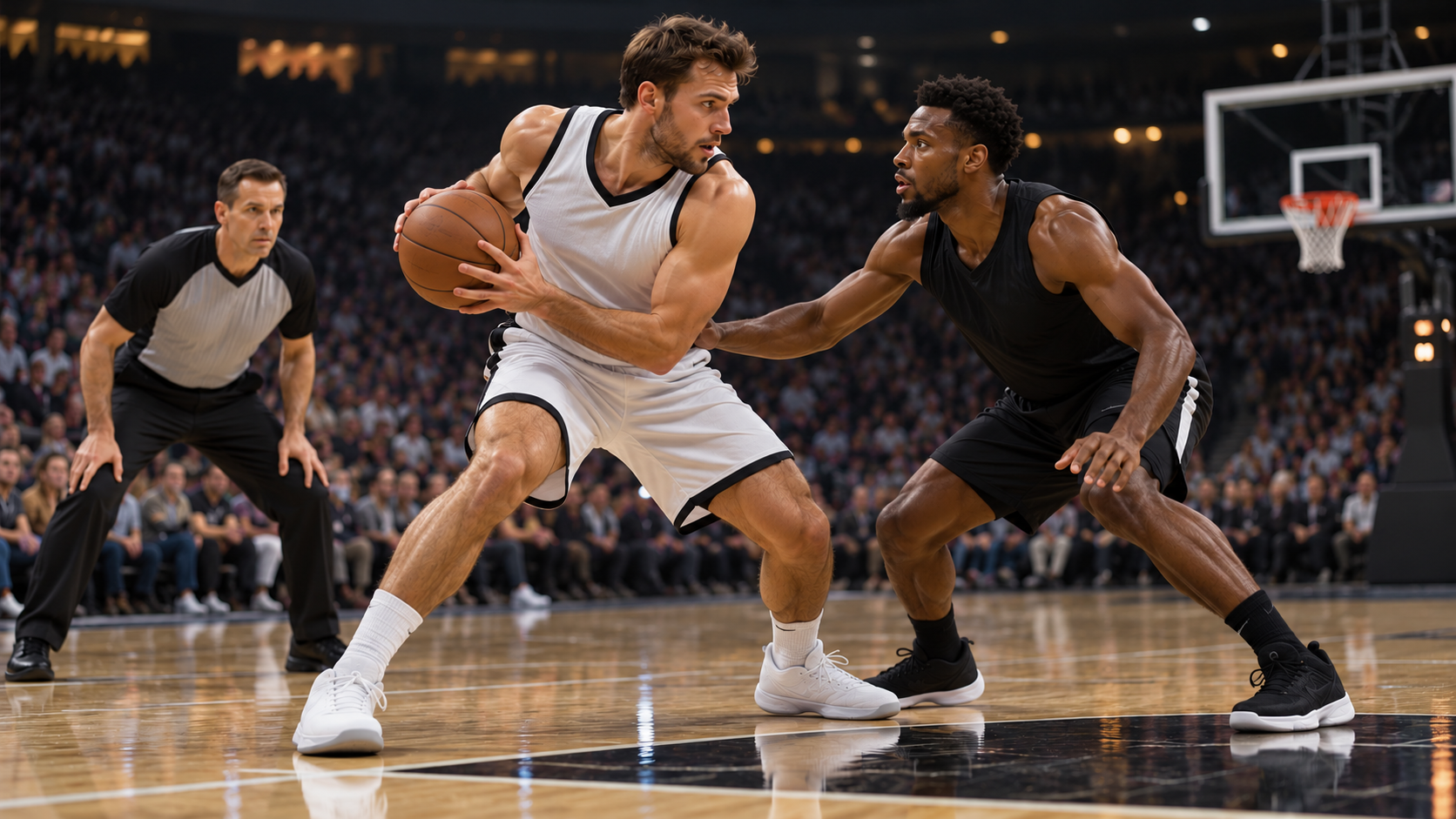
How Basketball Traveling Works Explainer
Traveling is an illegal movement of the feet while a player controls the ball. In the NBA, the crucial starting point is the gather: the moment a player gains enough control to hold, pass, shoot, or bring the ball to a pause. Steps taken before that control is established are not counted the same way as steps after it.
A moving player may take two legal steps after the gather to stop, pass, or shoot. The first step occurs when a foot or both feet touch after control is gathered, and the second follows with the other foot or both feet together. An extra step before releasing the ball creates the familiar traveling call.
A stationary player instead works from a pivot foot. That foot may turn while staying on its spot, but it cannot return to the floor after being lifted before a pass or shot is released. A player beginning a dribble must release the ball before lifting the pivot foot.
Slow-motion clips can make every foot movement look suspicious. The useful question is not simply how many contacts occurred, but when control began. Identify the gather first, then count the legal steps or find the pivot foot. That sequence explains most modern traveling decisions.
It is the point when a player gains enough control of the ball to hold, pass, shoot, or bring it to rest.
In the NBA, a player may take two steps after the gather to stop, pass, or shoot.
Yes, to pass or shoot, but the ball must be released before that foot returns to the floor.
Explore more "Explainers"
Discover additional explainers across politics, science, business, technology, and other fields. Each explainer breaks down a complex idea into clear, everyday language—helping you better understand how major concepts, systems, and debates shape the world around us.