

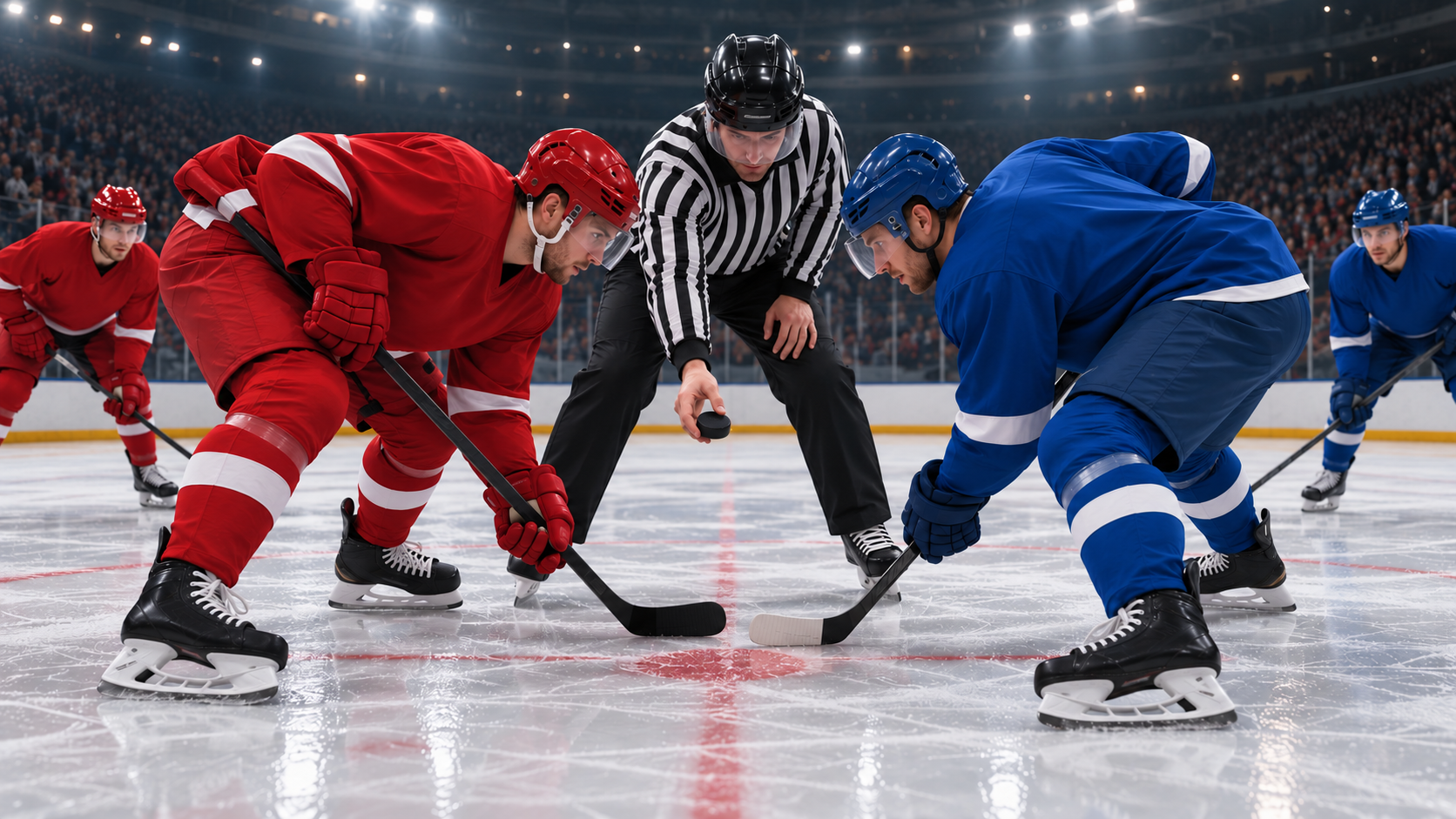
How Hockey Faceoffs Work Explainer
A faceoff restarts hockey by dropping the puck between opposing players at one of the rink’s designated spots. The location depends on why play stopped: an offside, icing, penalty, frozen puck, goal, or other stoppage can move the draw to a different zone.
The two centers position their skates outside the marked restraining lines and place their sticks as required before the official releases the puck. Other skaters must stay outside the faceoff circle or behind the hash marks and avoid encroaching before the drop.
If a player enters early, fails to set, makes illegal contact, or otherwise violates the procedure, the official may remove that center and require a teammate to take the draw. Repeated violations can bring a bench minor penalty, making discipline around the circle important.
Winning a faceoff means gaining useful control, not merely touching the puck first. Centers use hand position, timing, leverage, and planned help from wingers to direct it. Watch the official’s hand and the teammates around the circle: coordinated positioning often decides the possession.
A linesperson handles most faceoffs, while a referee may conduct certain center-ice draws under the rulebook.
Illegal positioning, moving early, or another faceoff violation can require a teammate to replace the center.
No. Teams judge success by who gains useful possession after the puck is dropped.
Explore more "Explainers"
Discover additional explainers across politics, science, business, technology, and other fields. Each explainer breaks down a complex idea into clear, everyday language—helping you better understand how major concepts, systems, and debates shape the world around us.