

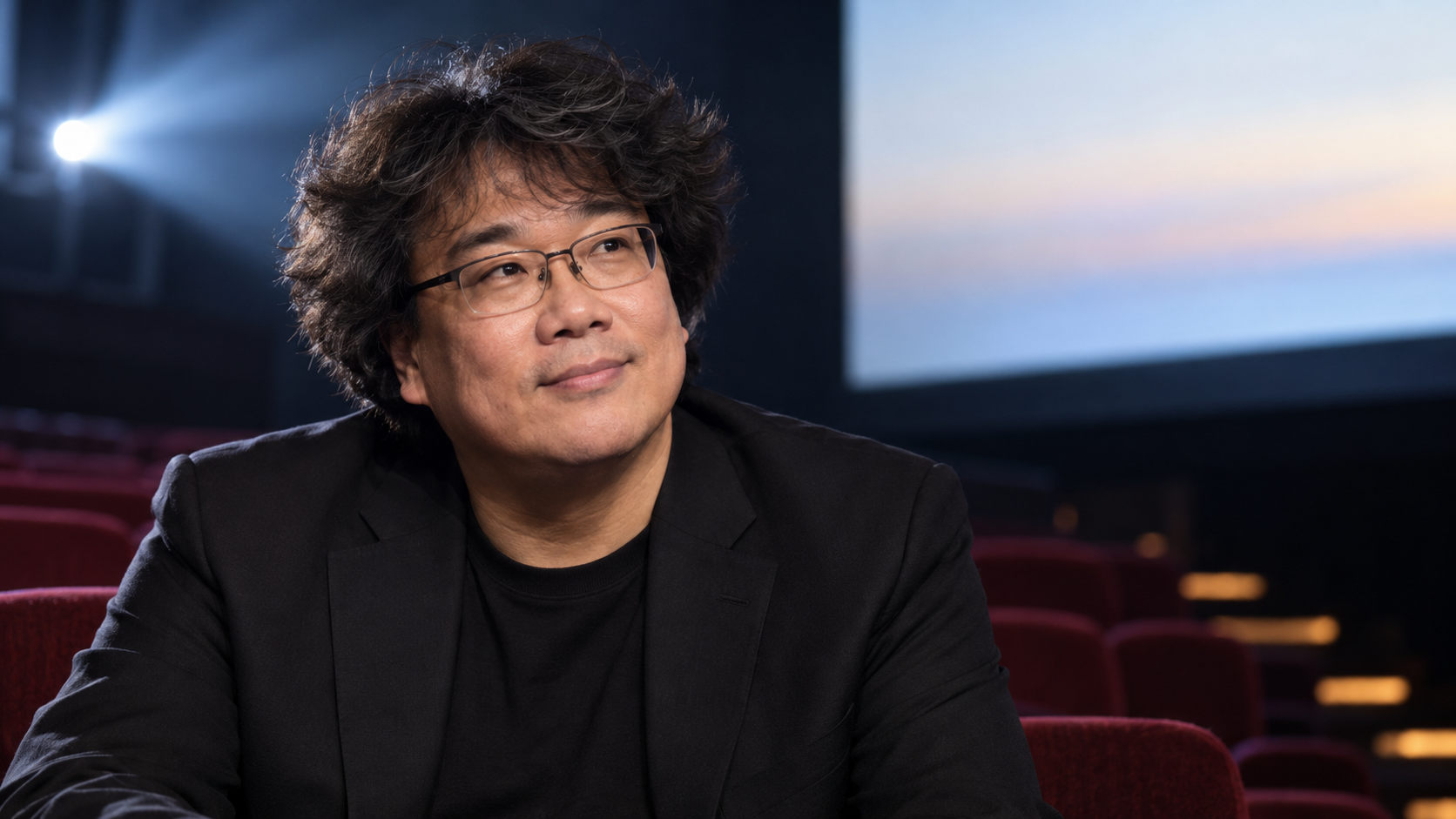
“Once you overcome the one-inch tall barrier of subtitles, you will be introduced to so many more amazing films.”
When Parasite won best foreign language film at the 2020 Golden Globes, director Bong Joon Ho used his brief acceptance speech to address the boundary that often keeps English-speaking audiences from international cinema. Through interpreter Sharon Choi, he said, “Once you overcome the one-inch tall barrier of subtitles, you will be introduced to so many more amazing films.” The line earned laughter, but its playful measurement carried a serious point: the distance between familiarity and discovery may be far smaller than habit makes it seem.
Bong’s metaphor turns subtitles from a burden into a threshold. Reading while watching requires some adjustment, yet that modest effort opens access to different storytelling traditions, histories, rhythms, genres, and performances. The quote also challenges an entertainment market that often treats English-language work as universal and everything else as a specialty. Parasite itself demonstrated the weakness of that division. Its story about class, aspiration, and inequality was rooted in South Korea while remaining immediately legible to viewers across borders.
The remark should not be reduced to an instruction that audiences simply try harder. Access depends on the quality, availability, timing, and affordability of translation. Subtitles can flatten wordplay or cultural context, and they may be difficult for viewers with certain visual or cognitive needs. Dubbing, audio description, caption customization, and thoughtful distribution all help more people enter a work. The larger principle is not loyalty to one format; it is curiosity supported by good accessibility and respect for the original artists.
The quote remains timely as streaming services place global catalogs beside local hits, while algorithms can still narrow viewing into familiar languages and genres. Crossing the “barrier” is a small way to resist cultural autopilot. Choose one film made outside your usual language or region, learn a little about its director and setting, and watch without treating difference as homework. Notice which emotions require no translation and which details invite further context. Then recommend the film by describing what it does well rather than calling it merely “foreign.” Bong’s sentence endures because it makes openness feel practical: one inch is not a wall. It is a reminder that culture becomes larger when audiences accept a little friction, translators are valued as creative partners, and distributors make discovery easier. The reward is not virtue for having read subtitles; it is the pleasure of encountering stories that can rearrange what a viewer believes cinema is capable of doing.
Bong delivered the remark through interpreter Sharon Choi while accepting the 2020 Golden Globe for Parasite. The South Korean film had already drawn international acclaim and would soon win the Academy Award for best picture. His joke addressed a real market habit: many English-speaking viewers and distributors still treated subtitled cinema as a narrow category rather than part of the medium’s mainstream.
The “one-inch” barrier suggests that a small adjustment can open a vast cultural field. Subtitles are not automatically accessible to everyone, however, and translation can lose wordplay or context. High-quality subtitling, dubbing, audio description, adjustable captions, and wide distribution all matter. The deeper invitation is to support curiosity with multiple access routes while respecting the language and craft of the original work.
Streaming libraries make international films easier to find, but recommendation systems often reinforce familiar habits. Choose one acclaimed movie from a language or region outside your routine. Read a short note about its setting, watch it in the format that works best for you, and recommend it for its artistry rather than its novelty. Treat translation as a bridge built by skilled people, not as an inconvenience between you and the story.
Explore more "Quotes of The Day"
Discover more notable quotes from influential voices across politics, science, business, technology, sports, and culture. Each quote offers insight into how ideas, beliefs, and decisions shape the world around us.