

“It is our failure to become our perceived ideal that ultimately defines us and makes us unique.”
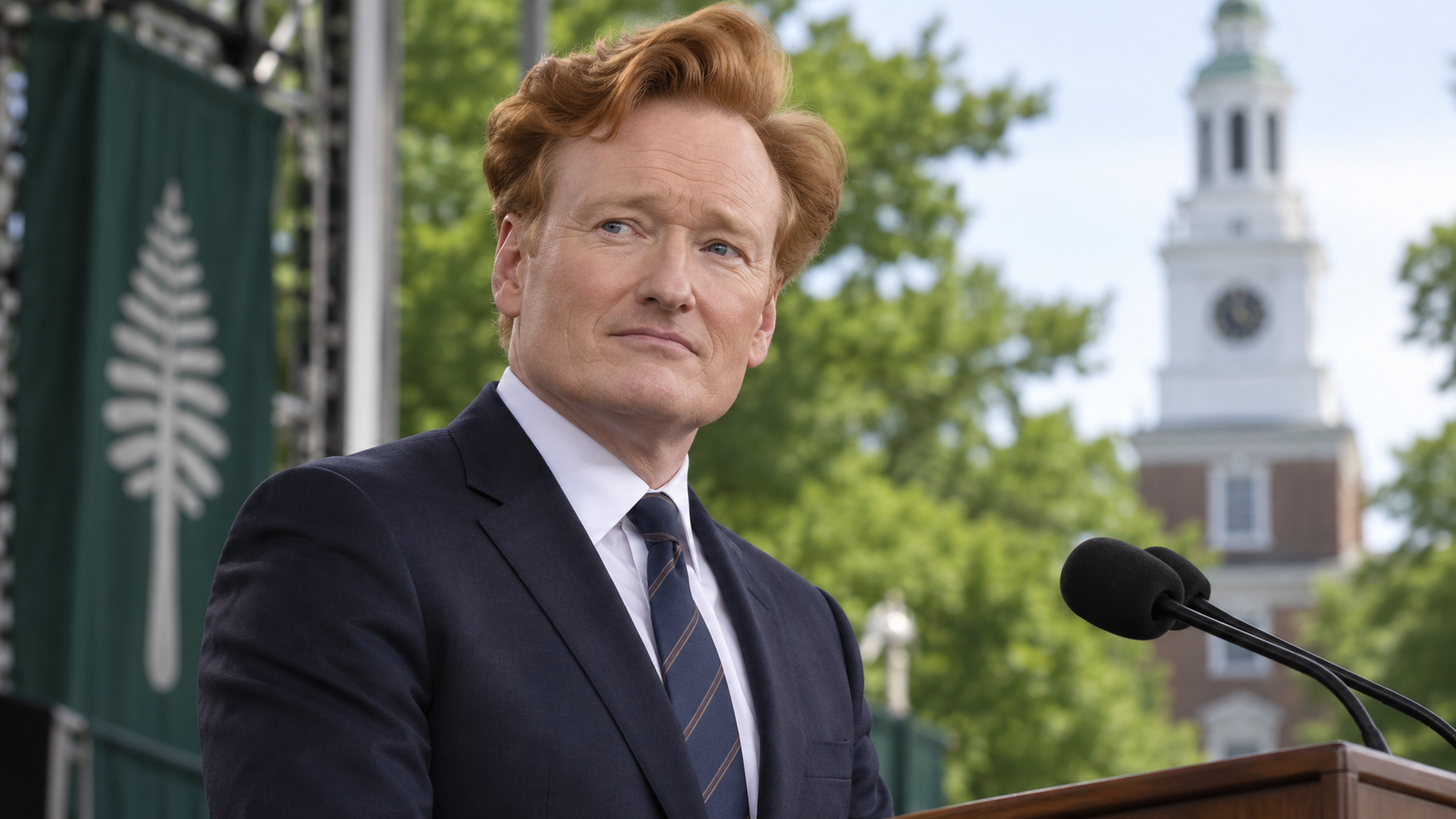
At Dartmouth’s 2011 commencement, Conan O’Brien spoke about a failure that millions of people had watched unfold. After briefly hosting The Tonight Show, he left NBC when a schedule dispute made the job he had pursued for decades untenable. “It is our failure to become our perceived ideal that ultimately defines us and makes us unique,” he told the graduates. The remark transformed a very public disappointment into a broader account of creative identity. Losing an ideal role had not erased his career; it had forced him to discover what remained when the title disappeared.
The phrase “perceived ideal” is crucial. An ideal can organize effort, but it can also become a borrowed script—an image of success inherited from an industry, a hero, or a younger self. O’Brien traced a line of comedians who tried and failed to become their predecessors. Each gap between imitation and reality produced a new voice. In that sense, failure is not automatically noble. Its value comes from the information it reveals: which parts of the dream were truly yours, which abilities survive a change of platform, and which unexpected experiments feel alive.
Reinvention should not romanticize loss. Career disruption can threaten income, health, family stability, and identity, and O’Brien spoke from a position that included fame, resources, and an audience. Some failures result from discrimination, exploitation, or plain bad luck; they do not arrive as carefully designed lessons. People deserve time to grieve what ended and practical support while rebuilding. The quote becomes useful when it releases someone from the obligation to reproduce a vanished plan—not when it pressures that person to perform instant gratitude for pain.
Its relevance has grown in a culture where careers, platforms, and measures of success change quickly. A fixed ideal can make adaptation feel like betrayal, even when new circumstances reveal a better fit. The practical move is to conduct an honest inventory after disappointment. Separate the title you wanted from the work you actually enjoyed. Name the skills, relationships, and values that remain. Then design one low-risk experiment that uses them differently: a small project, a new format, a conversation outside the usual network. Review what creates energy and what merely recreates the old status hierarchy. O’Brien’s sentence does not say that failure defines a person forever. It says the mismatch between the imagined self and the lived one can become a source of originality. Accepting that gap makes room for conviction based on experience rather than prestige—and for a future that a younger version of you was not yet equipped to imagine.
O’Brien delivered the line at Dartmouth’s June 2011 commencement, about a year after leaving The Tonight Show. He described growing a beard, touring, making music, using social media, and returning to television on a different network. The public setback gave him a concrete example of a dream changing after decades of pursuit, turning the address from abstract advice into a candid account of reinvention.
A “perceived ideal” may be partly inherited from an industry, mentor, or younger self. Falling short can reveal a more original path, but failure is not automatically beneficial. It can carry financial and emotional costs, and unfair systems cause many setbacks. The insight is not to celebrate pain. It is to use new information, support, and time to separate meaningful work from the status attached to an old plan.
Careers and creative platforms now change faster than many long-term plans. After a disappointment, list what ended and what remains: skills, relationships, values, and work you still enjoy. Choose one low-risk experiment that recombines those assets in a new way. Judge it by what you learn and the quality of the work, not by how closely it restores the title you once treated as the only acceptable destination.
Explore more "Quotes of The Day"
Discover more notable quotes from influential voices across politics, science, business, technology, sports, and culture. Each quote offers insight into how ideas, beliefs, and decisions shape the world around us.