

Stunt Coordination Explainer
Stunt coordination is the planning and supervision of screen action that carries unusual physical risk or requires specialized performance. A coordinator translates a script and director's visual goal into a method that can be rehearsed, photographed, and repeated while protecting performers and crew. The job can cover fights, falls, vehicles, water, fire, wire work, animals, crowds, and apparently simple movement made hazardous by speed, height, surfaces, weather, or equipment. SAG-AFTRA standards describe the coordinator as a frontline safety professional who works proactively with departments such as assistant direction, special effects, props, and production.
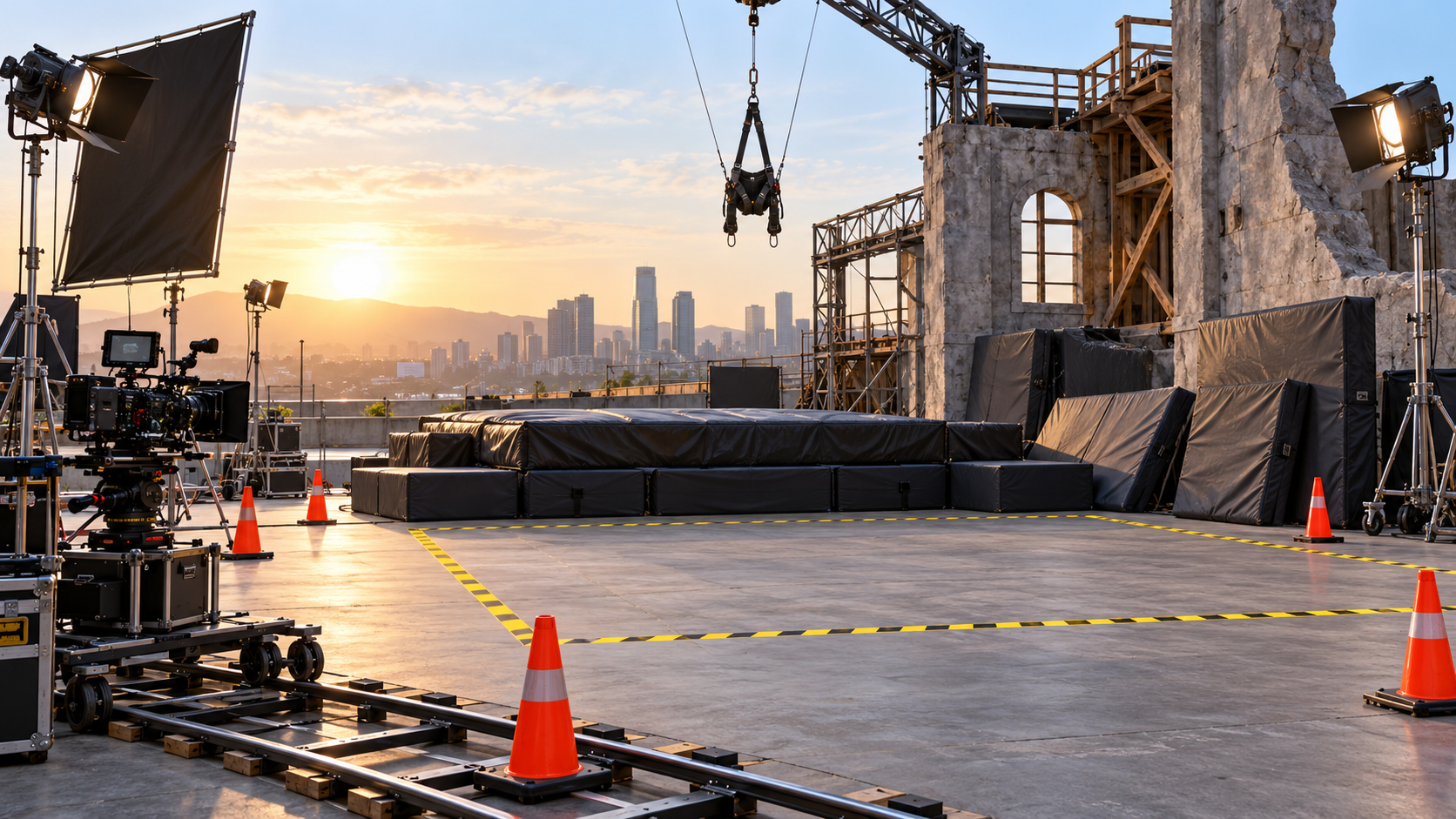
Planning begins with a breakdown of the action and its environment. The coordinator identifies hazards, chooses qualified specialists, considers performer capabilities, and collaborates on camera placement, rigs, props, costumes, padding, medical support, and emergency procedures. A previsualization or rehearsal video can test timing before the full set is involved. The team may reduce risk through controlled speed, breakaway materials, hidden mats, wires, protective clothing, modified vehicles, or separate elements combined in editing and visual effects. The objective is not to make danger genuine; it is to create a convincing image through controlled technique.
Rehearsal builds repeatability. Performers learn choreography in stages, increase intensity gradually, and establish cues for action and stopping. A stunt double may perform when the action exceeds an actor's training or when matching camera angles allows a specialist to do the hazardous portion. Actors still need instruction for the safe parts that connect to the double's work. Before filming, the coordinator communicates the plan at a safety meeting and checks that essential personnel understand positions and escape routes. Conditions are reassessed when weather, equipment, blocking, or a creative request changes, because yesterday's safe plan may not fit today's set.
Authority and communication are critical. Union guidance says an appropriately qualified person should be engaged and present when a producer requires stunt activity, and performers have the right to raise safety concerns. Final decisions involve the coordinator and other responsible production leaders, but no schedule or shot justifies bypassing a known hazard. Specialists also have limits: a driving coordinator may consult another expert for a deep-water or aviation sequence. Records, inspections, permits, and technical bulletins support judgment, while emergency response must be ready even when prevention has been thorough. Successful stunt work often disappears into editing. Camera angle, lens choice, sound, performance, and cutting can make distance feel smaller, impact feel larger, and separate safe actions feel continuous. Digital effects can remove wires or extend environments, but they do not eliminate the physical risks of every shoot. The craft combines creativity with disciplined refusal: a coordinator may redesign or stop an action that cannot be performed safely under current conditions. That is not opposition to filmmaking. It is the expertise that allows ambitious action to be attempted responsibly, repeated for coverage, and completed without treating injury as proof of realism. A practical way to read or discuss Stunt Coordination is to separate the basic definition from the choices made in a particular example. Stunt coordinators translate scripted action into a controlled plan that can be rehearsed, filmed, and repeated. Then identify who sets the relevant rules, which parts are creative decisions, and which parts follow from law, contracts, technology, or production limits. Examples that look similar on the surface can operate differently because their purpose, audience, timing, and surrounding agreements are different. Stunt doubles perform specialized hazardous action while actors learn the safe portions needed to connect the scene. It is also useful to check whether a source is describing a formal industry category, an informal critical label, or one organization's current practice. Those distinctions prevent a memorable anecdote from becoming a false universal rule. Finally, compare the visible result with the less visible work that produced it. Camera angles, editing, sound, rigs, padding, breakaway materials, and digital cleanup create intensity without requiring uncontrolled danger. That approach keeps the explanation grounded while leaving room for reasonable disagreement about borderline cases.
Stunt coordinators translate scripted action into a controlled plan that can be rehearsed, filmed, and repeated.
Risk assessment considers environment, surfaces, speed, height, weather, equipment, performer skill, and emergency response.
Coordinators collaborate with direction, assistant direction, camera, special effects, props, costumes, medical teams, and visual effects.
Stunt doubles perform specialized hazardous action while actors learn the safe portions needed to connect the scene.
Safety meetings, clear cues, gradual rehearsal, inspections, and reassessment are required when conditions or blocking change.
Camera angles, editing, sound, rigs, padding, breakaway materials, and digital cleanup create intensity without requiring uncontrolled danger.
Explore more "Explainers"
Discover additional explainers across politics, science, business, technology, and other fields. Each explainer breaks down a complex idea into clear, everyday language—helping you better understand how major concepts, systems, and debates shape the world around us.