

Music Festivals Explainer
A music festival presents multiple artists within a shared event, often across several stages and one or more days. Festivals can center on a genre, community, cause, place, or broad popular audience. Unlike a single concert, the program itself is part of the attraction: attendees choose among overlapping performances and experience music alongside food, art, workshops, camping, or other activities. The format ranges from a neighborhood gathering to a temporary city with complex transport, utilities, medical care, and crowd management.
Promoters begin with concept, site, dates, permits, budget, and booking strategy. Artist offers must fit travel schedules and exclusivity clauses, while the lineup must create enough demand at a workable total cost. Programmers arrange stages and set times to manage audience flow as well as artistic logic. Two popular acts scheduled together may split crowds, while a single major draw can overload one area. Changeovers require realistic time for instruments, sound checks, staging, and the movement of crews.
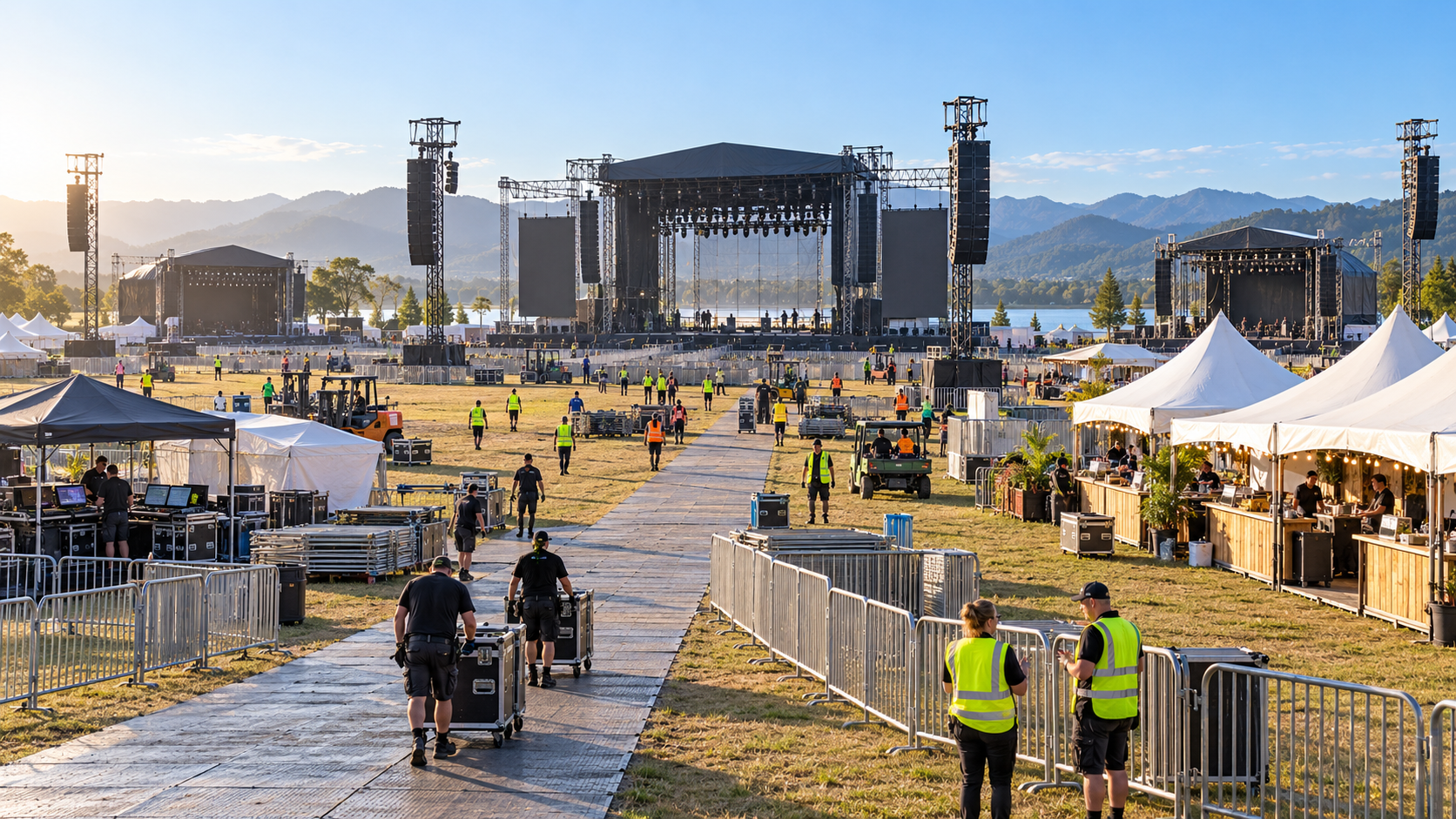
The site plan integrates stages, audience capacity, entrances, exits, barriers, concessions, sanitation, water, accessibility, lighting, transport, and emergency routes. Engineers and authorities review temporary structures and local conditions. Security, stewards, medical teams, weather monitoring, and a command structure prepare for ordinary needs and unusual incidents. Communication is crucial because a decision about lightning, wind, crowd density, or transit affects many independent vendors and thousands of people at once.
Festival economics are exposed to uncertainty. Ticket tiers, sponsorship, food and beverage, camping, merchandise, vendor fees, and media rights may contribute revenue. Artists, infrastructure, land, labor, insurance, power, waste, transport, and public services create high upfront costs. Poor weather can reduce attendance or force interruption after much of that money has been spent. Refund policies and cancellation terms distribute risk among organizers, artists, suppliers, insurers, and audiences in different ways. A festival's identity emerges from curation and operations together. A thoughtful lineup can still fail if sound bleed, queues, heat, inaccessible routes, or weak communication dominate the experience. Conversely, efficient logistics cannot substitute for a clear artistic reason to gather. Environmental efforts focus on travel, energy, waste, water, and reusable systems, but claims should be measured against actual practice. The best way to understand a festival is as a designed ecosystem whose performances, infrastructure, community, and risks are inseparable. A practical way to read or discuss Music Festivals is to separate the basic definition from the choices made in a particular example. Festivals sell a combined program and environment, not merely a collection of unrelated concerts placed on one field. Then identify who sets the relevant rules, which parts are creative decisions, and which parts follow from law, contracts, technology, or production limits. Examples that look similar on the surface can operate differently because their purpose, audience, timing, and surrounding agreements are different. Crowd management uses capacities, sightlines, flow, communication, staffing, and programming choices rather than relying on security response alone. It is also useful to check whether a source is describing a formal industry category, an informal critical label, or one organization's current practice. Those distinctions prevent a memorable anecdote from becoming a false universal rule. The date and market matter too: tools, distribution systems, and standard agreements change, while older examples can preserve assumptions that no longer apply everywhere. When a claim sounds absolute, compare it with a second type of source and look for the conditions under which it is actually true. Finally, compare the visible result with the less visible work that produced it. Artistic curation, local community, accessibility, sustainability, and reliable operations together determine whether the festival has a coherent identity. That approach keeps the explanation grounded while leaving room for reasonable disagreement about borderline cases.
Festivals sell a combined program and environment, not merely a collection of unrelated concerts placed on one field.
Booking and scheduling account for artist availability, fees, exclusivity, stage fit, changeover time, and expected movement of audiences.
A temporary site needs engineered structures, power, water, sanitation, access routes, barriers, lighting, medical support, and emergency planning.
Crowd management uses capacities, sightlines, flow, communication, staffing, and programming choices rather than relying on security response alone.
High upfront costs and weather exposure make contracts, insurance, contingency budgets, and cancellation procedures central to the business model.
Artistic curation, local community, accessibility, sustainability, and reliable operations together determine whether the festival has a coherent identity.
Explore more "Explainers"
Discover additional explainers across politics, science, business, technology, and other fields. Each explainer breaks down a complex idea into clear, everyday language—helping you better understand how major concepts, systems, and debates shape the world around us.