

Film Directing Explainer
Film directing is the process of shaping a screenplay, performances, images, and sounds into a coherent audiovisual work. A director establishes how the story should feel and what the audience should notice, then communicates that intent to specialists across the production. The role includes planning shots, rehearsing performers, making choices on set, and responding to material in post-production. It is creative leadership rather than solitary authorship: the result depends on hundreds of practical decisions made with producers, department heads, cast, and crew.
Preparation usually begins with a close reading of the script. The director breaks scenes into dramatic beats, identifies each character's objective, and discusses feasibility with producers. Meetings with the cinematographer, production designer, costume designer, editor, composer, and other collaborators turn ideas about tone into specific plans. Casting, location choices, storyboards, shot lists, rehearsals, and technical tests reduce uncertainty, but the plan must remain flexible enough for performance discoveries, weather, time limits, and budget changes.
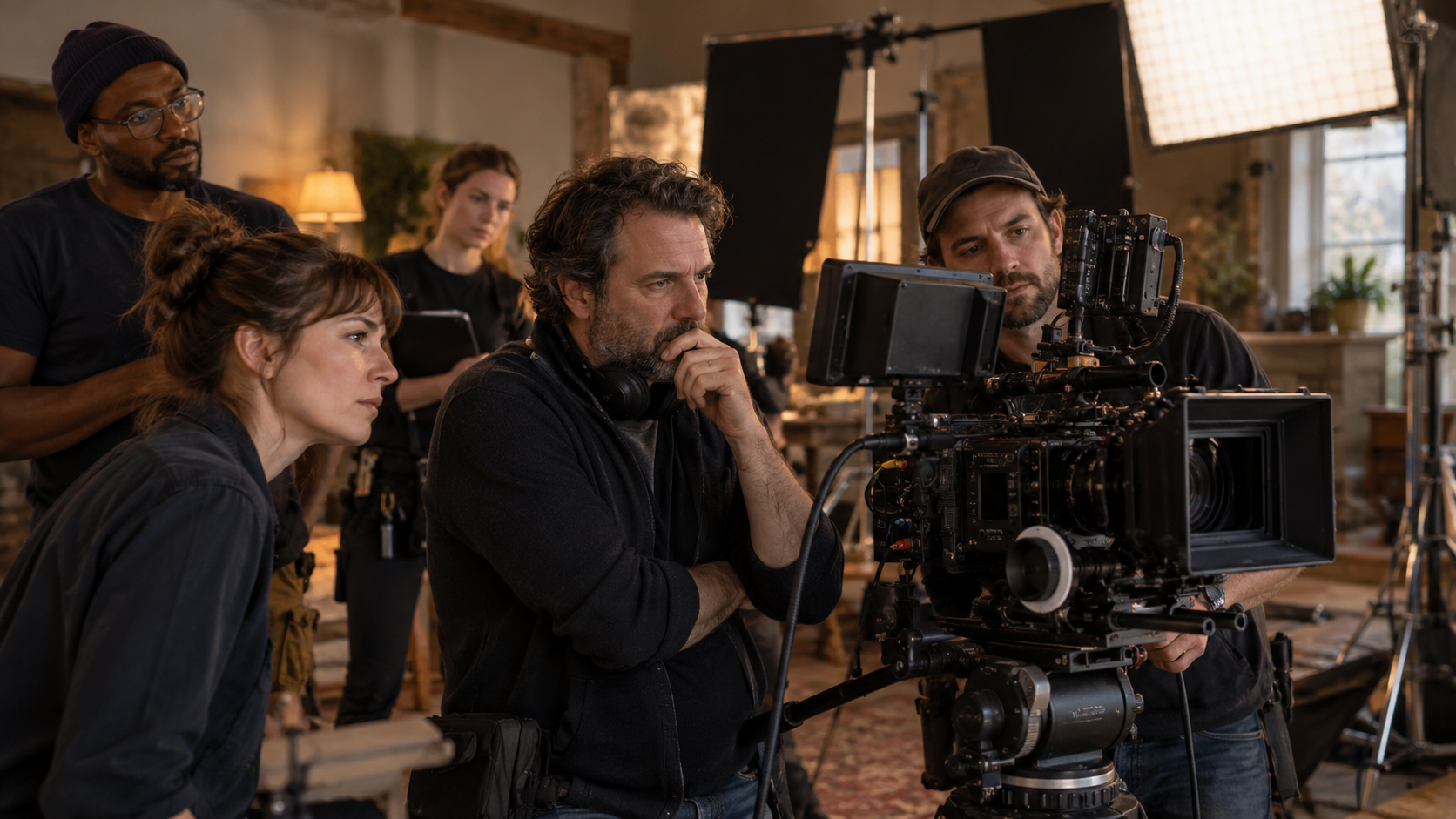
On set, the director concentrates on what a scene is doing emotionally and narratively. Notes to actors may concern intention, rhythm, physical behavior, or relationships rather than a demonstration of one supposedly correct performance. At the same time, the director approves blocking, coverage, lens position, design details, and the timing of action. Department heads translate those approvals into craft. Clear priorities matter because shooting time is finite, and every additional setup competes with rehearsal, lighting, and the number of takes available.
Directing continues after photography. The director works with the editor to choose performances, organize information, control pace, and test whether transitions are clear. Sound design, music, visual effects, color grading, and alternate versions can change how the same photographed material is perceived. Professional agreements may define specific consultation or first-cut rights, while the producer or distributor can retain final authority. The exact balance varies by production, contract, country, and medium. A recognizable directorial style can emerge through recurring approaches to performance, composition, time, sound, or genre, but style is not a checklist of camera tricks. A visually restrained choice may be as deliberate as an elaborate one. Viewers can analyze direction by asking what information a scene reveals, how attention moves, whether performances share a common tone, and how departments reinforce or complicate one another. Those questions show how a director's central task is integration: making many specialized contributions feel like one purposeful experience. A practical way to read or discuss Film Directing is to begin with the basic definition and then identify the choices made in a particular example. A film director interprets the script and coordinates performance, camera, design, sound, and post-production around a unified dramatic intention. Next, ask who sets the relevant rules, who performs the work, and which results follow from creative judgment, law, contracts, technology, budget, or production limits. Similar-looking examples can operate differently because their audience, market, format, timing, and agreements are different. Department heads contribute specialized authorship; the director's job is to align those contributions rather than personally execute every craft. It also helps to distinguish a formal industry category from an informal critical label or one organization's current practice. That separation keeps a memorable anecdote from becoming a false universal rule. Dates and territories matter: tools, distribution systems, audience behavior, and standard agreements change, while older examples can preserve assumptions that no longer apply everywhere. When a claim sounds absolute, compare it with a second kind of source and look for the conditions under which the claim is true. Then trace the process from the visible result back through the less visible decisions, handoffs, and quality checks that produced it. Good analysis connects a directing choice to story, character, and audience attention instead of treating conspicuous technique as an end in itself. Finally, compare the example with a contrasting case and note which part of the definition still holds. This method keeps the explanation grounded, highlights the people and systems behind the outcome, and leaves room for reasonable disagreement about hybrid or borderline cases.
A film director interprets the script and coordinates performance, camera, design, sound, and post-production around a unified dramatic intention.
Pre-production converts themes and story beats into casting choices, rehearsals, location plans, shot concepts, schedules, and department briefs.
During photography, the director guides actors while approving blocking, coverage, timing, and the priorities that keep the day achievable.
Department heads contribute specialized authorship; the director's job is to align those contributions rather than personally execute every craft.
Editing, sound, music, effects, and color can reshape meaning, and the director's contractual authority in those stages differs by production.
Good analysis connects a directing choice to story, character, and audience attention instead of treating conspicuous technique as an end in itself.
Explore more "Explainers"
Discover additional explainers across politics, science, business, technology, and other fields. Each explainer breaks down a complex idea into clear, everyday language—helping you better understand how major concepts, systems, and debates shape the world around us.