

Music Arrangements Explainer
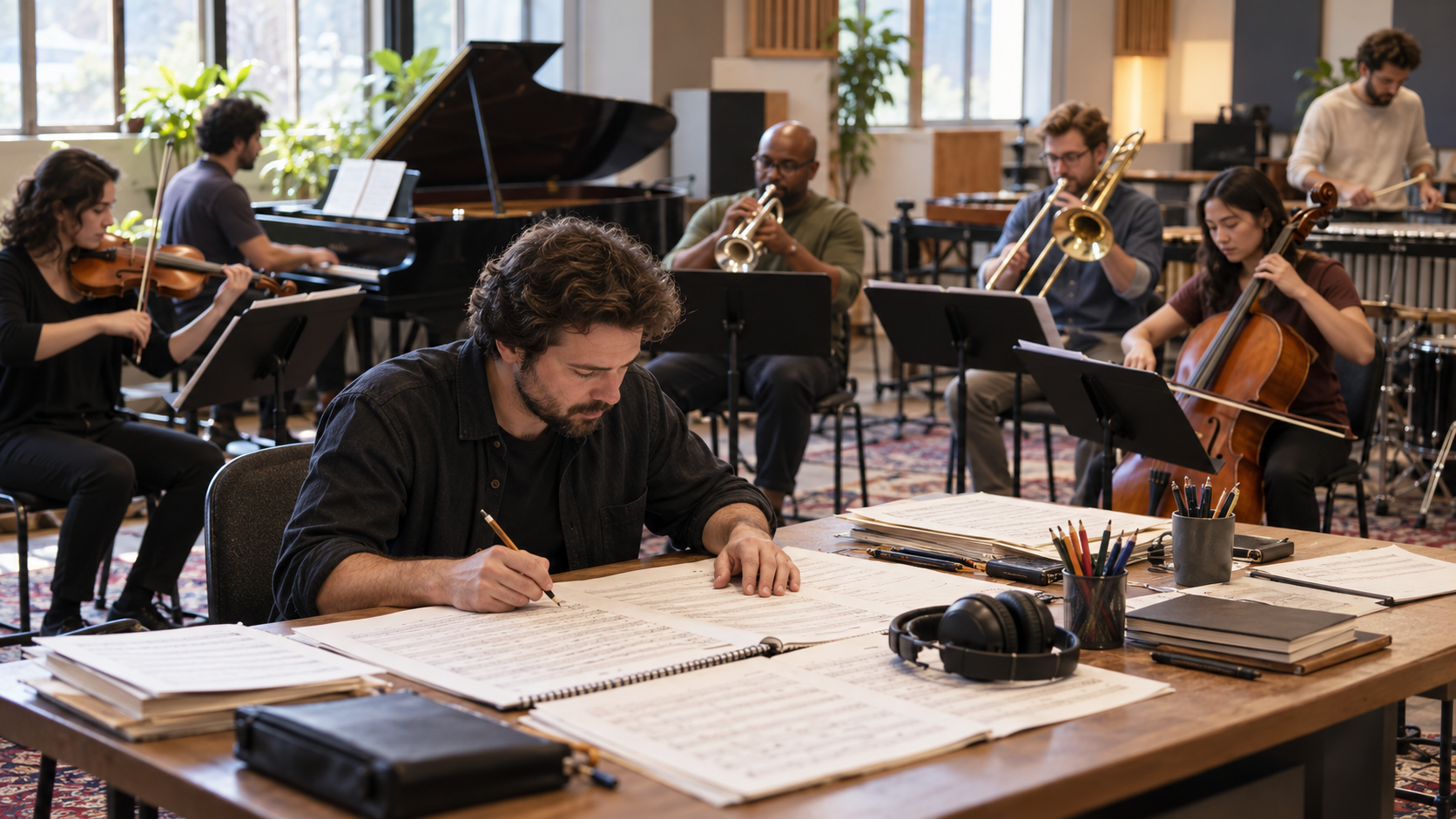
A music arrangement is a planned version of a composition for particular performers, instruments, voices, style, or occasion. The arranger decides how musical ideas are distributed and developed in performance. That can involve instrumentation, voicing, harmony, introductions, endings, transitions, accompaniment, texture, register, and form. Simply playing the same notes on a different instrument may be a transcription; an arrangement usually adds a more substantial interpretive structure, though terminology varies by tradition.
The arranger begins with the musical material and the abilities of the ensemble. A melody written for voice and piano might become a brass-band chart, a choral setting, or a small acoustic version. Range, balance, breathing, articulation, amplification, and player skill limit what will work. The arranger can preserve the central melody while changing its surroundings, or can transform rhythm and harmony enough to create a new stylistic identity.
Good arranging manages attention over time. Not every instrument should play constantly, and contrast makes important entrances audible. Inner voices can support harmony, bass parts can define motion, and countermelodies can answer the main line without obscuring it. Doubling adds weight or color, while space can make a small ensemble feel clear. Rehearsal often exposes practical issues that notation alone misses, prompting revisions to range, density, page turns, or transitions.
Arrangement, orchestration, adaptation, and production overlap but are not identical. Orchestration commonly focuses on assigning material to instruments, while arranging may alter structure and harmony more broadly. A record producer can also shape an arrangement through tempo, sections, sound, and performance. Credits should reflect the actual contribution and relevant agreements rather than assuming that one label covers every creative decision. When an arrangement is based on a copyrighted composition, the right to authorize a derivative version belongs to the copyright owner unless a license or exception applies. Copyright in sufficiently original new arrangement material does not erase rights in the underlying song. Public-domain music removes that underlying copyright barrier, but a particular modern arrangement or recording can still be protected. These distinctions make permissions and source identification as important as musical creativity in release planning. A practical way to read or discuss Music Arrangements is to begin with the basic definition and then identify the choices made in a particular example. An arrangement adapts a composition for specific voices, instruments, players, style, duration, or performance context. Next, ask who sets the relevant rules, who performs the work, and which results follow from creative judgment, law, contracts, technology, budget, or production limits. Similar-looking examples can operate differently because their audience, market, format, timing, and agreements are different. Orchestration emphasizes distribution among instruments, while arranging can encompass broader changes, though professional usage overlaps. It also helps to distinguish a formal industry category from an informal critical label or one organization's current practice. That separation keeps a memorable anecdote from becoming a false universal rule. Dates and territories matter: tools, distribution systems, audience behavior, and standard agreements change, while older examples can preserve assumptions that no longer apply everywhere. When a claim sounds absolute, compare it with a second kind of source and look for the conditions under which the claim is true. Then trace the process from the visible result back through the less visible decisions, handoffs, and quality checks that produced it. Public-domain source music can be freely arranged, while a particular recent arrangement or recording may still carry separate rights. Finally, compare the example with a contrasting case and note which part of the definition still holds. This method keeps the explanation grounded, highlights the people and systems behind the outcome, and leaves room for reasonable disagreement about hybrid or borderline cases.
An arrangement adapts a composition for specific voices, instruments, players, style, duration, or performance context.
Instrumentation, voicing, harmony, texture, introductions, endings, transitions, and form can all be part of the arranger's work.
Practical range, balance, articulation, breathing, amplification, player skill, and rehearsal time shape what an ensemble can perform.
Orchestration emphasizes distribution among instruments, while arranging can encompass broader changes, though professional usage overlaps.
Sufficiently original arrangement material may be protected, but it does not cancel copyright in the underlying composition.
Public-domain source music can be freely arranged, while a particular recent arrangement or recording may still carry separate rights.
Explore more "Explainers"
Discover additional explainers across politics, science, business, technology, and other fields. Each explainer breaks down a complex idea into clear, everyday language—helping you better understand how major concepts, systems, and debates shape the world around us.