

On This Day in Sports: April 27, 1956
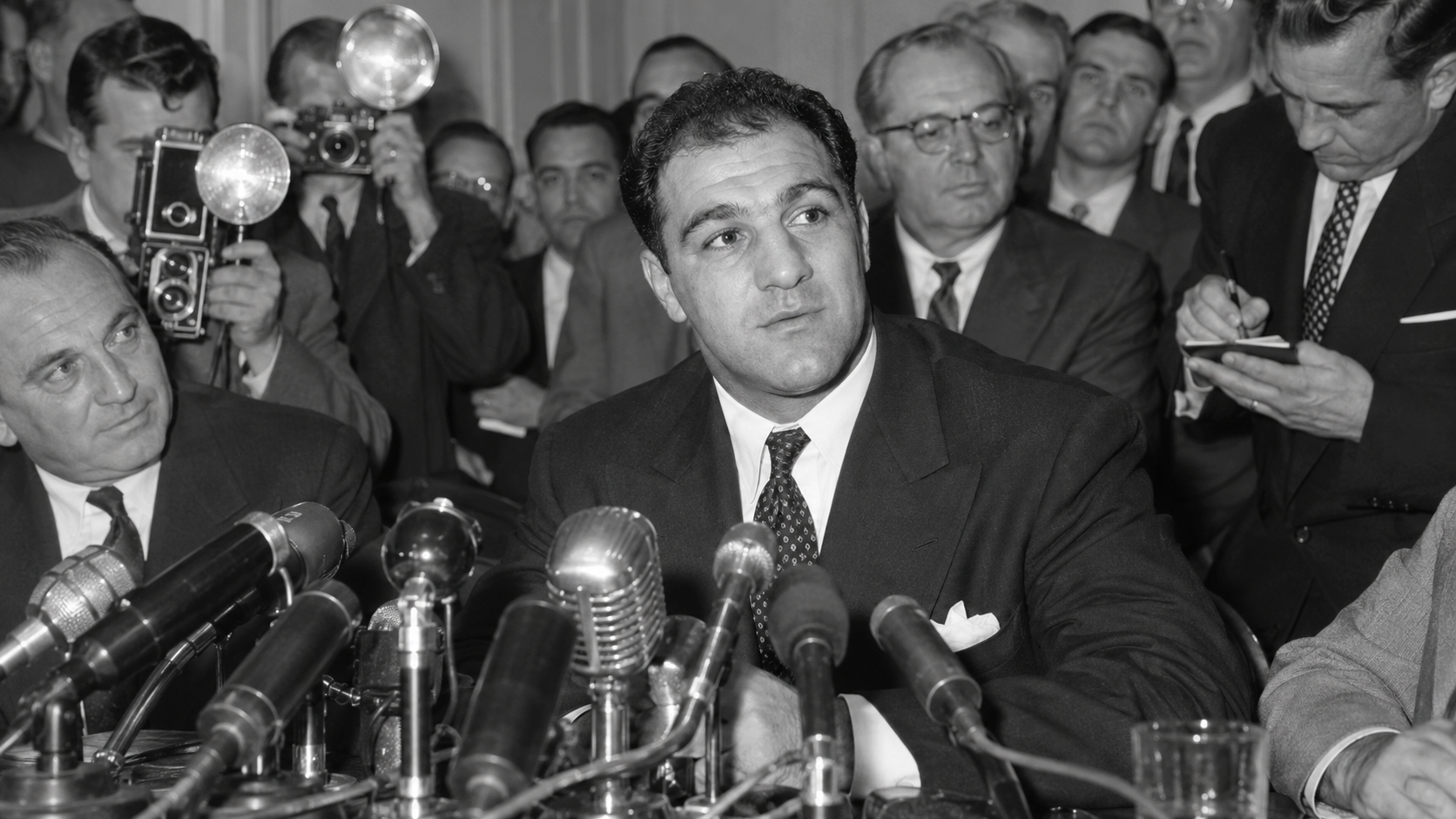
On April 27, 1956, heavyweight champion Rocky Marciano announced his retirement from boxing at age thirty-two. He left the sport with a 49-0 record and 43 knockouts, the only heavyweight champion to finish a career undefeated. Marciano said family considerations and the physical demands of training had led him to step away while still holding the title.
His final bout had come the previous September against Archie Moore. Marciano was knocked down early, recovered and stopped Moore in the ninth round. The sequence captured his career: he was not the largest or smoothest heavyweight, but extraordinary conditioning, relentless pressure and punching power allowed him to survive danger and wear opponents down.
Marciano had won the championship from Jersey Joe Walcott in 1952 with a dramatic 13th-round knockout. He defended the title six times, including rematches with Walcott and Ezzard Charles. His compact frame and crouching attack produced fights of sustained intensity, and his willingness to absorb punishment made retirement at his peak especially striking.
The 49-0 record became a permanent reference point whenever an elite boxer approached an unbeaten career. Later champions surpassed 49 wins in other divisions, but Marciano’s perfect heavyweight mark retained its symbolic force. By leaving before defeat or decline, he fixed his public image in the hardest position in boxing: champion, undefeated and still capable of more.
Marciano retired at age 32.
His professional record was 49-0.
He recorded 43 knockouts.
Marciano won the title from Jersey Joe Walcott.
He made six successful title defenses.
His final opponent was Archie Moore.
Explore more "On This Day in Sports"
Discover more landmark games, records, championships, and turning points from sports history. Each day revisits the athletes, teams, and moments that shaped competition and culture.