

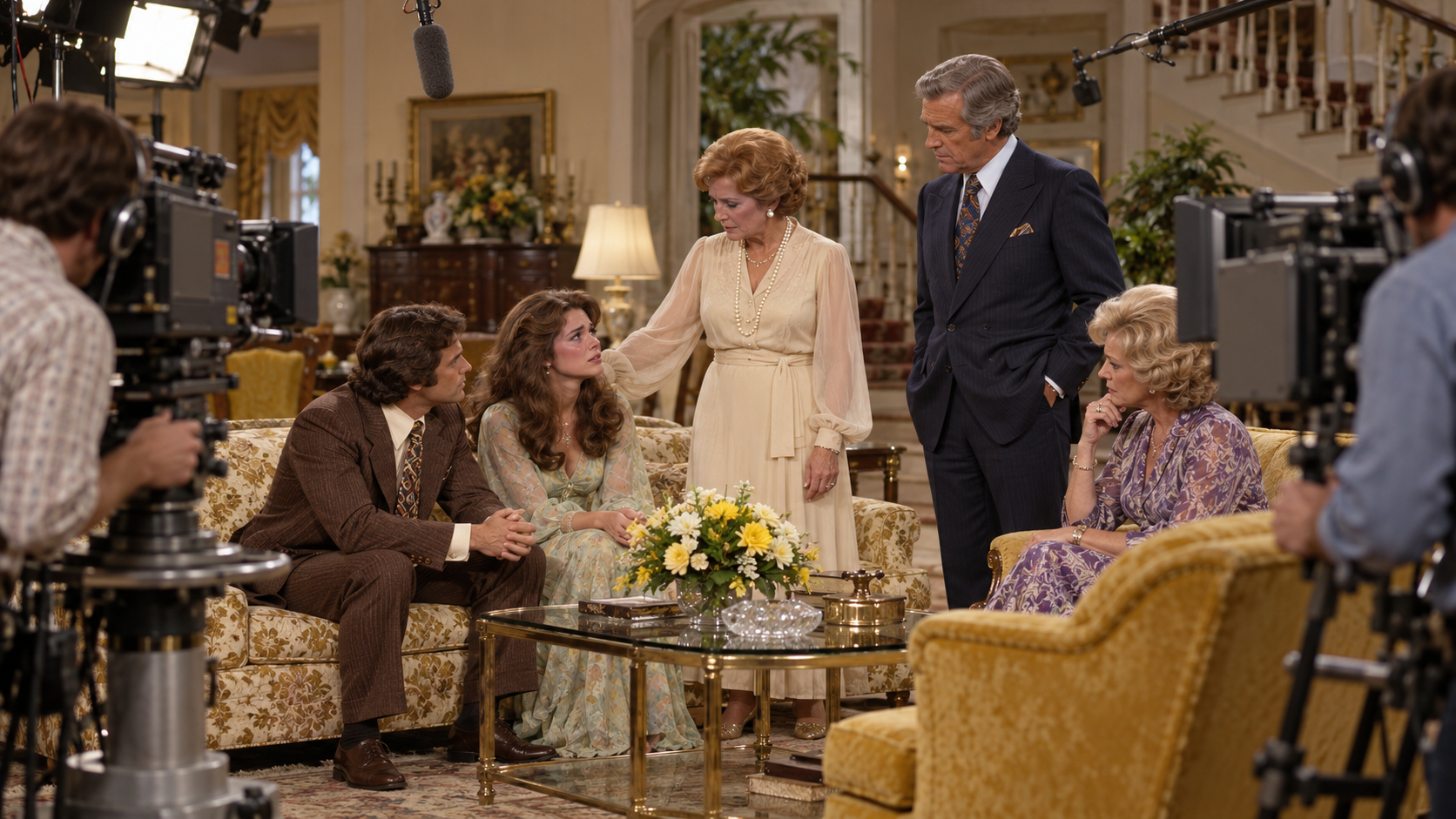
On This Day in Pop: March 26, 1973
On March 26, 1973, CBS premiered The Young and the Restless, a half-hour weekday drama created by William J. Bell and Lee Phillip Bell. Set in the fictional Genoa City, Wisconsin, the series initially contrasted the wealthy Brooks family with the working-class Fosters. Younger characters, contemporary social issues and cinematic production values distinguished it from soaps centered primarily on older domestic worlds. Seen in its own time, the occasion was more than a tidy calendar entry. It emerged from choices by performers, writers, technicians, executives and audiences, each working within the opportunities and constraints of the period. Restoring that setting keeps the story human and specific instead of treating a complicated cultural shift as inevitable.
The Bells built stories around romance, ambition, family loyalty and social mobility, using long emotional arcs to reward daily viewing. The show eventually shifted toward the Abbotts, Newmans and Chancellors, creating rivalries that could evolve across decades. Its measured pace, close-up performances and recognizable musical themes made private feeling the main spectacle. Moving to an hour in 1980 expanded the canvas without changing the serial engine. The reaction also shows how popular culture gathers momentum. A premiere, broadcast, release or public appearance can feel self-contained on the day, yet its meaning expands through reviews, radio, television, sales, conversation and imitation. Those channels reach people unevenly, but together they can turn one event into a reference point that later work follows, revises or rejects.
The Young and the Restless became one of American television’s longest-running programs and held the top daytime-drama rating for decades. Its endurance depends on continuity and reinvention: veteran characters anchor history while new generations repeat and revise conflicts. The premiere is significant because it shows daytime television adapting to a younger audience and building an imagined community strong enough to survive enormous changes in viewing habits. That longer view is why the date still matters. It opens a door onto changes involving many contributors, including people whose labor was less visible than the headline names. Recordings, films, photographs and documents allow later audiences to reconsider both the achievement and its limits. Pop history is strongest when celebration is paired with context, and this anniversary leaves room for both. Its afterlife also shows that cultural memory is active: anniversaries, restorations, reissues and fresh criticism keep changing which details receive attention and which assumptions are questioned. Looking back does not mean pretending everyone experienced the moment alike; it means noticing the distance between a public milestone, the industry around it and the private reactions beyond the spotlight. The tension between the immediate event and the story later told about it is part of what makes this episode worth revisiting instead of merely listing.
The Bells introduced Genoa City through the contrasting Brooks and Foster families in a weekday half-hour format.
The setting and sequence matter because they show how The Young and the Restless premiere reached the public on this particular date.
Younger characters, topical stories and polished visual production gave CBS a modernized entry in the daytime serial field.
The immediate response traveled through the era’s available channels, from press and broadcast coverage to ticket buyers, listeners and viewers.
The series expanded to an hour, led daytime ratings for decades and created multigenerational families familiar to millions of viewers.
Its reputation has kept developing through preservation, scholarship, revival and the interpretations of later audiences.
Explore more of "On This Day ..."
Discover more events from the same date across news, politics, technology, sports, and other fields. Each link highlights significant moments that shaped history on different fronts.