

How Baseball's Defensive Shift Restrictions Work Explainer
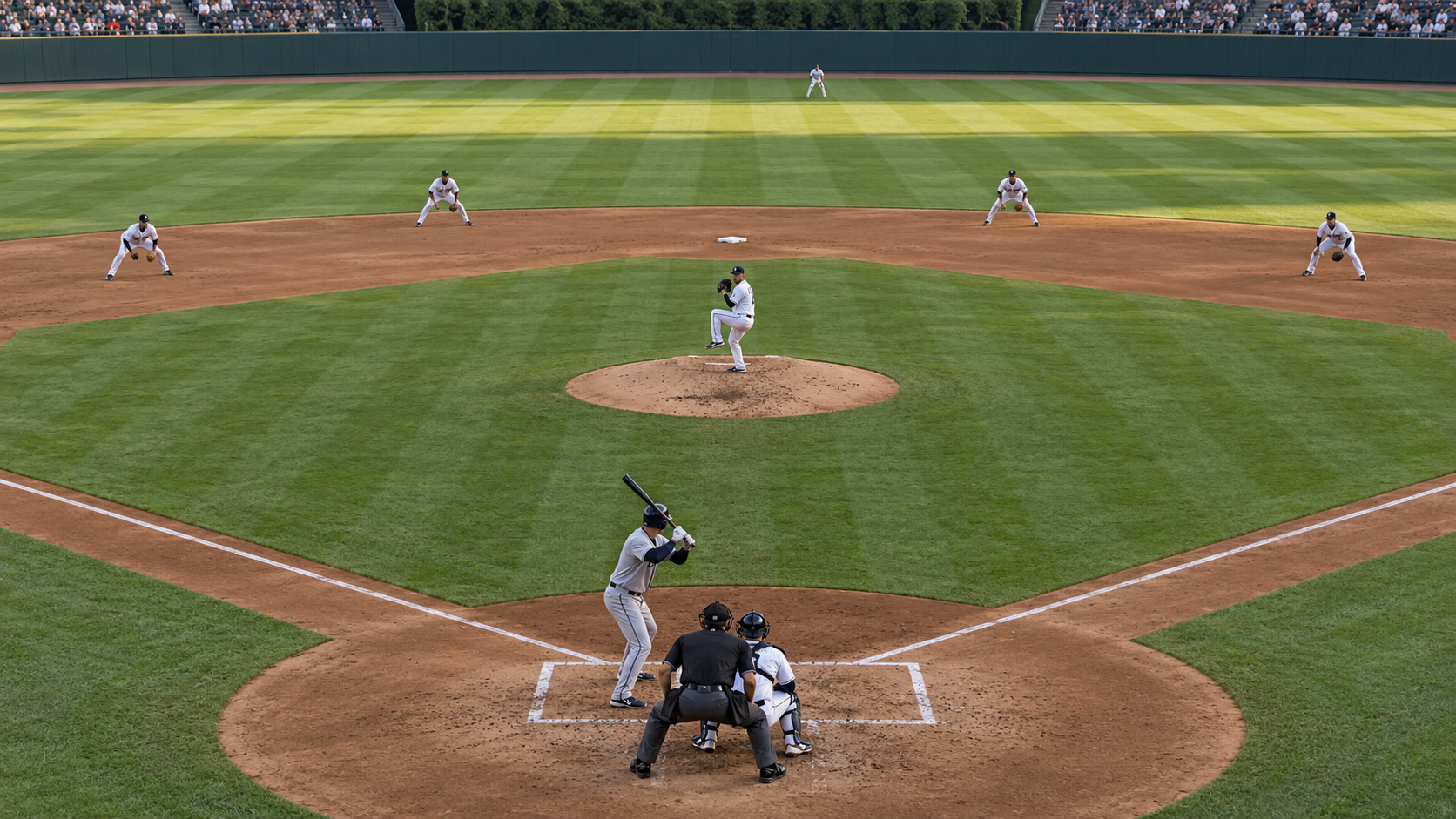
MLB limits extreme infield shifts by requiring four infielders to be positioned within the outer boundary of the infield dirt when the pitcher begins the delivery. Two must be entirely on each side of second base, preventing a three-infielder overload on one side.
The rule assigns each infielder to a side for that plate appearance. Teams cannot swap those sides merely to follow a batter's tendencies, except when a substitution changes the defensive personnel. Outfield positioning remains more flexible, subject to the general rules of the game.
Infielders may move after the pitch is released, so anticipation and pre-pitch shading still matter. A shortstop can start close to second and break toward the middle, while a second baseman can play deep within the dirt boundary. The ban removes the most extreme starting alignments, not strategy.
If the defense violates the positioning rule, the batting team may accept the result of the play or take the prescribed penalty, generally a ball. Umpires can also address repeated attempts to evade the restriction. The best overhead view checks feet, dirt, and second base at pitch release.
Two infielders must be entirely on each side when the pitch begins.
Yes. The restriction governs their starting position as the delivery begins.
The rule specifically regulates the four infielders; outfielders retain broader positioning freedom.
Explore more "Explainers"
Discover additional explainers across politics, science, business, technology, and other fields. Each explainer breaks down a complex idea into clear, everyday language—helping you better understand how major concepts, systems, and debates shape the world around us.